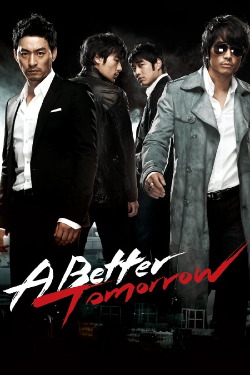
Review of A Better Tomorrow (2010) by Alexander C — 14 Oct 2007
For all John Woo's reputation for films with dramatic gunfights, A Better Tomorrow is a film which which relies less on the gunfights, and more on the story and the acting.
Chow-Yun Fat plays Mark Gor, an gangster who runs a counterfeiting ring with Sung Tse-Ho (or just Ho), played by Lung Ti - who has to hide his double life with his ill father and his brother, Kit, who is a Detective Inspector in the Hong Kong Police department.
After Ho is betrayed to the police because of a business deal, and Mark loses his leg avenging Ho's betrayal, they both find themselves themselves trying to live legitimate lives - Ho trying to go straight after his arrest, and regain the trust of his brother; Mark forced out of his position in the gang and left destitute, while trying to find his way back in.
The world of A Better Tomorrow is a far grittier one then western action films - or even from Woo's later action films. It only takes one bullet to cost Mark his leg, an injury which could be easily healed in other action films. With the exception of the two-fisted gunfighting, you almost wouldn't think this was a John Woo film. Many of the stunts and visual tropes we've come to expect from Woo simply aren't present here. No doves, no over the top stunts, and violence has consequences.
The acting on the film is excellent as well. Lung does an excellent job as Ho, and successfully conveys the character's emotional torment at his younger brothers rejection. Likewise, Leslie Cheung, who plays Kit, equally gets across his shame at the discovery that his brother is a criminal, someone he swore to fight against, and his second shame at losing the trust of the department because of his discovery of his brother's double life.
However, the top performance of the film goes to Chow Yun-Fat, who essentially ends up playing 2 roles: the bold, brash, cool gangster; and then fallen Mark Gor, with all the trappings of his position within the Triad stripped away - angry, lonely, and seemingly without hope. Plus, Chow does an excellent job of conveying the loss of the character's leg without actually having to show a prosthetic, simply by changing his walk and in several scenes where he's basically having to manipulate and move his leg around with his hands. It's a magnificent scene.
In short, this is, by far, one of Woo's greatest films - not in terms of action, but in terms of pacing, acting and storytelling. This is the cinema of Hong Kong at it's finest, and anyone who is a fan of foreign film - period, should give this film a try.
This review of A Better Tomorrow (2010) was written by Alexander C on 14 Oct 2007.
A Better Tomorrow has generally received positive reviews.
Was this review helpful?