Review of 4 Months, 3 Weeks and 2 Days (2007) by First L — 05 Dec 2008
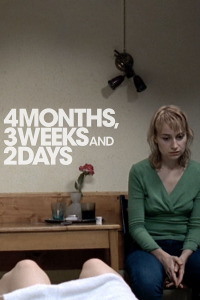
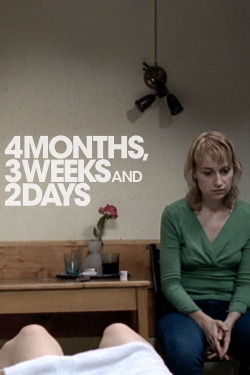
The 2007 Palme D'or winner at Cannes, Cristian Mungiu's withering portrait of emotional and social devastation in Communist Romania is certainly a serious art film about a serious art subject: abortion in a morally repressive state. It unfolds in seemingly-endless long takes, the naked naturalism of its settings and performances often slipping into the unsettling and the uncomfortable (particularly at a dinner party of extreme awkwardness). You're riveted, mostly, or at least lulled into a riveted-like state by the low clouds of despair that loom above the proceedings...
But what does Mungiu have to say about abortion, in the end? To those of us accustomed to the terms of moral certainty applied to the issue in North America (particularly by the religious right and the feminist left in America), the Eastern European view that comes out through Mungiu's film is one of troubled ambiguity. As is the case with so many push-button political issues, Europeans have distinctly different views than North Americans largely because they have experienced extreme social responses to these issues and have had their lives directly affected (often quite adversely) by such responses. It's easy enough to be unequivocally for or against abortion if you've grown up in a Texan suburb or a small town in BC, but those who lived through the aggressive natalist policy in Ceaucescu's Romania and the crushing social pressure it lead to could hardly be so certain about it...
Instead of providing a political call-to-arms, Mungiu crafts a complicated picture. He presents the absurd difficulties facing women who want to have abortions with alacrity. The hoops that Otilia and Gabita have to jump through, the lies they have the tell, the shame and degradation and emotional scarring they have to endure; all of these things are presented clearly. But the film is hardly a pro-choice primer; it quite seriously treats the abortion as a deflating, destructive, tragic choice for these women. The act is obviously far too heavy for naive Gabita, a flighty and frivolous young woman who is overwhelmed by its enormity and falls to dissembling, shirking responsibility and ultimately alienation in the face of it. Though the abortionist Mr. Bebe is a species of monster, one can't help but agree with him now and then as he excoriates Gabita for not thinking her choice through quite seriously enough. Mungiu recognizes quite rightly that, regardless of the legal status or medical safety of an abortion (though the film presents with unerringly starkness that legality and medical acceptance is a much better option than its opposite), it is an act of tremendous moral weight that cannot be easily shrugged off. And it is to his credit that he gives us two heroines who are not stalwart pro-choice saints, but fragile human beings who crack more than a little under the pressure. Style aside, it's the ambiguous substance that makes Mungiu's film notable, if not special...
This review of 4 Months, 3 Weeks and 2 Days (2007) was written by First L on 05 Dec 2008.
4 Months, 3 Weeks and 2 Days has generally received very positive reviews.
Was this review helpful?