Review of 12 Years a Slave (2013) by Dave M — 03 Dec 2015
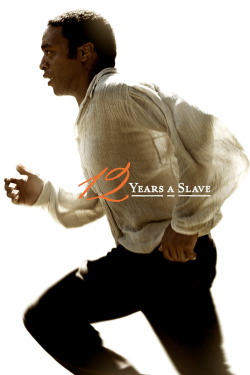
One problem with movies about slavery is that, in order to portray its dehumanizing evils, there seems to be no way around dehumanizing its characters. "12 Years a Slave" (R, 2:14) manages to solve this problem. While making the lives of slaves look and feel more real than most portrayals of the subject, this film also manages to humanize the slaves' suffering - and underlying dignity - more effectively than I've ever seen it done before. Besides all this, the film educates its audience about a topic as well-known as slavery by showing a permutation of its injustice that has rarely, if ever, appeared on screen before.
This film tells the true story of Solomon Northrup (Chiwetel Ejiofor), an educated, black middle-class family man who lived in upstate New York, until he was kidnapped and sold into slavery in the Deep South. He ends up serving two different masters (Benedict Cumberbatch and Michael Fassbender). The former is relatively kind and the latter is very cruel (but, interestingly, both are seen using the Bible - in different ways - to keep their slaves under control, one of the many ways in which this film smartly puts slavery's injustices and contradictions on full display). Solomon encounters a variety of other people who are party to his confinement and occupy various spots on the morality continuum (including brief but powerful performances by Paul Giamatti, Paul Dano and Brad Pitt). Solomon's intelligence helps him to survive, but does little to solve the problem of his captivity. It's not that he doesn't try to regain his freedom, but the system is so stacked against him that every idea he considers and every plan he hatches crumbles before his eyes, steadily eating away at his remaining hope of freedom.
The film's title makes it obvious that Solomon isn't still a slave at the movie's end. How that freedom comes about is the question (for those of us previously unfamiliar with the history on which the film is based). Does Solomon escape? Is he freed by a sympathetic master? Is he discovered in captivity by someone who knows that he was a free man? Does his freedom come as naturally as it did for millions of other slaves in the Antebellum South - by death? Whether you know the ending, figure it out during the course of the movie or just sit back and absorb the story as it unfolds, Solomon's experiences in his brutal and tragic enslavement, offer plenty to watch as we wait to see how these 12 Years will end.
This film's uniqueness in its depiction of slavery is brilliantly executed by screenwriter John Ridley and director Steve McQueen. Ridley's dialog effectively portrays the relative intelligence of his disparate characters and reminds us of the eloquence with which many Americans used to speak, sounding almost Shakespearean at times. McQueen makes the audience feel like they're part of the action by bringing his camera in very close at certain carefully chosen moments, and pacing the film in such a way that the characters' emotions become our own, including the very uncomfortable feeling of being off balance, not knowing what's coming next. The star's performance was so strong that, when the 2013-2014 awards season arrived, we all had to learn to pronounce Chiwetel Ejiofor, much as, one year earlier, we had to learn the name of the young "Beasts of the Southern Wild" star Quvenzhané Wallis (who, interestingly, is also in this film). Although "12 Years a Slave" drags at times and stages its final scene rather awkwardly, overall, the film is a masterwork of story-telling and emotional resonance. "A-".
This review of 12 Years a Slave (2013) was written by Dave M on 03 Dec 2015.
12 Years a Slave has generally received very positive reviews.
Was this review helpful?