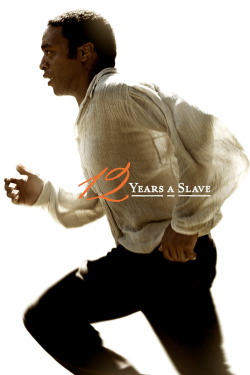
Review of 12 Years a Slave (2013) by Shiira — 15 Jan 2014
For his next project, the big shot Hollywood director(in Sullivan's Travels) aspires to make a "message film" about the poor, but in the process, ends up demeaning the underprivileged class when he goes undercover dressed in hobo apparel as research for an adaptation of O Brother Where Art Thou, a dramatic piece that the studio hack is ill-suited for, since his filmography consists of profitable, but mostly forgettable comedies.
In stark contrast to his lightweight oeuvre, John Sullivan suddenly develops a conscious; he wants to experience "the real world", a world he knows next-to-nothing about. Solomon Northup, albeit an imperfect analogue to John Sullivan, arguably, undergoes a similar journey.
After all, how much did a free Negro have in common with a slave? The progressive north of 12 Years a Slave, where a black man and his family could walk down any street without hassle, doesn't at all resemble the real world, but more like the 19th century of some parallel universe.
When Solomon wakes up, shackled, in a darkened cell, after two men, alleged circus promoters, the night prior, laces the fiddle player's wine with a sedative, it recalls the same topsy-turvy scenario that befalls John, who, after flaunting his wealth to the wrong hobo, from a boxcar, rouses from his incapacitated state and ends up becoming a slave to the state, just another felon in a chain gang, a prosperous man made anonymous.
Sheltered entertainers both, skin color is the lone prevailing trait that the filmmaker and violinist have in common with their respective people. Despite being black, Solomon is separated by class. The bourgeois Negro, following his vicious indoctrination to the south, with a bloodied backside, kicks away the plate of slop laid down by his captor, an instinct predicated on upbringing and self-image, the same factors that compel John and the "The Girl" to reject the food they're served at a soup kitchen.
When a fellow kidnappee counsels Solomon on their unlawful predicament, the musician speaks as if he lives in a vacuum, telling the other prisoner, "I don't want to survive. I want to live." Well, so would his southern counterparts.
This sociological differentiation rears itself most prominently on the cotton plantation, in a scene where Patsey, the slave whom Master Epps fixes himself erotically on, requests that Solomon help assist her in suicide, down by the river.
With unintended hubris, he asks Patsey, "How can you fall in such despair?" Sure, being a slave for twelve years is cruel, but it's a sentence that pales in comparison to a lifetime of indentured servitude.
"God forgives merciful acts," ensures Patsey, who needs to convince Solomon that the perceived transgression is not a sin. God, always an abstract and malleable construct, according to Patsey, sees Negroes as people, not property, whereas in The Birth of a Nation, it's the latter, since God's cameo has the effect of sanctioning Flora's self-propelling dive from the cliff as, in Patsey's own words, "a merciful act", a suicide without biblical retribution, because her pursuant, a Negro, who in accordance with the film's ideology, would certainly have raped her.
Solomon, never one to participate in Negro spirituals while working Master Epps' cotton fields, finally relents at a slave funeral. No more airs. The man who once told a hysterical mother to stop mourning so audibly for her children, realizes, at long last, that he is just another n****r.
As an aficionado of high art, Solomon, undoubtedly, would not be caught dead singing "Roll, Jordan Roll" back home in New York amongst his white friends. But this is not the south that Ashley Wilkes waxes poetically about in Gone with the Wind.
"The high soft Negro laughter from the quarter," that he yearns for would be hard to hear over Patsey's screaming when Epps nearly whips the life out of her. In a film about slavery, there must be blood, serious blood, not puerile blood, like the Grand Guignol spectacle in Django Unchained.
But to Tarantino's credit, the film does foreground the reactionary ideas behind the 1939 David O. Selznick epic, since Dr. King Schultz plays like an update of Rhett Butler, the blockade runner, who, unlike the bounty hunter, never develops a conscience about the slave trade after years of profiteering from it.
The flashbacks of the runaway mandingo fighter being torn apart by dogs are Schultz's. With a start, we realize that his enlightened attitude towards Negroes was part of his role. He then breaks character; he won't shake Monsieur Candie's hand.
When the faux dentist shoots him, he allows himself to be gunned down without a fight, as penance for being part of the problem; for simply being there, like Bass, Solomon's patron, who accepts payment in full for services rendered as a carpenter from slave owners.
Although Bass can't shoot Epps, put Patsey on a horse, or blow up the plantation, he can write a letter.
This review of 12 Years a Slave (2013) was written by Shiira on 15 Jan 2014.
12 Years a Slave has generally received very positive reviews.
Was this review helpful?