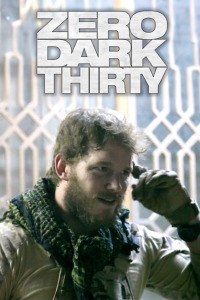
Review of Zero Dark Thirty (2012) by Raun K — 01 Jun 2014
"This is what defeat looks like, bro. Your jihad is over.".
That line sums up what I originally thought of this film: I thought of it as little more than a fist-pumping, pro-America flick, with a little moral ambiguity thrown in to appease the critics. After watching, however, I must say, I was far off the mark. Very far off.
In truth, Zero Dark Thirty disappointed me, Not because it was bad, but because I wanted to hate it. I went into this thinking: "This is going to be nothing more than a piece of trashy propaganda!", and I was already writing a scathing review in my head. How wrong I was. Not only is Zero Dark Thirty one of the best films of 2012, but it realistically portrays the hunt for Bin Laden in a way that is shocking, and occasionally hard to watch, but necessary, to truly understand the ideology behind both sides. Yes, one could criticise the film for it's obvious scenes of torture, but then one would also have to disregard the fact that only when torture was abandoned did they find Bin Laden. Yes, you can criticise the fillm's nittier, grittier aspects, but in doing so, you would only be denying yourself the whole picture, and Kathryn Bigelow presents this picture with intelligence, style, and a stunning eye for detail.
The plot, while you most likely know the basics, is absolutely compelling. Jessica Chastain plays Maya, a C.I.A. operative in the Middle East, who has devoted her life to finding the man responsible for blowing up the Twin Towers. The film is broken up into various chapters (each detailing an important event in the hunt), making a complicated story easier to understand, though not at the expense of any intrigue or importance. Funnily, aside from Maya, no character seems truly important to the film, though I guess that is what one could attribute to translating such an epic event to film. Anyway, the plight of any other characters are secondary anyway, as this film is The Maya Show, first and foremost. Every event, good or bad, morally justifiable, or sketchy, is seen through Maya's eyes, which skews much of what one would usually be firmly for or against, but due to the style of filmmaking, as well as Chastain's fantastic performance, the perceptive bias is necessary in affirming the film's power.
If this doesn't read enough like a plot synopsis, let me assure you, it isn't due to any faults in the film's narrative, but rather, the fact that a key ingredient in the film is the notion of "Perception is Reality". As I said, Maya is our eyes in the film, and her experience translates to our own, making for an overreaching narrative that, with such a grand scope, is difficult to quantify.
Positives: Even if you dislike the film's premise, and I know many people took isse with it, you cannot deny the mastery of her craft that Bigelow displays here. She does a great job at keeping the surprise factor high (two of the three notable explosion scenes made me jump), while also managing to keep the viewer interested in what could have been mind-numbing scenes of detective work, desk-work, and diplomatic conferences. Bigelow adds this pulsing intrigue to the film, as though we need to keep watching, and that is the highest praise one can give to a film: To say that a film must be watched is the highest praise I can think of.
Of course, not all the acclaim for the film's brilliant atmosphere and pace should go to Ms. Bigelow. The cast do a fantastic job, despite everyone feeling secondary to Jessica Chastain's show-stealing performance. Jason Clarke, as the veteran C.I.A. worker provides a fantastic character for viewers to either love or hate. One can despise his ruthless interrogation of prisoners, but admire his essentially friendly, and occasionally goofy demeanour. That is another aspect of the film that I found riveting: The moral ambiguity. While it may be cliched, one can't help but feel angry when Dan (Jason Clarke's character), after brutally torturing a prisoner, complains when his pet monkeys are taken away. This two-sided nature (one found in most of the film's characters), is just another facet that makes the film so intriguing. Again though, nothing can top Chastain's performance. She brings a lovable nature to a character that could, under a different microscope, be seen as a terrible person. That is something to notice throughout the film: Characters that could have been seen as cruel, or inhumane in any other setting, are often seen as perfectly normal, even likable, characters in this film.
This gives further credence to the film's ideal of "Perception is Reality", and is displayed in a number of ways, with the eating of food being one that stuck out for me. Throughout the film, we often see characters eating food, and for some reason, that, in my eyes, humanised them somehow. As it is something that filmmakers don't always focus on, the eating of food does a lot to make characters seem real in a film that could easily be seen as unemotional, or detached. A subtle movement, like licking peanut-butter off a knife transformed Maya from cold, unrealistic character, into a more endearing one, caught up in events that no normal person should, while retaining the characteristics that make her human in the first place.
One more aspect that hugely helped out the film's tone was the music. Is it just me, or is Andre Desplat everywhere these days? If you haven't heard of him, look him up on the internet, and the amount of mainstream films he has composed the score for in the last few years, will blow you away. Anyway, it is no different in Zero Dark Thirty. The music, effortlessly shifting from a sleek, pulsing rhythm (A la Drive), to a haunting, Middle-Eastern call (A la Assassin's Creed), adds to the atmosphere of action scenes, such as those in the middle of the film, and it's gut-wrenching final shot.
Flaws: In a film as divisive as Zero Dark Thirty, it is hard to decipher what could be a legitimate gripe, what could be a personal bias, and where one makes the distinction. To deal with such a problem, I'm going to list off everything that I personally found to be a grievance (The blunt approach).
First of all, I felt the film started off very weak. Of course, I went in with the intention of criticism, but I genuinely feel the opening was poor. I'm not criticising the opening black screen, over the sound of 9/11, but rather the event immediately following: Dan, with Maya watching on, and two goons to help, tortures a prisoner for information. Now while I understand that such a scene is important in setting the film's tone, in building the characters, and making the distinction between events early and late in the film (Maya is initially revolted by torture, only to realise it's seeming importance in the second act, only to abandon it in the final act, etc.), but the scene feels so forced, and awkward to watch, especially in comparison to the masterful later scenes, that I can't help but feel as though this scene was introduced to make the critics (and perhaps the political goons) sweat. That being said, the more the film continues, the better it gets (especially the highly emotional ending shot), so the opening awkwardness is more than made up for.
Another flaw, that wouldn't be attributed to the film's political reception, is it's overwhelming detail. Now, I wouldn't be so crude as to say that there is too much going on for a viewer to feasibly enjoy, but a lot does go down throughout the film, and that makes it a bit difficult to keep track of the various plot threads to be found. I could blame this on the fact that we see everything through Maya, making for a less over-arching, and more personal touch, but that does hinder the great amount of events that are introduced during the film.
In closing, Zero Dark Thirty is a powerhouse: A film that takes a somewhat amoral stance on hot-button topics, while crafting an intense, emotional and unforgettable tale. While it may divide viewers as to the worth of the filmmakers ideology's, one cannot deny the huge production value, fantastic score, and powerhouse performances, coming together to produce an amazing, thrilling account on the story that everyone knows, but doesn't know.
Final Grade: A-.
This review of Zero Dark Thirty (2012) was written by Raun K on 01 Jun 2014.
Zero Dark Thirty has generally received very positive reviews.
Was this review helpful?













![[REC] (2007)](https://cdn1.cinafilm.com/static/img/movie/5996792e/200/1-rec-2007.jpg)