Review of You Can't Take It with You (1938) by Ricardo O — 24 Feb 2011
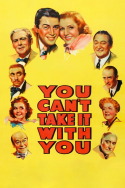
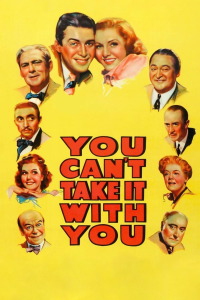
You Can't Take It With You is a screen adaptation of the Pulitzer Prize-winning Broadway play by Moss Hart and George S. Kaufman. It centers on the Sycamore household headed by Grandpa Vanderhof (Lionel Barrymore), a former businessman who proclaims that he once went up the elevator and then proceeded back down because he realized he never had any fun in that kind of life. In the household, everyone pretty much does what they please. Grandpa's daughter Penny Sycamore (Spring Byington) has become a novelist because someone mistakenly delivered a typewriter to to her home. Penny's husband Paul Sycamore (Samuel S. Hinds) makes firecrackers in the cellar with the help of Mr. DePinna (Halliwell Hobbes), an iceman who showed up one day at the doorstep of the Sycamores and never left. Their daughter, Essie (Ann Miller), is an amateurish ballet dancer who thinks of her dancing skills very highly, although her Russian teacher, Boris (Mischa Auer), expresses his thoughts of her skill as a simple phrase, "it steenks!" Essie's husband, Ed (Dub Taylor), is man who would much rather play his xylophone than work, spends most of his free time selling Essie's candy, wrapping each package in paper that is from a used printing press that dispenses anarchic slogans. The other daughter, and probably the most sane person in the entire household is Alice Sycamore (Jean Arthur) who is in love with the wealthy Tony Kirby (James Stewart). Tony proposes to marry Alice and decides to have his parents meet hers for dinner one night. Naturally, when the two families meet each other, the event is a disaster, eventually leading to the arrest of everyone in the household because Grandpa Vanderhof has not been paid his taxes.
Because Frank Capra has become more well-known for the fact that he directed It's a Wonderful Life, Mr. Smith Goes To Washington, and It Happened One Night, You Can't Take It With You has become a sort of minor classic. Although it isn't deserving of that title. It's much much better than it suggests. It has it's own charm and is quite often funny, it also has as much pathos and sentiment as Capra's later masterpiece It's a Wonderful Life. The script is very well written and it also has some of Frank Capra's best direction; his Oscar for Best Direction was very well deserved, the dinner scene and the courtroom scene were both excellent. The film also has many of the finest comic actors of the time including Spring Byington, Dub Taylor, and Mischa Auer. It also has two of the finest dramatic actors of the time in James Stewart and Lionel Barrymore. One thing that makes seeing this film interesting after having long ago seen It's a Wonderful Life is that Lionel Barrymore, who plays the sympathetic character Vanderhof, would later play the villainous Mr. Potter, a character very similar to Edward Arnold's character in You Can't Take It With You. I much rather prefer Barrymore in this film than It's a Wonderful Life but one can't deny that Potter is one of the screen's greatest villains. Along with It's a Wonderful Life, Mr. Smith Goes To Washington, and Mr. Deeds Goes To Town, this is one of the films that truly defines the adjective "Capraesque," the definition of the "American Dream." It's a film that I very much recommend watching. It's a great romance and a great screwball comedy that I think most will find it hard to not enjoy. 10/10.
This review of You Can't Take It with You (1938) was written by Ricardo O on 24 Feb 2011.
You Can't Take It with You has generally received very positive reviews.
Was this review helpful?