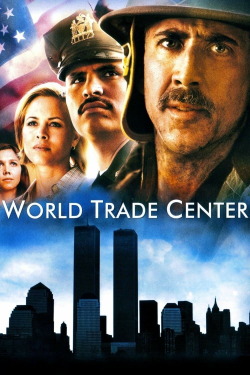
Review of World Trade Center (2006) by Cameron J — 10 Sep 2012
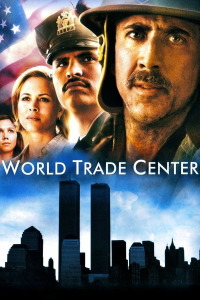
An Oliver Stone-directed and Nicolas Cage-starring film about 9/11, five years after 9/11. How could this possibly go wrong? Yeah, I figured if anyone was gonna have the guts to try something like this, then it would be the King of Controversy himself, yet, before this film came out and turned out to be really good and, every so surprisingly, relatively restrained, I'd imagine plenty of people were hoping that Stone wouldn't go this far, because the man couldn't even make a film about Alexander the Great without it being offensive, though not so much because of its subject matter, but rather because of its quality. Hey, forget you guys, I still really liked "Alexander", but I must admit that I really can't think of too good of a reason why in the world it was Oliver Stone, of all people, who made an Alexander the Great biopic, outside of the fact that they needed someone who could make an epic of that kind of grand subject matter real good and long, because as the three-and-a-half-hour conversational epic that was "JFK" definately proved, Stone isn't one to tighten things up too much. I guess that just goes to further prove how much more relatively restrained this film is from other Oliver Stone efforts (PG-13... Holy Hank Williams!), because this film really isn't that long, or at least not by Oliver Stone standards, seeing as how 130 minutes is still a pretty hefty length. Shoot, if Stone had his way, this film would be about three hours long, and really, I'm surprised he didn't gun for a director's cut of this or, well, any succeeding film, because if it was a 1990s, or, in the case of "Alexander", not very well-reviewed Oliver Stone film, you better believe that there was a director's cut of it out there. I don't know, maybe I'm just complaining so much because I wanted to stick with this film longer, because, say what you will about Oliver Stone, but the man knows how to make a good movie (*cough*like*cough*"Alex*cough*ander"*cough), though ones that are most certainly not without more than a fair share of flaws, and sure enough, while this film is more restrained, and even less flawed than other Stone efforts, it's not without its faults.
Oliver Stone takes some restraint with this film, or at least as much as he can, and presents no palpable agenda, but instead chooses to dramatically meditate upon those struggling to survive and those struggling with the horrors of uncertainty during 9/11, which is great and all, except for the fact that this film perhaps outstays its welcome. Sure, you can definately say that about the three-and-a-half-hour dialogue piece that was "JFK", yet that was one of those frenetic style pieces riddled to no end with intrigue, and seeing as how Stone has been doing so much of that over the years, people tend to forget that Stone has had his fair share of slow moments, and sure enough, with this film, slowness comes with restraint, for although this film's particularly slow spots aren't quite as consistent as those of "Platoon" or something, they remain prevalent enough to keep the film often moving at a sometimes limp pace, while leaving the film's being overlong to rise more to attention. This situation is at its worst during the development segment, which goes padded out through excess material and slowed nearly to a crawl by a dry, if not sometimes rather dull atmosphere, made all the worse by Oliver Stone's making a bit too sure that he gets clean across the point that he's pulling back with his portrayal of this extremely traumatic and relevant tragedy, by going so restrained that he ultimately leaves tension to fall flat, and the film itself to become rather distant, which isn't to say that I'd rather Stone bring in his usual freneticism and make this film almost offensively overbearing, but it is to say that the film disengagingly limps out during some of the most crucial expository moments. After the film picks up, it never again falls to the state of being that emotionally distant, or slow, or, for that matter, overdrawn, yet it rarely picks up all that much before it finds itself slowed back down by dry spells and dragging, as well as by Stone's continuing to be a bit too careful with this subject matter, no longer by keeping an emotional distance, but by sometimes distancing total genuineness from emotional resonance. For the most part, the film is fairly genuine with its emotional resonance, yet there are key points in which Stone manipulates atmosphere, less subtle spots in Andrea Berloff's screenplay and, of course, Craig Armstrong's score to drain the emotional resonance of subtlety, and at that moment, all of the story conventions and emotional tricks come to attention and further slow down the momentum of this film. For quite a few reasons that I'll touch upon later, I feel that Oliver Stone is a surprisingly good choice to direct this, yet in many ways, he doesn't entirely fit, not quite having as much subtlety as he should when it comes to resonance, nor having quite as much experience as he should when it comes to restraint, as he leaves the film to not quite bite as firmly as it could have and just kind of circle the drain. Of course, the point around which this film circles is still pretty high, for although this film doesn't hit quite as much as it should have, or even quite as much as a few other Oliver Stone efforts, Stone hits much more often than not and crafts a film that may have its flaws, but never descends beneath being rewarding as a dramatic piece, or, if nothing else, a stylistic piece.
With the overwhelming freneticism goes much quite a bit of the stylistic touches that make Oliver Stone's taste in style just so blasted good, and it doesn't help that the absence of a cinematographer as excellent as Robert Richardson is rather noticable, so of course the film isn't quite as visually stunning as other Stone efforts, nor is it even all that consistently striking, yet, when it's all said and done, it's hard for an Oliver Stone film to not look good, and sure enough, while he doesn't always deliver on the breathtaking goods, Seamus McGarvey never ceases to deliver on some certain degree of photographic sharpness, drawing handsome detail from color that, at the right moment, all but stops you cold. Of course, McGarvey's photography is perhaps at its most impressive during our moments with John McLoughlin and Will Jimeno under the debris of one of the towers, as McGarvey manages to keep everything tight and darkly lit, as well as gritty, thus making for many a neat shot that's both visually striking and immerses you in this intense setting. What further sells you on both the tension and emotion of those moments are leading men Nicolas Cage and Michael Peña, who deliver on the human depths, layers and emotional range needed to convey the frustrations, strength, fear and hope found within hopeful people trapped within seemingly hopeless situations, thus making them compelling leads, which isn't to say that the other members of this colorful cast of star talents don't deliver on engaging emotion and presence that defines the character this film is so heavily reliant upon. Of course, one of the biggest reasons why this film is so compelling is because the story is, of course, so strong, being structured with a few conventions by screenwriter Andrea Berloff, as well as with a few lapses in subtlety, courtesy of Oliver Stone's direction, but still having such weight and relevance behind it to compliment depth and humanity, thus making for an immensely engaging tale that brings this film to life, while the top-off that makes this film as compelling as it ultimately is comes from the man who executes such a worthy story, albeit in a flawed fashion, but generally with a lot of inspiration and in a fashion we're not used to seeing, though certainly welcome. Oliver Stone may be a little bit crazy, but he's not a monster, so of course he's taking some restraint with this subject matter, occasionally too much so, to the point of rendering the film a bit bland in its caution, yet generally to the point of gracing this film with the meditative depth and weight that is missing in many other Oliver Stone efforts and is very much needed in this film, though not quite at the total expense of Stone's audacity to present things with daring realism, thus making for a marriage between restraint and intensity that is both reasonably organic and certainly effective. Stone often takes a bit too much restraint in his portrayal of this tragedy, yet more often than not, he finds a fine balance that he rarely explores between intensity and subtlety, presenting intense situations with audacious grit in order to establish consequence and nerve-pinching tension, while generally manipulating restraint well enough to bond that intensity with the substance of the story in order for it to not only come off as not gratuitous, but supplementary to the emotional resonance of the film and effectiveness of the respectful and affectingly authentic tribute to those who suffered through the unthinkable. Of course, some of the most potent moments of effectiveness in this film are the ones in which Stone manages to not go too far with his manipulation of the genuine moments of drama, to where things are neither too unsubtle nor too distant, simply balanced in their genuineness, thus making for golden moments of piercing resonance that define this film, both as a compelling drama by its own right and as a tribute to survival and humanity during the darkest of times, with no real agenda, just the intention of crafting a poignant film, which is exactly what Stone crafts, for although this film isn't without its faults and ultimately stands to be more potent, it generally delivers on consistent compellingness and ultimately stands as a truly rewarding experience.
When it's all said and done, the film has its slow spots, and just enough to lose quite a bit of steam at times and leave you to notice just how overlong everything is, while faults in Stone's acts of restraint - which either go restrained to the point of being a touch emotionally distance, or emphatic to the point of being unsubtle, if not a bit sentimental - taint the film's consistent effectiveness, bring story conventions more to attention and ultimately help in leaving the final product to stand as not quite as thrilling or well-handled as it probably should be, yet still thrilling and well-handled, to a certain degree, nevertheless, boasting a strikingly clever visual style that's both handsome and supplementary to the grit of the film, as well as a myriad of emotionally-involved and profoundly human performances that bring the character aspects - upon which this film is so heavily reliant - to life, while Oliver Stone generally cuts through his mistakes and delivers on respectful restraint, married with audacious realism in order to deliver on both the potent intensity and sometimes penetratingly genuine emotional depth needed to bring this worthy story to life and leave "World Trade Center" to stand firm as a consistently compelling and ultimately rewarding disaster drama and tribute to those who faced the unthinkable with rewarding bravery and hope.
3/5 - Good.
This review of World Trade Center (2006) was written by Cameron J on 10 Sep 2012.
World Trade Center has generally received mixed reviews.
Was this review helpful?