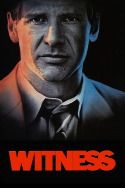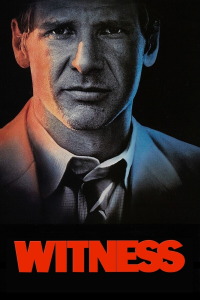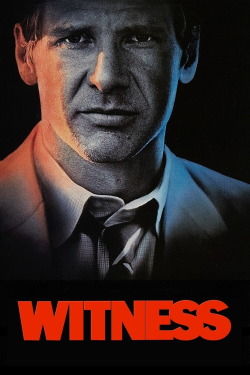
Review of Witness (1985) by Brett C — 11 Jun 2014
I first stumbled onto Witness during my days in high school where the class that I was in was forced to study and watch it. I never thought very highly of the film back then, thinking the film was average due to its lack of cosmetic excitement and being instead primarily concerned as cultural education. My interest in revisiting the film came when my sister, enrolled in the same high school as I was, has told me that they were learning this film in class and that she wanted to borrow it from the local library so she could study the film at home. Once I picked it up, I suddenly had an urge to watch it, hoping maybe the film would feel different now that my perspective of films have drastically changed, and at the same time hoping I could gain a sense of nostalgia when watching this, possibly bringing back great memories of being in that classroom. Now that I have seen it again, I can proudly say that this film is astonishing and has found itself a spot in my list of films that I consider to be the best in the medium.
Witness was written by Earl W. Wallace and William Kelley, with story contributions by Pamela Wallace. The writers have made a marvellous film that tells the story of John Book, a police officer working on a homicide case that involves a witness, a young Amish boy that needs to be protected. The film explores a number of themes that touches on culture, responsibility, innocence, and betrayal.
The film's exploration on culture is highly fascinating. It compares two different cultures that ultimately cannot work with another. When the two sides clash, the Amish and Western society, friction occurs as there seems to be a lack of understanding and the opinions and perspective that are already formed for one another are stereotypical. Though Weir's execution was a bit biased towards the Amish community, they still aren't seen as perfect individuals. Rachel, at the start of the film, sees the world outside of her community as dangerous and unhealthy, assuming everyone is immoral and nefarious. It was when she has spent more time with Book, that she realised there is more to them than she thought and that there is "good" in them, it was just clouded by their accepted attitude and way of life. The film at the first act of the film establishes Book's attitudes and lifestyle which is looked down upon by both Rachel and Sam, and the audience. Weir knew that by having the Amish characters present around Book, that it would make him seem like a lower person, and by doing this it allows his journey during the second act to become more dramatic and ultimately, effective.
Once Book is placed in the land of the Amish, conflict arises and his emotional and spiritual journey begins. The tension between the two cultures was handled effectively, ensuring that it doesn't lose track of the primary conflict, the corrupt policemen. The film allows us to see the cultural values and lifestyle of the Amish people and it does it in a way that doesn't feel strongly forced. Weir uses small and large situations to contrast the two different cultures, whether it would be a scene at a dinner table or a confrontation with the local English community members. He allows shows the audience that different cultures deal with situations in different ways and that sometimes it would be impossible to meet halfway due to the restrictions of that are placed in order to live that way of life. Book's journey definitely has affected him as we are treated to sides of him that weren't so apparent at the start of the film. He is seen as a much happier person and the work he has done for the day seems to do more good for others, than his profession as a policeman. Before shooting this film, I believe that Weir had a fascination of the Amish culture as the film does at times draw the line of indulgence, showing us small details of their lifestyle that don't necessarily push the plot forward, it's present for those who are truly interested in understanding the culture and to create this idea that their land of peace and harmony is what all cultures and communities should strive for; a place where one can feel safe and can rely on others for help when needed, to not be selfish and hurt others in order to get ahead. Each member of the community is an equal to each other, every individual has a role to play and they do perform it without any sense of ego or pride. If everyone in the world followed their ideals, there wouldn't be unnecessary and avoidable things like war and poverty.
The film also explores the theme of innocence through the young character, Samuel Lapp. His witness of a murder has affected, potentially scarred, him forever. That sense of trust and joy that he was surrounded and familiar with in the Amish community, have been fractured, forming a new growth that would have him see the world and the people in it much differently. The scene in the train station was brilliant as in that limited area alone, he was able to see and understand more of "our" world than most ever could. He mistakes others who wears similar clothing to his as members of his own, when in fact other religions and cultures also wear the same thing; he is introduced to new technology that, we from that society, have taken highly for granted; and ultimately it ends with him witnessing a murder that has the potential to completely change someone's life, how that would affect him is not fully explored in this film as one needs to see him grow in maturity to fully realize it's effect on him. The act of murder is something that is new and different to him as death in his community is commonly as they say "determined by god", so to see an individual take the life of someone of the same worth or level is life changing and can test one's faith. This is why Rachel is protective of her son as he is still in that stage in his life where everything he sees, listens, and touches can shape his life values which determines what he would be like when he is older.
The film's romance between Book and Rachel plays out very subtly as it sneaks up during the second act, starting with Book seeing Rachel sitting there across from him realising that she has been taking care of him this whole time. This plays around with the Florence Nightingale effect, where the patient starts to develop romantic feelings towards their carer, similar to what was demonstrated on Back to the Future between Marty and Lorraine. Rachel on the other hand started to develop her feelings after she witnesses Book performing carpentry, this scene also showed Rachel developing a small sense of lust for Book which I thought was a nice touch, as it made the relationship feel mature. The relationship between the two characters aren't just purely driven by romance, it is also driven by responsibility. The two are aware of the risks they would be taking in moving forward with the relationship and that if one acts on it they must be responsible for their actions and will demonstrate commitment to the decision that they would make. If Book stays with Rachel, he must commit himself and live within the Amish community; but if Rachel leaves with Book, then she would have to abandon her life with the community but at least she would be with the man she loves. The decision that determines the prognosis of the relationship is heavily influenced by Samuel. The boy has lost his father and Rachel is aware that the next man she ends up with must be a person that is willing to stay and raise the boy. Book contemplates throughout his stay on whether or not he is able to take responsibility for the child. Even though many people seem to complain on the way it concluded, I felt that the decision made at the end of the film was justified and appropriate.
The film's photography was handled by John Seale, who is known to have worked on well-known films like Rain Man and Dead Poets Society. I was impressed with the way Seale shot the film as he captures the essence of the film's two cultures very well. The first act of the film starts off by showing us the sense of harmony and beauty found in the fields of Amish Pennsylvania, giving us beautiful images of agriculture blowing in the wind as members of the Amish walk through it along with a gorgeous backdrop of a clear sky. The film then creates a contrast showing us the dirty and menacing look of the Philadelphia streets, which is filled with garbage and graffiti. This transition connects with the impression that our young Samuel also had with the change of scenery, this immediately allows the audience to empathise with his desire to go back to his safe and quiet home. Book's transition from the city to the country also demonstrated a big change in lighting; scenes at the start of the film tend to implement the three point lighting technique giving scenes a lack of intimacy and a higher sense of clarity. The film then moves onto the scenes in the Amish community that contains intimate scenes filled with shadow, using only one or two light sources to create that soft look that works well in creating the intimate mood particularly during romantic moments between Book and Rachel. The film also features drop dead gorgeous tracking and pans that are strong enough to convince one to give John Seale the Academy Award of Cinematography, just watch the opening credits if you're not convinced, but sadly he had stiff competition that year; fighting against Out of Africa, Ran, and The Color Purple.
The film's score was also amazing and it was composed by the legendary Maurice Jarre who has worked on great films like Lawrence of Arabia and Eyes Without A Face. Jarre uses the traditional orchestra style and infuses it with synthesizer-ish sounds that is popular in films during that era, I even first thought of Blade Runner when I heard the score. Jarre have used this futuristic artificial sound to contrast with the traditional side of the score, keeping in tone with the themes being explored during the film. At times they sound like the two distinct sounds clash one another trying to define the tone of the score, but eventually it mixes together beautifully, working together into building something beautiful. The track that plays during the barn scene alone is enough to make me a fan of Jarre's work.
Harrison Ford plays the film's lead protagonist, John Book, and he embodies the role perfectly and effortlessly. Book is a role that calls back to the other characters Ford has played, most notably Deckard, as we are presented with a strong and professional man who, along the way, falls for the film's leading lady. But Weir does play around and contradict the tough image that Ford has made for himself early in his career, delivering us a man who is capable of change by showing us a vulnerable side of the actor that is rarely seen in his previous films. Kelly McGillis plays the film's leading lady, an Amish woman who has given the role to care for Book in his stay with the community. She was fantastic in the role, not coming off as useless and always in reliance of the leading man to save her or make the choices for her. The character makes sure that the rules are being followed during Book's stay while at the same time displaying a sense of romantic vulnerability as the character has lost a significant figure in her life, her husband, and this requires her to become strong for her son while at the same time tending the empty void caused by the loss of her husband. The chemistry between the two actors was fantastic. Never at any point did I feel they were trying to out-act each other as they were under Weir's direction which only requires act as much as the scene needed and he was able to split the focus enough between the two actors, giving each one their moment to shine.
I am not even going to try and give this a thorough and proper conclusion as by now what I have said should have convinced you to give this try. I'll just leave it with this; Witness is one of the greatest American films of all time.
This review of Witness (1985) was written by Brett C on 11 Jun 2014.
Witness has generally received very positive reviews.
Was this review helpful?