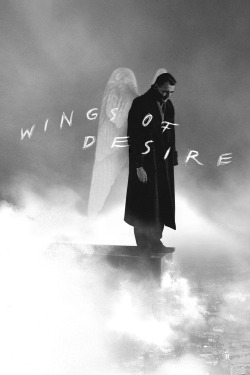
Review of Wings of Desire (1987) by Cameron J — 09 Aug 2012
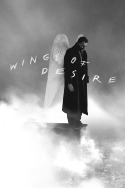
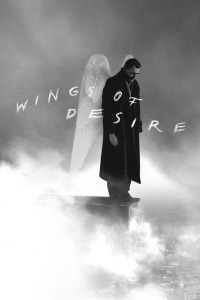
Before Bruno Ganz was Hitler, he was an angel, so I think that it's safe to say that he is a very diverse actor. Still, he's not the most diverse actor in the world, because he just can't get enough of being in full-on German films, even though he's Swiss, with a northern Italian mother. Yes, I'm well aware that Swiss borders on Germany, so it's pretty tight with the German culture, but really, Ganz wishes that he was born on the other side of that border, because he's a bit too celebratory of his culture's rather similar neighbor. Well, the German films he's in are the only ones that people remember, and plus, his name is Bruno Ganz, which is so German that it's not even Swiss anymore, so it's pretty clear that he was born to be a little bit more German than the average Swiss. Well, now that I think about it, maybe he's not so much a fan of Germany, as much as he's a fan of short drives - seeing as how this film is German and French, two cultures that are pretty much right there next to Switzerland -, but either way, it would appear as though Ganz is a good casting choice for this film, because he, much like the angel he portrays, is in a culture that looms over Germany, though isn't quite German, no matter how much he wishes he was. Well, either the Damiel character wants to be German or is upset about the harsh realities of life... or wants a sandwhich; it's kind of hard to keep up with subtitles sometimes. Hey, I may be rusty on my German... French, Turkish, Hebrew and Spanish (Thank goodness this film also has English segments, or else my head probably would have exploded), but I know a good film when I see it, and let me tell, this one, well, isn't even close, as it is a tremendous mess, yet one saved by what is good in this film, which may not be much, but is decidedly enough to save these wings from getting clipped (Whatever that's supposed to mean).
Henri Alekan's cinematography has been praised as brilliant, and, of course, it really isn't all that good, largely because the artistry within the photography goes drowned out by the mostly black-and-white style. However, black-and-white or not, there's a consistent level of attractiveness in Alekan's photography, and much of it comes from quite a few slickly clever tracking shots that catch your eye and give you a dazzling view of the environment, which is something to be said about the few occasions in which the photography does don color, and handsome color at that. Outside of Alekan, the other man who breathes essence into this film and gives you a certain degree of feel for the environment is, of course, leading man Bruno Ganz, who has very little to do, being asked to do not much more than be fascinated, awed and often disturbed by the human world, but boy, does Ganz know how to do that. The Damiel character's visit of the mortal world gives him profound insight into the hearts, minds and souls of humanity, and Ganz conveys this poignantly and with quite a few layers, capturing the wonderment, sympathy, affections, fear and anguish of a spirit who uncovers the depths of a world and finds both the very good and the extremely bad. Alkan's and Ganz's artistic efforts are held back, but impressive enough to sustain your attention, to a certain degree, while director, co-director and co-writer Wim Wenders makes his ambitions palpable, and respectably so, thus creating a sense of charm that's not especially intense, but does go quite a ways in the long run. As I'll get into later, this charm often descends into a bit of arrogance, but on the whole, Wenders' ambitions are commendable, and fulfilled just enough to save this film. However, for every fulfilled ambition, there are every so many that go unfulfilled, and quite considerably, for although the film never collapses under the overwheming weight of its mistakes, it still makes so many mistakes, and just enough for it to fall as unrewarding, or if nothing else, blandness incarnated.
Okay, maybe the film isn't exactly blandness incarnated, or even quite as boring as I was expecting, yet make no mistake, it is dull, as you would expect a meditative film to be, and woah boy, is this film very much a meditative film. The fact of the matter is that the film has nearly no plot and is primarily looking to analyze humanity with style and lyricism, which is respectable and all, but ever so rarely works, and sure as sunshine doesn't work here, as the film is too plotless and too lyrical, heavily meditating upon nothing but nothing for excessively long periods of time, thus leaving the film's artistry to overbear considerably, which is a situation made worse by the histrionic voice-overs, superfluous on-the-spot dialogue pieces and music that amplify the film's overbearing artistry. It doesn't take long for this type of meditative storytelling's effectiveness to run thin, and it all but takes over most of the film, and after a while of this, the artistry doesn't simply dull the film down, but drenches it in pretense, as well as a lack of focus that leaves substance to dilute, thus betraying the film's intentions. These overlong moments of meditativeness certainly add a degree of unevenness in the film once traditional storytelling falls into play, at which point, you're jarred into a different storytelling method so messily that you hardly even notice the transition, thus leaving the ever so few moments of plot - such as it is - to fall flat. Still, where we're dealing with too much artistry or following an messily handled "plot", there is a consistent element throughout this film, and that is, of course, slowness, which renders the film all too often rather bland, and here and there, just plain all-out boring, thus leaving the final product to further lose momentum, something that it hardly has any of to begin with and progressively loses more and more of as things go along. This film is what is it, it's just that what it is is a member of a flawed film type: the mediative film, and on that level, it's still flawed as all get-out, being too meditative, too plotless and too uneven when it does incorporate plot, and when you couple all of that with the kind of overstylizing and slowness that practically defines meditative filmmaking, what you're ultimately left with is a very average meditative film, complete with immense underwhelmingness, but also so many other flaws that, by the end, it descends below average and rests as utterly mediocre, if not borderline bull. Considering the fair couple of aspects in it that are respectable, the final product could never be bad, and while it is never genuinely good, I was willing to stick with it, but after a while of sitting through all of its pretentious, monotonously overbearing over-artistry and scarce substance, I found that I could no longer get behind it, and while the final product is, again, not bad, by the end, I found myself tremendously underwhelmed, considerably unrewarded and rather relieved that the film was over.
In the end, the film's artistry is undeniably handsome, and with Bruno Ganz's underwritten yet generally inspired performance and Wim Wenders' mostly charming ambition breathing further life into this film, what we're ultimately left with is a final product that can never be bad, yet can, at the same time, never be anything more than underwhelming, until it becomes incapable of transcending total mediocrity, being tainted by overbearing artistry and meditation that severely dulls down and takes over the film, drenching it in a kind of arrogance that leaves what substance there is to fall flat, and with very little dynamicity or plot available for this film to transcend its missteps, more and more steam goes lost, never to be recovered, until "Wings of Desire" finally falls limp as an unrewarding bore that has too many respectable aspects to be utterly dismissed, though not enough for the final product to raise above extreme blandness.
2/5 - Medicore.
This review of Wings of Desire (1987) was written by Cameron J on 09 Aug 2012.
Wings of Desire has generally received very positive reviews.
Was this review helpful?