Review of Wildlife (2018) by Bertaut1 — 15 Nov 2018
Old-fashioned filmmaking with a progressive theme.
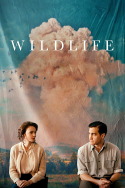
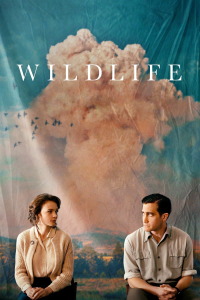
The directorial debut of actor Paul Dano, Wildlife is based on the 1990 novel by Richard Ford, and is written for the screen by Dano and Zoe Kazan. Looking at the implosion of a family, although Wildlife is a piece of remarkably nostalgic filmmaking, it tells a somewhat progressive story, demonstrating the uncertainty with which second-wave feminism initially manifested itself at grassroots level. Although it's essentially a character study, the film also suggests the 1950s way of life, built around the perfect nuclear family wherein a wife must be subservient to her husband, is about to change.
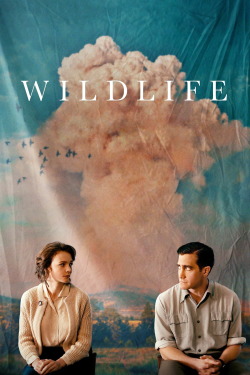
Set in Great Falls, Montana in 1960, the film tells the story of the peripatetic Brinson family; Jerry (Jake Gyllenhaal), Jeannette (Carey Mulligan), and 14-year-old Joe (Ed Oxenbould). When Jerry loses his job and takes off in a misguided attempt to reaffirm his masculinity by fighting a forest fire, something is awoken in Jeanette, who, for the first time, admits to herself that she has become deeply unhappy. Overnight, her behaviour changes dramatically, as she rebels against her domesticity, determined to forge a new identity. Importantly, the film is set three years prior to Betty Friedan's ground-breaking The Feminine Mystique (1963), which redefined the parameters of all gender-based topics. Initially, Jeanette is depicted as a quintessential 1950s wife and mother; she cooks, cleans, washes the clothes, does the dishes, sees that Joe attend to his homework, and when Jerry loses his job, it is Jeanette who goes out looking for work for both of them. She knows that her role in this patriarchal society is to hold the family together, but it's a role that's nothing like she thought it would be. Although she and Jerry seem to love one another, or they certainly used to, she feels trapped by her domestic situation. Making a conscious decision to stop performing the role delegated by men, just as many of the female population of the western hemisphere would be asking over the next ten years, she wants to know, "is this all there is?" In this sense, she recalls Nora Helmer from Henrik Ibsen's A Doll's House (1879) or any number of Tennessee Williams heroines - a woman who wakes up to find she has become deeply unhappy despite attaining everything she once wanted.
Dano's directorial work is subtle yet sophisticated. For example, on occasion he has characters walk off-screen to speak, whilst keeping the camera trained on Joe as he tries to listen, with the dialogue barely perceptible from just off the edge of the frame. As well as being an excellent use of off-screen space, something you don't see too often, this technique ties us rigidly to Joe's POV early on. Another very nice piece of direction is an early montage cutting between Jeanette riding her bike, Jerry driving the car, and Joe riding the bus, in which each character is facing a different direction, each in isolation from the others. It's basic cinematic shorthand, showing instead of telling, but it's very well done.
The acting, as you would expect, is universally superb. On paper, Jeanette and Warren Miller (a superb Bill Camp), an older man who becomes romantically interested in her, are very much the villains of the piece, but Mulligan and Camp's performances are so full of warmth that you can't look at them as antagonists. When she starts drunkenly dancing with Joe at Miller's house, the scene is deeply uncomfortable, but Mulligan's performance is such that we don't condemn her, at least, not completely. She never allows the audience to lose sight of the fact that although she is behaving rather poorly, she is a prisoner reacting against her confinement.
Of course, there are a few problems. Essentially a tale of marital angst, the narrative is not especially original - we've seen this story before, and for all the craft on display, Dano never really manages to say anything new Additionally, his measured direction is also too good in places - everything is so ordered, neat, and trim, that at times, the milieu doesn't seem lived-in, but more an abstract concept of what the period was like.
On the one hand, Wildlife is about how society was changing in 1960, and on the other, about how that change manifests itself within the Brinson family. Yes, it's another "death of the American dream" story in a long line of such films, but here, the focus is, for the most part, on character rather than theme, with Jeanette functioning in kind of a synecdochical manner; our specific entry point, she is the individual that facilitates an examination of the masses. And yes, Dano may take his eye off the ball a couple of times, with a somewhat too picture-postcard perfection, but all in all, this is an excellent directorial debut.
This review of Wildlife (2018) was written by Bertaut1 on 15 Nov 2018.
Wildlife has generally received positive reviews.
Was this review helpful?