Review of Widows (2018) by Bertaut1 — 25 Nov 2018
Looks amazing, but tries to cover too many issues, and the plot is laughable.
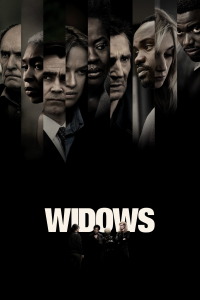
Arguably the most ambitious heist movie since Heat (1995), just as did Michael Mann's epic, Widows has aspirations far beyond the limits of its genre. Written by Steve McQueen and Gillian Flynn, and directed by McQueen, the film is based on the 1983 ITV series, written by Lynda La Plante. Operating firmly within a genre framework, it tries to filter the basic heist template through a feminist pseudo-#MeToo prism, taking in political corruption, police homicide, Black Lives Matter, institutional racism, American gun culture, hegemonic masculinity, and the importance of wealth. The problem, however, is that it tries to pack far too much into too short a space of time. Whilst I can certainly appreciate and celebrate how progressive the narrative is, placing a black woman at the centre of a genre traditionally dominated by white men, the film still needs to work as a genre piece. And this is where Widows fails most egregiously.
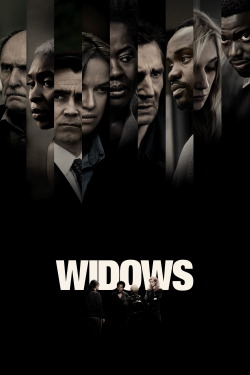
Widows tells the story of a team of women - Veronica (Viola Davis), Linda (Michelle Rodriguez, Alice (Elizabeth Debicki), and Belle (Cynthia Erivo) - who attempt to pull off a heist originally planned by their now deceased husbands, and set against the backdrop of an election for the alderman of Chicago's 18th Ward, contested by Jack Mulligan (Colin Farrell) and Jamal Manning (Brian Tyree Henry).
McQueen and Flynn use the material as a vehicle for a racially-tinted critique of both powerful men and the corrupt systems that enable them. By creating a canvas depicting life at various social strata in Chicago - from the inherited white privilege of Jack to the poor black neighbourhoods of Jamal to the "everything is a transaction" philosophy of high-powered real-estate - the film attempts to address a plethora of racial, political, and gender issues. And herein lies the problem. Rather than trying to deal with one or two core issues, it instead tries to deal with upwards of about seven, and ends up saying little of relevance about any.
Which is not to say, of course, that none of the themes are foregrounded. Gender, for example, is built into the plot, especially in relation to notions of subverting the patriarchal status quo. As they prepare the heist, Veronica tells the team that their greatest strength is the element of surprise, because "no one thinks we have the balls to pull this off". Later, she reminds them they have "to look and move like a team of men". Whilst on the heist itself, they have to disguise their voices so no one realises they're women.
Another theme is macroeconomics. An excellent shot in this respect is when Jack and his assistant Siobhan (Molly Kunz) travel from a poor black neighbourhood to an affluent white suburb. Filmed in a single-take, Sean Bobbitt's camera remains fixed on the car's bonnet, with only a portion of the windshield and one of the side-mirrors visible. Meanwhile, we see the city change in real-time in the background, taking only a couple of minutes to go from skid row to millionaire's row, forcing the audience to acknowledge how thin the line is, geographically speaking, between rich and poor.
For me though, the whole thing was underwhelming and predictable, with a twist that's as ridiculous as they come, and a narrative that relies far too much on coincidence and movie-logic. The widows need to disguise their voices on the job? Good thing that Belle's daughter has a gizmo that does exactly that! A highly successful modern-day thief who writes everything down longhand? A team of people (irrespective of gender and race) who teach themselves how to pull off a major heist in a matter of weeks? For all its real-world social and political concerns, I never once bought into the premise that these four women could actually pull this off, and that undermines everything else.
Just because a film addresses certain themes doesn't mean it earns a free pass ("look, Hollywood cares about poor people; we better not criticise the ridiculous plot"), and from a narrative standpoint, Widows is pretty ludicrous. With the plot often feeling contorted to support the themes, rather than the themes arising from the plot, McQueen's didactic concerns overridden his storytelling. More a vehicle for protestation than anything else, because the central heist narrative can't stand on its own, the very real issues that the film addresses are flattened and neutered. The socio-political commentary, for the most part, is never really integrated into the narrative - so you end up with a film that feels like its preaching at you rather than talking to you. If it had embraced its genre a bit more, and eased back on the homiletics, it would have worked much better.
This review of Widows (2018) was written by Bertaut1 on 25 Nov 2018.
Widows has generally received positive reviews.
Was this review helpful?