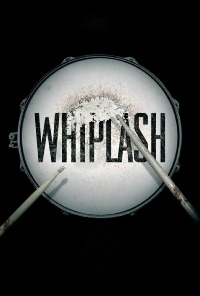
Review of Whiplash (2014) by Therocksbarney — 15 Jan 2015
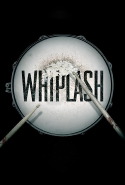
“Whiplash” is initially a captivating study about what it takes to be great and what is needed to become great, and it ends as a captivating study about what it is to be great. Miles Teller (playing Andrew Neiman) and J.K. Simmons (playing Terence Fletcher) are both absolutely fantastic in their respective roles and their performances are on par with those I loved witnessing in “Birdman” and they fit perfectly, as “Birdman”’s cast did with that films respective themes, with what “Whiplash” is all about.
Greatness, as I mentioned earlier, is what “Whiplash” is all about. Teller’s and Simmons’ drive reflect this, and it comes through in their characters. Andrew wants to be “one of the greats” and Fletcher wants to be the man to coach one of them. Yet this is certainly the absolute minimum of what I gathered about this film before I saw it. This kind of drive is in motion about halfway through the film, and “Whiplash” has several twists and turns in it before it finishes. Teller and Simmons develop extremely complex characters and what you come to realise is that what makes them complex is their drive. Andrew for example is an initially very easy character to understand and in some ways, to relate to. We’ve all wanted to be better and get great at something. But what takes “Whiplash” in a different direction from the one where we see Andrew asking the girl behind the counter at the cinema out is Fletcher. He pushes Andrew beyond “what is expected of him”. Watching Teller develop Andrew as a character is a fun ride although Fletcher swearing, slapping and throwing cymbals at him is not so much, but it’s all for a reason.
But is it necessary? Fletcher believes so, calling it “an absolute necessity” in a scene where he seems to reveal himself as the grand villain, right beneath our noses this whole time. “Whiplash” asks these questions and it’s almost as if the film sprouted from them, not that they came up and were developed as the film continued to shoot. Andrew and Fletcher’s relationship is an attempt at answering them, leaving it up to you whether the answers “Whiplash” puts forward are right or wrong. Are Fletchers methods the way forward? Could Andrew harness his talent and be great without Fletcher? Did Andrew have the talent to do such a thing? Is talent even a realistic construct? “Whiplash” asks all of these questions, and puts forward its answers here.
Of course Teller and Simmons are fantastic too and deserve the nominations they are getting. Simmons character is particularly well developed (and funny too) and again it is a joy to witness Teller’s development. Neither character can be described really. Simmons seems describable but there seems to be something beneath him that I couldn’t figure out and in one scene we see that he isn’t quite as tough as he seems to be. What surprises me though is how Simmons keeps winning awards and Teller does not. For me they are both brilliant and one does not outdo the other because in “Whiplash” you come to think of them as entirely separate individuals, and their relationship is instead an eternal one in regards to how it can be applied to several examples and asked whether it is one required for greatness.
What’s also worth mentioning is the films score. It’s brilliant. It really is just a complete appraisal of Jazz. Drums of course predominantly feature and although the score is not as good as “Birdman”s, again heavily featuring drums, the reason it is not is because the score in “Whiplash” is external and in “Birdman”, it’s internal, inside the cast’s heads. It has meaning and something to do with the film whereas in “Whiplash” it’s almost as if Jazz music and the drums in this case are being used as a way by which we can see Andrew become great. It’s another eternal concept of sorts.
“Whiplash” is definitely worth seeing and although I wouldn’t quite call it the film of the year, it certainly puts forward a good performance in several categories and has done well considering it was shot in 19 days and adapted from a short film. Most should come out saying “Whiplash” was a good film. It’s tense and has some good performances in it and asks questions, and talks about, greatness. It’s visually tense as well, helped along by slow-motion shots of sweat bouncing up and down off cymbals and blood dripping from a hand. Because of this, it was an utter relief, and felt hard-earned in some respects, to see the films ending.
This review of Whiplash (2014) was written by Therocksbarney on 15 Jan 2015.
Whiplash has generally received very positive reviews.
Was this review helpful?