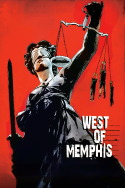
Review of West of Memphis (2012) by Artfully Bedraggled F — 07 Jan 2013
By now we know the case of the West Memphis Three. We know how three teenagers were convicted and tried for the murders of three boys back in 1994, murders which were set to have been produced as part of a satanic ritual and which got one of the accused a death sentence and the other two life sentences. After having served over 18 years in prison, they were released. Youâ(TM)ve heard about this case as much as you have mostly because people ranging from Johnny Depp to Eddie Vedder were outspoken about their beliefs of the innocence of these three men, and because three terrific HBO documentaries have been made about them.
Paradise Lost: The Child Murders at Robin Hood Hills came out in 1996, then came Paradise Lost 2: Revelations in 2000, and then just in 2011 we had Paradise Lost 3: Purgatory, a film which was supposed to be another installment with the three men in prison but was reshaped while in production, after the release of the West Memphis Three, to serve as a definitive closing chapter to their saga. Itâ(TM)s believed by many that had it not been for filmmakers Joe Berlinger and Bruce Sinofsky, who were in charge of those films, the case of these three men wouldnâ(TM)t be nearly as notorious and the support that raged for their innocence wouldnâ(TM)t have been nearly as great, and thereâ(TM)s a good chance theyâ(TM)d still be in prison.
Now thereâ(TM)s a new film about them, directed by Amy Berg, who made the Academy Award-nominated documentary Deliver Us from Evil (one of the very best docs Iâ(TM)ve ever seen), and produced both by Damien Echols, one of the actual West Memphis Three, as well as Peter Jackson, the director of The Lord of the Rings films whoâ(TM)s another one of the big names who was out there supporting the innocence of the trio.
Let me just say this is certainly one of the very best documentaries of 2012. It tells the story we know so well by now, from the beginnings of the case, to the trials, to the eventual release, but it does so with truly unprecedented access. Not only because itâ(TM)s told to us by the people who lived it, but also because weâ(TM)re given this brilliantly detailed look into the defense, seeing how the research worked and how the process went down. Moreover, West of Memphis shines a light on Terry Hobbs, the stepfather of one of the murdered children, making him a potential new suspect due to evidence and confessions made by those around him.
The Paradise Lost movies are, of course, tremendous, and a big part of me genuinely believes the West Memphis Three may still be in prison were it not for the attention those films brought to their case, but West of Memphis, giving us the whole story in two and a half hours and constructing it after the storyâ(TM)s ended and not as itâ(TM)s happening makes for an equally compelling view of a crime that haunted the American South for two decades. Itâ(TM)s a story about a horrific failure in the justice system, about the police being incompetent and about prosecutors not wanting to listen to evidence found in a privately funded investigation. Using the word enraging to describe this doesnâ(TM)t really cut it.
Itâ(TM)s made with so much love, and itâ(TM)s so nuanced and has such a powerful kick that I believe this should be necessary viewing, really. And I genuinely mean that this is a film made out of love; you get to hear from people who spent two decades trying to free innocent men, and you do so knowing that their efforts paid off. Thatâ(TM)s inspiring, knowing that it paid off, but itâ(TM)s also horribly infuriating because yes, this story may have had a happy ending, but this story never should have happened in the first place.
Seeing Lorri Davis is one of the only truly happy sights of this movie, and goes to show you the love that went into it all. A New York landscape architect who became infuriated when she heard about the case in 1996 and started corresponding with Mr. Echols, the man the film focusses the most on. They eventually got married in 1999, and she started sending him books, which is the reason why when you hear Mr. Echols, who pretty much grew up in poverty, he sounds so articulate and smart. That the love and conviction of this woman paid off in her now living with her husband in freedom is fantastic.
Something that really gets me going about this whole saga is that the justice system allowed them to walk free only if they accepted an Alford plea, which means that they reassert their innocence while still recognizing that thereâ(TM)s enough evidence to convict them. Itâ(TM)s basically the prosecution saying âYes, we were wrong, but look, even they acknowledge we had all the evidence to think we were rightâ?. That this happens in a justice system, and, as evidenced by The Central Park Five, another incendiary documentary from 2012, that it happens so often, is something that is just tremendously horrifying.
Still, this is a film thatâ(TM)s enraging more than anything else. Yes, they were freed. But only after years of huge publicity to their case, and honestly, the amount of money that was spent in legal and forensic activities is one that only a case that was that notorious could have gotten. You canâ(TM)t help but think about how many other gross miscarriages of justice will be left uncovered because they donâ(TM)t have the outlet to be let known, and thus the funds to have the wrongs righted. Another thing thatâ(TM)s infuriating is the fact that even with new evidence that warrants a trial to find out the real killer, the justice system doesnâ(TM)t want anything to do with it, it seems like theyâ(TM)re more than fine with a case as notorious as this being closed off in such a cluster-fuck way.
So, should you watch West of Memphis or the Paradise Lost films? Well, both, really. This one, because itâ(TM)s shorter, tells the story more cleanly and more concisely, with the advantage of hindsight; the Paradise Lost flicks are as amazing and as a landmarks docs as they are because you get to know these people and these places in some great ways, and because theyâ(TM)re the ones that got this whole thing rolling. West of Memphis is great though, it has a ton of terrific research and itâ(TM)s constructed tremendously and argued for brilliantly, certainly one of 2012â²s best documentaries.
This review of West of Memphis (2012) was written by Artfully Bedraggled F on 07 Jan 2013.
West of Memphis has generally received very positive reviews.
Was this review helpful?