Review of Watership Down (1978) by Genaro C — 26 Jun 2013
Because the notion that animated films are specifically made for children is so prevalent, it is rather easy for them to be deceptive. Take Watership Down, for example, a film that does not give any initial impression of its nature, based on its premise anyway. Certainly unusual amongst animated fare, this is an unflinching tale of survival and the difficulties of finding a new home, specifically for rabbits. Originating in Britain, it is largely unknown in the United States but has managed to garner some critical acclaim, notably from film historian Leonard Maltin.
The opening sequence of the film is truly inspired, possessing the type of animation style that complements short stories and, if my memory serves me right, has proven to be effective on PBS. It outlines the mythos and background of the film and establishes the role of the rabbits in their world. Everything following that has a predominant watercolor style, producing images that actually rival those seen in Disney's Bambi, although the animation of the rabbits themselves is a mixed bag because too many of them have no distinctive features. As a result, the only ones that the audience can really be concerned with are Hazel, the leader, Fiver, the inexplicable seer, and Bigwig, the brawn.
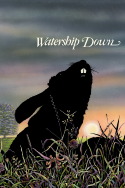
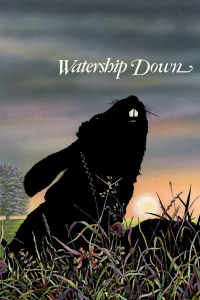
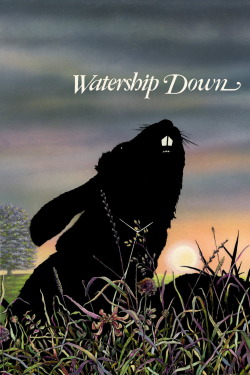
At its heart this is an adventure story, which is not really unusual for an animated film but, as anyone who has seen it will affirm, there is an inordinate degree of brutality, usually in the form of bloody death and claw marks. This seems to be what imbeds the film in peoples' memories and gives it the sense of ambition and boldness. However, I found it to be ineffective and done only for the purpose of simple shocks. The thing is there is a quite noticeable tonal inconsistency that prevents the amount of death and violence from being truly potent, instead coming across as out of place. The cover of the movie gives the impression that this is a brooding and atmospheric film, but much of it is too bright and not sufficiently dark in tone to achieve that. As a result, some of the threats, like the rival clan of rabbits, come across as crazy cartoon creations than genuinely menacing enemies. For illustrative purposes, watch Clayton from "Tarzan" and then watch Gaston from "Beauty and the Beast" and consider the difference. The most effective death in the movie actually comes early on, and interestingly does not rely on blood or violence, but on tension and suddenness. It occurs when the rabbit Violet ventures out into the open to feed on some plant, and is then snatched by a hawk. The best thing about this scene is that it does not even show the bird grabbing the rabbit. It builds tension and suddenly cuts to Fiver in shock, watching the spot where it all happened. It conveys the reality of danger in the wilderness more effectively than any other scene in the movie.
That's not to say that there are no other impressive moments in the film. While I did not find the sequences involving the enemy rabbits, particularly General Woundwort, to be harrowing, the events leading to their introduction include a very grim recounting of the destruction of the main rabbits' original home and a failed infiltration of a farmer's shack. But moments like these are not very common within the film, and adding that fact to the difficulty the film creates in developing a connection between the characters and the audience hampers its strength. It makes me wonder: if you are bold enough to incorporate such violence in a cartoon, why bother making it kid friendly at all? Why not go all the way and allow it to be brooding and serious in tone? Take, for example, Don Bluth's The Secret of NIMH, which still manages to appeal to children, but maintains a consistent maturity in its tone not because of brutality but because of the atmosphere and even some intensity. On the other hand, Hayao Miyazaki's Princess Mononoke is another animated effort that also incorporates a greater degree of violence, the difference being that it has a complete idea of what it is intended to be. It embraces its maturity and does not hide the fact that it is aimed at older audiences.
I rented Watership Down fully expecting to like it, and even though I ultimately did, it did not deliver exactly what its reputation promises. It needs a more menacing villain and more well defined characters, but nonetheless it remains a unique entry in this genre. While I do not mean to come across as presumptuous in saying this, the film could seriously benefit from a remake. If it were done with some improved animation and clarity, and more of an effort to create suspense and an overall brooding feel one might produce a stand-out feature at a time that has all but forgotten the appeal of traditional animation.
This review of Watership Down (1978) was written by Genaro C on 26 Jun 2013.
Watership Down has generally received very positive reviews.
Was this review helpful?