Review of Water (2005) by Sandeep S — 31 May 2008
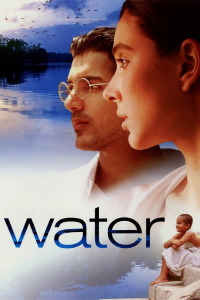
The movie 'Water' was very disturbing to me. I have utmost respect for director Deepa Mehta, she is talented BUT this film was an awful and over sensationalised. In 'Water' Deepa Mehta addresses one region, one aspect and one specific group of widows. It is very disappointing that Deepa Mehta generalizes this movie as the plight of ALL Indian WIDOWS (and in typical fashion, western audiences are again made to think that Indian culture is primitive and cruel).Four questions: 1) What was Deepa Mehta's message in this movie to the Indian & non-Indian audience? 2) Where does Deepa Mehta get the statistics that there are, 34 million Indian widows still living in such conditions in India? 3) Why does Deepa Mehta portray SETH Dwarakanath (or something like that) as a Brahmin? Since when were Seths Brahmins? Is she a Brahmin hater? If so, why? 4) Why is Deepa Mehta quoting 'Manu Smritis'? Isn't nonsense like that best forgotten? No one talks about Manu's scripts anymore. No one quotes Manu anymore. Why then is Deepa Mehta trying to glorify his scripts(in a negative way) in today's day and age? do agree with Deepa Mehta's portrayal of atrocities inflicted on the poor Indian widows. I do sympathize with their sufferings. Such as: The one meal a day; banned from sweets and fried food; forced to sleep on a straw mat on the floor; shaving the head; thin cotton white or maroon (South India) sari without blouse or petticoat; priests, men & married woman insulting the already suffering widows like, in the movie when the priest tells Seema Biswas not to cast her ill- fated shadow on the new bride; male chauvinism; etc.
These atrocities and extremities WERE inflicted on ALL the widows, regardless of caste, creed, education or affluence. The widows had to work for the entire household constituting joint family. They had to cook the special sweets and fried food but were not allowed to eat it. They would dress all the married women with pretty saris, jewelry, 'bindi' and fragrant flowers but were themselves not allowed to enjoy any of these. In addition to men mistreating and abusing women, women themselves treated the sorry widows very badly.
I DETEST all these bad things done to the widows of bygone years. But the film does not give out that message. Plus, there aren't that many widows in India today whose head is shaved off, as compared to the times of early to middle 1900s. So, India as a whole I guess is evolving, though slowly (but it is it seems).
This review of Water (2005) was written by Sandeep S on 31 May 2008.
Water has generally received very positive reviews.
Was this review helpful?