Review of Wall Street: Money Never Sleeps (2010) by Stephanie P — 20 Mar 2011
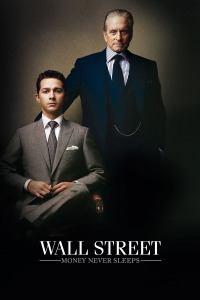
For the most part I almost always think it is a bad idea to do remakes or sequels to great films. Films like Wall Street (1987) or Chinatown (1974) are greats but they are stand alone entities. What made them great doesn't always translate years later and the second film suffers by comparison. That said, Wall Street: Money Never Sleeps (2010) was something I felt had a chance to be great, because it had a chance to really make a commentary on what our country has and is going through economically and financially. So what does this film's narrative do then? It brilliantly goes inside the financial crisis and lays it out for the viewer in a way that is easily understood and digested. But then it stops. Other than the obvious criminal implications for Bretton James (Josh Brolin), the film makes no attempt to comment on the consequences of our financial systems. It could comment on the people and families that have been devastated, but it doesn't. It could talk about the precipitous position our country still straddles but again, doesn't. It is these commentaries that make a film great and here the narrative fails.
As to the relationships in the film, that is done very well. Gordon Gekko's (Michael Douglas) relationship to his daughter and his rehabilitation for his crimes are handled masterfully. The relationship between Jake More (Shia LeBouef) and Winnie Gekko (Carey Mulligan) and his rivalry with James really shine and drive the film onward. There is a rather large caveat to this though.
Oliver Stone is a brilliant director and he has made some masterpiece films. But watching this film I have to wonder what he was doing. There were several aspects which drove me mad while watching. First, the editing. The transitions were abrupt and confusing. Many times they made no sense whatsoever, transitioning between two completely divergent sequences. And then there were several times when they tried doing a fast paced edit, some split screen edits and even once a superimposition edit that just were done very poorly. I did not agree with these choices at all. Next, the camera work. One of the first things we are taught at film school is the 180 degree rule. Did Stone just completely forget this? And what was with the abrupt pans and circling around his actors time after time? Finally, I'm fine with having David Byrne do the main song. But to have that song play repeatedly throughout the film? All these things serve to detract from the film while you're viewing it.
Finally the acting. I must say I rather liked it all. Normally I can't get behind LeBeouf but he was rather likable in the main role. Douglas was great, especially when he transferred back to the old Gekko with slick hair and expensive suits. Mulligan was gorgeous and exquisite and the comparisons to Audrey Hepburn are justified. And Brolin taking the reins from Gekko and being the source of all that is evil for the film, genius. He is an actor that is getting better with each role.
This film could have been great, had some great moments and performances but ultimately falls short of everything it could be. Too bad.
This review of Wall Street: Money Never Sleeps (2010) was written by Stephanie P on 20 Mar 2011.
Wall Street: Money Never Sleeps has generally received mixed reviews.
Was this review helpful?