Review of Walkabout (1971) by Benjamin H — 26 May 2008
[b]Walkabout (1971) - 8.2/10[/b].
Director - Nicolas Roeg.
Starring - Jenny Agutter, Lucien John, David Gulpilil, John Meillon.
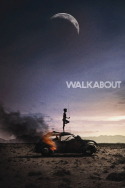
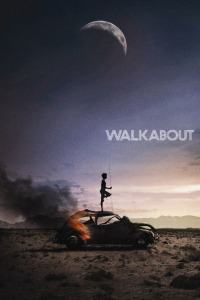
A father, brother and sister (John Meillon, Lucien John and Jenny Agutter) leave the city for a picnic in the Australian outback in the unusual drama [i]Walkabout[/i]. As the sister is setting up for the picnic, the father blows up the car and commits suicide, leaving the teenaged sister and her six year old brother stranded in the middle of a desert. As they try to find help (and any semblance of civilization), nature's hard reality begins taking it's toll. Hungry and thirsty, they encounter an Aborigine boy (David Gulpilil) who helps them find water in addition to hunting for food. He joins the brother and sister as they journey through the vast outback.
[i]Walkabout[/i] is anything but conventional. The star isn't one of the actors, instead it's Nicolas Roeg's camera. And although there is a plot, it's a minimal one that offers a basic set-up for the visual story that unfolds. In fact the dialogue is rather sparse. The viewer (like the two kids) doesn't understand the Aborigine boy, but like them we put our trust in him. What follows is a beautiful, haunting and even tragic journey captured by the watchful eye of Roeg. The dialogue may be sparse, but the symbolism and themes Roeg explores are anything but sparse. Obviously we have the man versus nature thing going on here. But we also have a man versus man theme going on, in this case the civilized white Europeans enchroaching on the black native Aborigines, which of course happened in America 350 or so years ago.
Of course the most important aspect of the film is the visual storytelling and the camera work by Roeg (also the cinematographer) is outstanding. He uses light so very well, capturing magnificent silohuettes and sunsets and using the vast landscape to it's fullest. And Roeg never met a lizard he didn't like! But the camera work goes beyond being pretty, it also is used to emphasize themes. The many shots of carcasses is one example (particularly emphasized with the white "sports' hunter) of man versus nature. The way he shoots the Aborigine boy hunting (for survival, not sport) is quite different that the way he shoots a white hunter. My favorite camera work is at the abandoned shack where Roeg uses light and shadow magnificently to capture a scene that had a decidedly cat and mouse feel to it. Brilliant! Obviously the acting takes a backseat to the camera work, but Jenny Agutter as the sister is actually quite good.
Overall I thought this was a very good film that just missed out on greatness due to a couple of substantial flaws. As cinematographer, Roeg is amazing, but as a director (this was his second film) he did make a few mistakes. First, there were a couple of scenes that just didn't fit at all. They did nothing to advance the story, in fact they only made it more confusing. And I felt the ending was a bit awkward. These flaws didn't keep me from enjoying the film, but I do think they are large enough to keep this film a notch below where it could have been. Still very good work.
This review of Walkabout (1971) was written by Benjamin H on 26 May 2008.
Walkabout has generally received very positive reviews.
Was this review helpful?