Review of Wah-Wah (2005) by Annetta K — 18 Sep 2011
Friday, 25 May 2007.
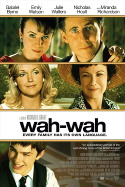
Wah Wah, 2005.
Writer / Director Richard E Grant, Starring Gabriel Byrne, Miranda Richardson, Julie Walters, Emily Watson, Nicholas Hoult (you might recognise the eyebrows from About a Boy).
We saw this special screening as part of the Auckland Writers & Readers Festival. We watched Wah Wah first. Apparently the names have been changed and the timeline needed to be condensed in places, but the script is close to true events. The film's story starts in 1969, Swaziland independence, it's the end of the British colonialist era.
Simple narrative throughout the film - it opens with a key scene - Richard's character, Ralph, is "asleep" in the backseat of a car and his mum is having it off with his dad's bestie - nice. Later at home his parents argue and next morning his mother sneaks off with her lover. Gwynnie (the jilted wife of the love quadrangle) and a horsy woman buzz round newly single dad, lots of booze involved. Ralph's despatched to boarding school. On a home visit a few years later he meets Ruby, "surprise! here's your new step mum!" Bit of teen rebellion - typical "you're not my mum" reaction and drug experimentation. Gets involved in a community play, which seals love of performing arts. There's a tense gun scene as dad's drinking spirals out of control. Dad finally kicks his addiction with antibooze pills but by this time he's already driven away wifey No.2. Wifey No. 1 returns - disaster - she's still a selfish B$%CH and given the boot. Wifey No.2 comes back again but tragedy - dad's been diagnosed with terminal illness. Last scenes set in hospital, then at funeral.
I didn't find it hard to like Wah Wah - great cast and unpretentious story. It's hard to remember now but back then kids mostly acted like kids instead of growing up far too soon, possibly because adults didnt involve kids so much in their affairs and strictly controlled who & what they saw and did.
Ralph's" upbringing in Swaziland have some similarities to NZ society in the 70s and the clinging to outdated customs from the "motherland". Many people whose parents broke up around this era can probably relate; divorce back then was still frowned upon and very much a social stigma - more so for women than men. Adults didn't discuss and barely explained things to children - a throw back to the Victorian "children should be seen and not heard". That old aunty / uncle nonsense is also a common memory ? supposedly a sign of respect and affection towards close family friends despite no blood relation.
A couple of scenes stand out: Ralph and mum are standing on a bridge and he realises she didnt come home for them - it was because her boyfriend was being sent to Peru. Ralph emotionally and mentally breaks ties with his mum as it hits him she will never be the mother he wants - the emotional shock is communicated to the audience using a handheld camera & change in film speed. Another device is used for another scene involving emotional shock / realisation - when Ruby brings him back home after the gun incident and Ralph happens to say something about the root cause of his dad's drinking. We see the car stop and Ruby quickly runs outs of frame as Ralph goes to talk to his dad.
Wah Wah Q&A with Richard E Grant.
REG is - funny, entertaining, gracious ("I thank you for your question"), expressive, uses colourful language, unpretentious, honest.
Interviewer with broken mike "blah blah", difficult to focus on their conversation; I fixated on reading REG's body language - performer is constantly moving, almost more interesting than the words that are being spoken.
Noticeable change in behaviour to previous day's TV1 interview (typical i/v of most actors I've seen-fresh off the plane-jet lag to blame?) where interviewer asked the obvious quickfire questions about the film - only short time to capture few soundbytes.
Q&A - questions posed by audience included:
Person at front (out of view) asked 2 questions (greedy!), frustratingly struggled to form words, wants to make a film about scientist father - an expose. 1st question was about retaining creative control. REG told story about making Wah Wah and how the producer tried to take out two key scenes, including the one where his father whispers "I still love your mother". "If you don't stick to your ideas then you may as well just bend over and take a bus up you", REG advised.
Other question was about how to decide on what the story is about & what to focus on - should the film be about the relationship with her father or informing public? REG says write the screenplay and it will reveal itself.
Funny story about work permits and visas - crew arrived in Swaziland days before filming due to start after 5 years of preparation. Official screamed for half an hour, rang producer (who supposed to arrange) who said to ask permission from the King - authorisation granted but stuck with 330K fine.
Another behind-the-scenes story about the funeral scene - REG admitted to committing some kind of cinematic incest as the girl playing his character's girlfriend was his 18yo daughter. Friend who attended actual funeral was evangelical, thought he could raise the dead, leapt on to coffin in ground, ripped off lid. Had to resist urge to look, in case father happened to rise like Lazarus. Feedback from previews was not to include the coffin scene in film -"too Monty Python", audience would lose narrative thread which starts from the time his dad is diagnosed and is later shown in hospital and the final key scene when dad hands over his watch and reveals secret about still loving his 1st wife.
REG says... country is part of his DNA, goes back annually. English speaking countries like Africa and Australia, even NZ, the landscape is part of our identity, this is not the same in UK. [Perhaps this is why our countries are like a separate character in our films?].
"I know you" audience member - a guy in the audience apparently taught REGs daughter in a choir back in the UK. "I live here now" he says. REG says "it agrees with you... you seem more relaxed than back then". [Did the man come just for the recognition or does he genuinely like festival films?].
REG talked about the transition from actor to writer/director - he likes controlling all the details. Another director, Ridley Scott said [for him] it's like being pecked to death by pigeons, but REG loved people constantly coming to him to make decisions about 1000s of small details. As an actor you have to deal with things getting cut out but as a writer / director you get to decide on final content.
Another question raised about how REG dealt with the autobiographical nature of the film, and how to maintain objectivity? When REG wrote the rough draft he dealt with thoughts and feelings about his family then. By the time the actors actually get to perform the script it's gone through a huge change process. To bring a story to the screen required REG to condense some events which actually occurred over a few years into a few scenes but essentially the result was true to real events.
Is there a the problem of living people recognising themselves? REG says people generally don't recognise themselves as characters. REG has done impersonations to their face and they believed he was doing someone else.
Did mother approve? REG admits his mum is vain and self obsessed. A friend says that she loved the portrayal of her son angsting over her absence, that his father drank over her and on his deathbed declared his unrequited love.
Tales of audience reaction - REG was pleased that at premieres the audience was happy and sad at the appropriate bits. The most extreme audience reaction was from the Canadians who couldn?t wait to leap up, Oprah style, and shout YES! I too had a father like that!
This review of Wah-Wah (2005) was written by Annetta K on 18 Sep 2011.
Wah-Wah has generally received positive reviews.
Was this review helpful?