Review of Victoria (2015) by Cody C — 09 Mar 2016
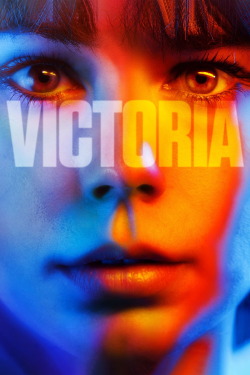
Before I begin my critique of last year's wild "Victoria," give me a moment to revel in the triumph of its now-famous technical achievements. Filmed in a single take over a period of around two-hours and twenty minutes, it is the kind of movie that reminds you just what an astounding medium cinema can be when put in the right hands. Had it been released in 2014, it would have felt right at home standing alongside the other eccentric "bests" of the year, acting as direct competition to "Birdman," which was photographed in a way to look as though it were filmed in a single take, and "Boyhood," which proved that time is not necessarily a limit when it comes to the power of film. It strips away the rules normally enforced by moviemaking and rewrites them, doing the impossible but coming out on the other side alive and flourishing.
Being German and released toward the end of last year, though, "Victoria" has only been seen by a small audience, almost nominated for the Oscar for Best Foreign Language Film until it was disqualified for its sizable percentage of spoken English. It will, perhaps, continue to reside as a cult classic in the hearts of devoted cinephiles around the world. But what a shame that is: a film so artistically daring needs to be seen, experienced, to be believed. Thrills like this almost never stop by theater screens.
But despite the way I hold it in high regard for its gutsiness, my skepticism intensifies the more I ponder if it really needed to be produced in one take. I am, of course, in awe of how its actors do more than just act (they, with dramatic pause, become), how the director, Sebastian Schipper, decides to go where few filmmakers dare to venture, and how cinematographer Sturla Brandth Grøvlen is able to capture the physical, breathless action of its 140 minutes without ever skipping a beat.
And yet, "Victoria" doesn't altogether benefit from its determination to make a movie in a single night; more flaws arise because of it. Its inability to compress time is an issue (where several critics praise its opening act, I turn the other way due to its insistent banality), and the story is decidedly thin for a film traveling far north of two hours. We're left impressed, our mouths cartoonishly agape as it arrives at its conclusion and we realize that everything we just witnessed was photographed in real-time, those involved fully committed and unable to break character. But would it have been a better, more gripping film had it been conventionally edit and cut down to a short 90 minutes? As it is a thriller and not "Before Sunrise," I'm pressed to agree. When a movie is given a license to thrill, meandering in the grit of kitchen-sink realness isn't breathtaking; it's boring.
But "Victoria" is breathtaking a lot of the time, and never does our admiration expire - it only seems to heighten as the plot grows more complex and the one take style takes a turn for the difficult. When its emotions are at a high, we might as well call it a masterpiece. It's just that its ticklings of the mundane are far too numerous and far too drawn out to do anything other than hinder its stretches of electricity. It's almost a tour-de-force, but falls short because of Schipper's self-indulgence.
"Victoria" stars a magnificent Laia Costa as its title character, who is a Spanish girl adjusting to a new life in Berlin. Only having moved to the area three months prior to the film's events, she hardly speaks German and hardly knows anyone in the city; she's a lost soul in search of someone to find. One night, after going clubbing by herself, she meets a quartet of young men denied entry outside. Though it's four in the morning and she has to head to work in a few hours, she quickly becomes acquainted with the posse and soon finds herself to be a part of their irresponsible clique. For the first time in what has felt like an eternity, Victoria's loneliness comes to a halt. Of the friends, she genuinely connects with Sonne (Frederick Lau), the most level-headed of the group and the most considerate of her feelings. They parade around the town for about an hour, forming the kind of bond you'd expect in a hyperrealistic romantic movie. But things take an abrupt turn left when Sonne vaguely asks Victoria if she'd like to drive him and his friends to a "job" that will help one of them (Franz Rogowski), who has just been released from prison, make even for his prison debts.
So enamored with the ending of her loneliness, and so caught up in a whirlwind of spontaneity, Victoria agrees to take part in the exploit. But too late does she come to understand that they're not embarking on some cute adventure with a little sin on the side. She and her new mates are committing a bank robbery, and it won't be long before they become hot commodities for the local police to chase.
With Costa's terrific performance at its front-and-center, "Victoria's" crisp delectations are increased, the supporting cast surrounding her unflinchingly naturalistic. The film peaks with the bank robbery (though we stay with Victoria in the car as her newly minted gaggle of pals do the deed), and from there does it become a heart-stopping film. Grøvlen's camera moves with frenetic speed as it follows the characters as they stop by a club, as the run away from the fuzz by foot, as they break into someone's apartment and devise a narrow escape, as they consider their options in a luxurious hotel room they didn't pay for. For its final hour, it's the film we dreamed it to be, without the long expansions of fatigue of its first. But that fatigue is so prolonged, it sits in our memory like a thought-to-be-dead plague. Good thing it eventually gives the audience what they want and love - then I'd call it a gimmick with no backing.
This review of Victoria (2015) was written by Cody C on 09 Mar 2016.
Victoria has generally received very positive reviews.
Was this review helpful?