Review of Vertigo (1958) by Mike S — 07 Sep 2012
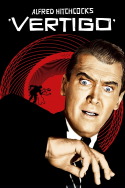
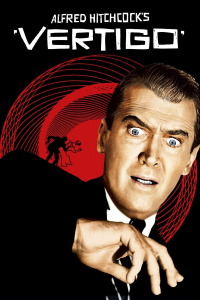
Venture into the depths of Hitchcock's film-making genius, in this hypnotically brilliant mystery thriller, which very recently attained the honor of being crowned the greatest movie of all-time by BFI's Sight & Sound magazine.
Set in beautiful San Fransciso, it starrs the always-fantastic James Stewart, as retired detective John "Scottie" Ferguson, whose seemingly incurable acrophobia has resorted him to quit the force. This self-invoked idleness, however, does not last for long, as an old friend of his (shipping magnate Galvin Ester, played by a superlative Tom Helmore) suddenly comes pleading with a most unorthodox request.
Caught off guard, yet soon to accept the task, John is entrusted with a mission to shadow Galvin's wife Madeleine, whom he firmly believes to be possessed or simply ready for the looney bin with her recently strange and erratic behavior. Getting more and more consumed by his undertaking, the plot thickens as strange revelations amass, with John all the while finding himself helplessly infatuated by this woman that he is asked to investigate. A spiral into obsession ensues, for which he is soon to pay a pricey toll.
As the mysterious Madeleine, we find the graceful Kim Novak, in an enchanting performance, that radiates in full with that old wonderful Hollywood glow that we so often find in movies from the era. Her interactions with Stewart is at the pinnacle of refined acting; demonstrating a chemistry that is as complex as it is involving.
Employing a great many visual devices, like his famous dolly zoom and surrealistic, mood-setting imagery, it's an incredibly innovative film for its time, that blazed a trail not only for the genre, but also cinema in its grand entirety. A true game-changer of a classic; the contributions of which certainly entitles it as one of the founding fathers of what we now refer to as neo noir.
Much like his other marvel, Psycho, it hosts a taut and creeping atmosphere; efficiently building up suspense until its mind-blowing climax, where all the pieces of the puzzle fall into place with a shocker of a twist. The only problem here is that it arrives a little too soon, as some of the events that follow - focusing on John's and Madeleine's love affair - aren't as exciting as the chapters that transpired before the reveal. Said abatement in suspense, added to a couple of slow and stand-still segments, is also the chief reason why I haven't rated this film any higher than I have. At the very end, however, it finds itself back again, culminating in a heart-pounding final act, where passion turns to aggression and emotions violently ablaze.
As a newcomer to Hitchcock's work, there's an unequalled pleasure - no, make that privilege - in discovering these classics with fresh and unbeknown eyes. Luckily spared from spoilers, I never quite know where they're gonna take me next, which in many ways makes me feel like a kid on Christmas again. Not to mention the additional joy in spotting Hitchcock's cameos, a lá "Where's Waldo".
I can't conclude this review though, without also giving credit to its technical and musical wonders. In particular Bernard Herrmann, whose spellbinding orchestral score is as beautiful as it is darkly absorbing. The cinematography by Robert Burks makes an equally dazzling impression. Even the writing and characterization is virtually flawless.
Put all that into the pot with Hitchcock's magnificent camera work and ravishing mise-en-scène, and you have a tour-de-force piece of film-making, that certainly belongs in the great treasure valve of art for the ages. I'm not sure if I'd call it a masterpiece, like some would do, but it's certainly a great nail-biter of a story that made its mark in cinema history. Or to put it less fancily, just a heck of a good film!
This review of Vertigo (1958) was written by Mike S on 07 Sep 2012.
Vertigo has generally received very positive reviews.
Was this review helpful?