Review of Vertigo (1958) by Issac L — 25 Nov 2012
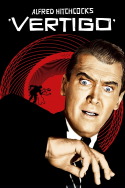
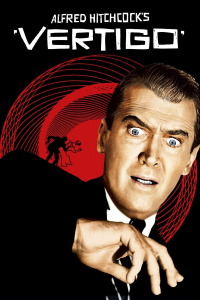
About two months ago, when Sight & Sound magazine announced their critics polls of my film of all time (a referendum carried out every decade), VERTIGO has unanticipatedly usurped CITIZEN KANE's seemingly invincible titleholder, which as a matter of course, has ensured many discordant responses, so it seems to be a perfect time to watch Hitchcockâ(TM)s (at least currently) crème de la crème.
I eschewed any possible spoilers before embarking on the film (a BluRay set of 1996 restored version), it has been fully testified (regardless of the faintly drawn-out stalking sequences, great framing nevertheless) that a stirring frisson is duly on the course of solving the absorbing doppelgänger riddle.
Visually there are some ground-breaking craftsmanship in the film, from the opening eye-focusing montages to the recurrent vertigo motif, even an abrupt cartoon snippet during the hair-raising nightmare scenes (which I estimate should be credited to the restore department). But the magnetic gravitation is the enigmatic pleasure from the perspective of a mutual love affair between a well-clad former detective and an equally enigmatic married woman (not the generic femme fatale brand though) whose motivation has been tainted since the very beginning. So in spite of that the set-up is almost immaculately deployed (until a rather second-rate glitch to culminate the finale), but one thing might not be so popular as it was half a century ago, the shifting role of female in the society, Kim Novakâ(TM)s characterâ(TM)s vulnerability and fatalism infatuation just doesnâ(TM)t feel sound enough to elevate the plot onto the final peak. Partially it is also the performersâ(TM) problem, Novakâ(TM)s glacial distance cannot pull herself through as a deft actor (neither for the scheme nor for the film), so it descends to a mere sexual impulse from James Stewartâ(TM)s standpoint, which I donâ(TM)t suppose is Hitchcockâ(TM)s idea. Also Stewartâ(TM)s paranoid âminute copyâ? compulsion does mar some empathy toward him.
The film at bottom is a two-hander, so Barbara Bel Geddes and Tom Helmore are the only supporting roles which are all underdeveloped, particularly, Bel Geddesâ(TM) s one-sided affection has a buoyant start but completely sidelined after her inappropriate painting incident, leaving an unusual loose end.
So the film has its old-fashioned value of love and done an acute anatomy of the hallucinatory symptoms when one falls for a feigned personality (the torture is bilateral), but calls it âthe best film everâ? is a way too grave grandstanding which does no good to any films at all (even CITIZEN KANE has to pay its price), but I daresay 10 years later, VERTIGO will add another title under its belt, âa one-time champion of the best film of all timeâ?.
This review of Vertigo (1958) was written by Issac L on 25 Nov 2012.
Vertigo has generally received very positive reviews.
Was this review helpful?