Review of Valerie and Her Week of Wonders (1970) by Matthew S — 03 Aug 2015
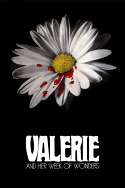
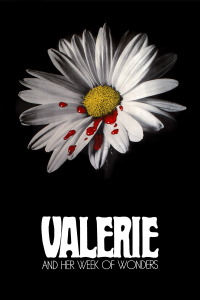
Shot in 1969 and released in 1970, Valerie and Her Week of Wonders marks the end of The Czech New Wave. Watching Jaromil Jire' bizarre movie within the context of the 21st Century is challenging from several different angles.
Based on Vít?zslav Nezval 1930's Surrealist novel. Nezval was key member of the Czech Surrealist Movement. The movie most definitely utilizes his dialogue and adheres his core aesthetics. The entire production is almost drenched in Gothica. But it would be impossible to not see the strong tie of the film to Pohádka or the Czechoslovakian concept of "fairy tales" which is more than a little different from our perceptions of parables.
The plot is deceptively simple: a beautiful 13 year old orphaned girl has her first period and as she starts her path to womanhood is confronted with a series of horrify and menacing people and situations.
In what may or may not be a world strictly limited to her imagination.
Her ghostly Grandmother begins to form into a sinister threat. Other female family members enter her world her bear her Grandmother's same face -- each one offering a new level of terror. Her yearning to know who her parents were takes on an odd level of horror. Before long poor Valerie is finding herself among vampires, ghouls, evil priests, angry villagers intent on burning her at the stake and possible familial connections seemed loaded with incestual desires.
All the while Jires fills her world with symbolic colors and alternating tones. From beginning to end the movie is a just a total trip into oddness. The strange appearances of the actors and Jan Curík's stunning cinematography make it almost impossible to look away.
The major problem viewers face in viewing this film is regarding the casting of its lead actress. The part of Valerie was played by 6th grade age girl, Jaroslava Schallerová. The movie has no problem in sexualizing this child. Filmed in what can best be described as "dewey erotic lighting", often semi or nude and constantly being pulled into sexual intended kisses and caresses. The film veers into the realm of the inappropriate in the way this child actor was filmed.
The current view of Film Scholars is that Jires did not film the girl as a "sex object" but more as a "symbol of innocence" in a world filled with sexual desires and threats. I'm not able to agree with this attitude. That being stated this film does not ever approach any level of "pornography" but it does go too far. The actress now in her early 50's has always been very proud of her fleeting moment of fame. Her mother was present for the entirety of the shoot. Even still, audiences should be warned that this envelope is pushed.
Despite this ethically questionable aspect, I can't help but love the artistry and the film itself. It is a highly effective surrealist attempt to capture the human psychological and emotional experience of gaining a mature understanding of the world that will very quickly become your own. In many respects the morphing of the familiar into the unknown or monstrous is resonating. Of course this lies at the heart of many fairy tales. In addition, the film is edited and shot in ways that allow the viewer to constantly find new ideas or points with each viewing. It applies a circular sort of logic which invites multiple interpretations.
It is a totally unique cinematic experience.
This review of Valerie and Her Week of Wonders (1970) was written by Matthew S on 03 Aug 2015.
Valerie and Her Week of Wonders has generally received positive reviews.
Was this review helpful?