Review of Unforgiven (1992) by Ingrida L — 07 Jan 2011
-"You just shot an unarmed man!"-"Well, he should have armed himself...".
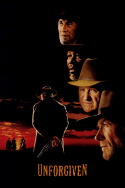
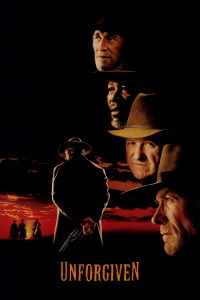
Plenty of films have tried to examine the human side of violence. This is especially appropriate for westerns, where very often rows of men are gunned down without a thought. "Unforgiven" does better than most, but where this differs from other films is that at the end this whole theme is flipped around as the outlaw William Munny (Clint Eastwood) pulls of a truly legendary piece shooting. This scene though only emphasizes a great sense of failure for the characters, their failures are obvious, but I will not give too many examples for fear of spoiling it.
Look at the way the trio of Munny, Ned Logan (Morgan Freeman) and the Schofield Kid (James Woolvett) are slowly whittled down to just Bill, as others realize that they just do not have what it takes to kill people anymore. Munny, although carrying out his task to the full, has equally failed in his attempt to reform himself as he proves to himself that he is not a pig farmer after all, but still the legendarily cold blooded killer from years ago.
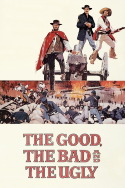
Westerns have had different ways of looking at violence. Sergio Leone looked at the build up; Sam Peckinpah looked at the violence itself. Eastwood looks at the moment after the violence and shows the heartbreaking consequences. Given this it is all the more shocking to see just how merciless and devastating Munny's furious assault on the saloon really is, with him shooting unarmed and wounded men just for the sake of completeness. There is a question of motivations though-before he was in it for the money, but when a personal element is added to the mix the results are volcanic. But this is no blaze of glory for William, but something that has to be done, and although treated in a callous way there is a sense that this will have consequences as far reaching before. Bill has failed in his attempt to reform himself, and the purpose of his life is defeated. There is a suggestion that Munny is damned-there is a moment in the carnage where he stops a drink. The scene is shot so that Eastwood appears to have no reflection the large mirror placed above the bar. More obvious is the following exchange between our hero and Sheriff Dagget (Gene Hackman)":
-"See you in Hell, William Munny. Yeah. ".
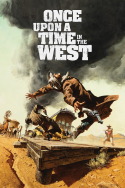
The way the climax is presented would be perhaps more appropriate for a more lurid western, with most shots going wild-far more shots are fired than are strictly necessary, in true action film tradition. This is just the point though, as the end is supposed to be at odds with the grittily realistic nature of the rest of the film. The end result is a powerful message powerfully put across. That is not to say that other westerns that do not necessarily share this sentiment (at least to this level) are less powerful-the theme of "Once Upon A Time in the West" is equally strong and affecting, but the message is different and presented in a different way. 'Unforgiven" proves though, both to the writer W. W. Beauchamp (Saul Rubinek) and to the audience, that there is a flip side to every story and a dark side to every man.
This review of Unforgiven (1992) was written by Ingrida L on 07 Jan 2011.
Unforgiven has generally received very positive reviews.
Was this review helpful?