Review of Unbroken (2014) by Juan David C — 21 Jan 2015
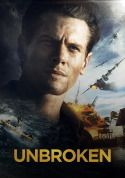
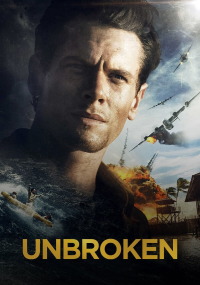
Only Griffith, DeMille, Lucas, O' Selznick, Fleming, Spielberg, Cuarón, Kubrick, Nolan, Minghella, Lean, Jackson and Cameron have attained similar heights of technical achievement in stories of such grand scope. Jolie had everything she needed to release the best World War II movie in History. A screenplay signed by the Coen Brothers and William Nicholson, the editing of Tim Squires, the camerawork of Roger Deakins and a brilliant soundtrack from Alexandre Desplat, who makes us remember how epic music can be, made the movie look like the event of the century. Unbroken had the ingredients to be the recipe of success, as the director Sidney Lumet once observed, "What the movie is about will determine how it will be cast, how it will look, how it will be edited, how it will be musically scored, how it will be mixed, how the titles will look, and, with a good studio, how it will be released. What it's about will determine how it is to be made." The problem lies in the most important and relevant aspect of the whole process: the chef's skills, or in this case, the director's knowledge.
This is an epic story of honor, sacrifice and survival; however, the director tells the story in such a different way that the film's style or texture becomes its dominant and most memorable aspect, making a stronger impact on our minds and senses than any of the other thematic elements. It is easy to mention all the ideas and concepts the film tries to explore but fails to solve, such as moral implications of the decisions we make in our lives; The truth of human nature in order to illustrate some widely or universally acceptable facts about mankind; Social problems when the thin veneers of civilization or "everyday reality" have been removed etc, etc...
The struggle for human dignity is of course its strongest side since it portrays the basic conflict or tension between two opposing sides of human nature. One is the desire to surrender to animal instincts and wallow in the slime of human weakness, cowardice, brutality and stupidity. The other is the struggle to stand erect, to display courage, sensitivity, intelligence, a spiritual and moral sense, and strong individualism. This conflict is best shown when the central characters are placed in a position of disadvantage, having been dealt a bad hand in some way, so that they must play against tremendous odds. The conflict is external, with the character struggling against some dehumanizing force, system, institution, or attitude. The conflict is also internal, with the character struggling for dignity against the human weaknesses present in his personality.
Zamperini's life, as well as his efforts to stand tall, is something to remember. The look, feel, rhythm, atmosphere and tone are first-rate for sure. Unfortunately, the film is at the end formulaic and predictable because we have seen it all before in 'The Bridge on the River Kwai.' Another film depicting the same issues was the recently released 'The Railway Man', which did not receive the recognition and advertising it fairly deserved. Even 'Fury' with Jolie's husband is a far better movie. She needs more experience before embarking on such larger-than-life projects; she needs time to observe the circumstances and understand why we do the things we do and not just present them as a series of meaningless, unlinked events.
This review of Unbroken (2014) was written by Juan David C on 21 Jan 2015.
Unbroken has generally received positive reviews.
Was this review helpful?