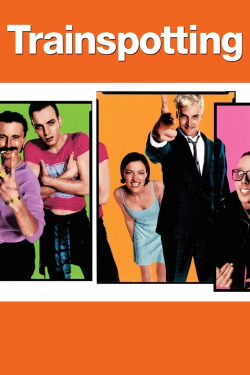
Review of Trainspotting (1996) by Alejandro R — 14 Nov 2012
Like many of the things which shape us, I saw this film at the perfect time. I was in my early 20s, trying to decide what I was going to do and where I was going to do it. As an added bonus, I was born and raised in Edinburgh. If there was a target market for Trainspotting, it was me.
The mid-90s had seen an explosion of suave, knowing, coolly post-modern films; rich in violence, explicit sex, bad language and dialogue which referenced the highways and byways of popular culture. This was led by Quentin Tarantino â" the self-confessed film geek working in a video store turned movie-maker. First came Reservoir Dogs then Pulp Fiction (1994); confirming that America was at the epicentre of the new mood.
Britain responded. Along with a new Labour government and a flourishing music scene came films which spoke of the moment. There was 1994â²s Shallow Grave, a darkly comic thriller-morality tale of greed and broken trust in Edinburgh. Its director, Danny Boyle, high on the critical and not insignificant commercial success, announced that for his next trick heâ(TM)d direct the adaptation of cult book Trainspotting; Irvine Welshâ(TM)s bizarre, dialect-heavy short story collection about drug addiction in 1980s Edinburgh. Danny Boyle was widely considered to be talented, but over-ambitious. Received wisdom had the book as un-filmable and certainly not for the mass market.
So the film arrived, on a wave of hype in 1996, with an iconic marketing campaign, claiming to herald a young and urgent voice to compete with Tarantino. It couldnâ(TM)t possibly live up to the hype.
It did. Surfing the wave of popular culture and critical fame it became enough of an international hit to launch director Danny Boyleâ(TM)s career on a path that would eventually take him to the widely loved Slumdog Millionaire. Whatever you knew about Trainspotting, whatever you hoped for from it, nothing quite prepared you for seeing it. The opening monologue which felt fresh but familiar as soon as you heard it; the music; the daring and sharp cuts from scene to scene; an ability to seemlessly move from realism to flights of fantasy and hallucination; the unapologetic Scottish slang.
It didnâ(TM)t so much try to adapt the book as jump off from it. Inevitably some thought it was trying to glamourise drug use. Quite how that conclusion is reached given the consequences in the lives of the characters along the way is beyond me. I do, though, know of recovering addicts whose reactions to the film take in the whole spectrum. Some loved it; some couldnâ(TM)t bear to watch it. Itâ(TM)s certainly not for everyone â" itâ(TM)s explicit, itâ(TM)s foul-mouthed and features a lot of bodily fluids. Masterpieces, though, donâ(TM)t have to be for everyone.
What it does so brilliantly with addiction â" in this case to heroin in 1980s Edinburgh, at the time Europeâ(TM)s AIDS capital â" is, as the central character says early on, show that it starts because of âthe pleasure of itâ?. The film is structured like an addictâ(TM)s experience of a drug hit â" the rush, the hallucination, the brutal come-down, the attempt to rebuild life ⦠and when itâ(TM)s over, many of us will want to watch it over again. The filmâ(TM)s genius is, even in the midst of tragedy, not to ask us to pity, in fact to move way beyond pity to something deeper and further reaching. Thatâ(TM)s called understanding. For all the pulse-quickeningly brilliant music, the laugh out loud moments and the moments of shock and disgust, all it does is present the truth: people get addicted because itâ(TM)s an escape they enjoy. The consequences are there if you want to look â" but too often those are ignored at the price of the next hit of self-preservation.
Like all great works of art new things jump out on re-watching; not least one character, on the high of a recent hit in a fulfilling requirements interview for a job he doesnâ(TM)t really want, speaks of those who went to schools like his and those who who went to more prestigious ones as â~all in this togetherâ(TM). Those four words were the fanfare of British Prime Minister David Cameronâ(TM)s flailing coalition government, seeking to reassure a disbelieving electorate that the privileged were with those who were suffering. The governmentâ(TM)s actions since suggest otherwise; and those four words have become a stick to beat the government with. To hear them now, from the mouth of a chemically-dependant man seeking to avoid work at all costs, adds a delicious layer of irony.
Of course it has brilliant performances â" uniformly. Robert Carlyle, Ewan McGregor and Kelly MacDonald all stand out. Itâ(TM)s an adrenaline fuelled masterpiece with a sting in tale; Iâ(TM)ll say again that itâ(TM)s not for everyone and if you donâ(TM)t speak Scottish youâ(TM)ll probably need the DVD subtitles. It asks you to move beyond pity to empathy and self-examination. And it announced once and for all the greatest British director of his generation. Not bad for 94 minutes.
This review of Trainspotting (1996) was written by Alejandro R on 14 Nov 2012.
Trainspotting has generally received very positive reviews.
Was this review helpful?