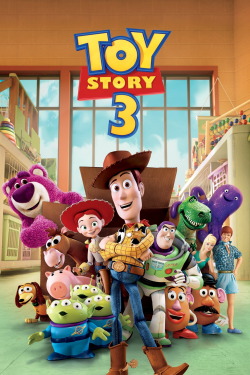
Review of Toy Story 3 (2010) by Filmmaster — 20 Apr 2015
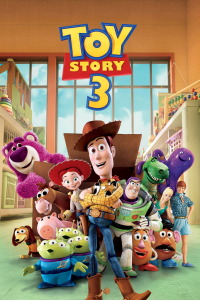
After years of being stowed in Andy’s toy chest, the time has finally come for Woody (Hanks), Buzz (Allen) and friends to move on. But after they’re welcomed to Sunnyside Daycare Centre by the kindly Lots-O’-Huggin’ Bear (Beatty) they realise this seeming toy’s paradise is actually something closer to hell...
Pixar has done it again, extending an amazing streak of successes that stretches all the way back to the original Toy Story, which changed the face of feature length animation when it reached theaters in 1995. Now, 15 years after their original debut and 11 years after the first sequel, Toy Story 2, Woody (voice of Tom Hanks), Buzz (Tim Allen), and their fellow toys have returned to the screen for another adventure. Although aspects of Toy Story 3 echo similar elements from the previous films, making this the least original entry in the trilogy, the movie's final act will resonate deeply with many viewers, making this chapter in many ways the most heartfelt.
He story, which is simple enough in its essence, affords opportunities for action (the Great Escape), comedy (Ken & Barbie, Buzz's Spanish personality), and pathos. The ending, which is surprisingly affecting, will speak more deeply to adults than children. Those in the latter group will understand the importance of friendship, but older viewers will perceive other, bittersweet things: the fleeting nature of childhood and how all things pass, seemingly in the blink of an eye. Children are only peripherally aware of the passage of time, but adults sometimes recognize little else. There's a moment in Toy Story 3, when Andy experiences an epiphany, that brings this all home. The scene, which may go unnoticed by the core demographic, will bring lumps to the throats and tears to the eyes of some parents. This is the kind of thing Pixar does so effectively, and the reason why their films achieve greater respect than those of their less ambitious competitors.
From a purely artistic standpoint, Toy Story 3 is superior, although not vastly so, than its predecessors. At the time of their releases, Toy Story and Toy Story 2 were cutting edge, but the bar hasn't moved much in 11 years. The problem with this movie is the 3-D, which is the "preferred" format for its screening. The bright rainbow of colors becomes murky and washed out, with grays withering the kaleidoscope of hues. In addition, the 3-D appears to have been employed as an afterthought - there are lengthy sequences in which it either isn't used or is used minimally. I was surprised to find I could take off the 3-D glasses and, for stretches, not be confounded by blurred or double images. In the case of Toy Story 3, 3-D adds nothing except a box office surcharge.
With most franchises, animated or otherwise, the well has run dry by the time the third episode is under consideration, which explains why so many second sequels fail to meet expectations. In a way, the same may be true of Toy Story 3, but it doesn't strain to be different to the point where it loses sight of its strengths. Instead, it focuses on the reasons for its popularity and amplifies those. Our familiarity with the characters and their interaction becomes an asset, making the action scenes more than displays of pixels zipping across the screen. The writing shows a deftness of touch that provides Toy Story 3 with emotional depth. And director Lee Unkrich, a Pixar fixture who co-directed Toy Story 2 (among other films), shows the same mastery of elements evident in the other Toy Story films, allowing for a seamless continuity. Toy Story 3 enhances the legacy of its brand while providing exceptional entertainment value for viewers of all ages, especially for those who favor the brighter, livelier 2-D iteration over the 3-D gimmick.
This review of Toy Story 3 (2010) was written by Filmmaster on 20 Apr 2015.
Toy Story 3 has generally received very positive reviews.
Was this review helpful?