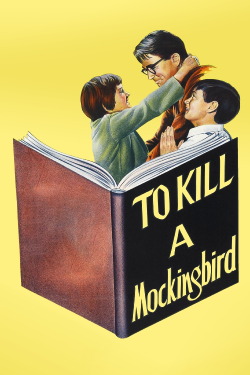
Review of To Kill a Mockingbird (1962) by Nick O — 14 Feb 2013
Atticus Finch always said do the right thing -- to his friends, children, countrymen; the small town jurors hearing out the prejudiced rape case of an innocent black man in a big world you'll never be able to wholly convince of anything. Just be good. Do your best, and don't shut out the truth. That's it. Or so you'd think because it's as it should be, because even though we can't change the past we can learn from the guilt we take away from it.
The screen version of Harper Lee's "To Kill A Mockingbird" by director Robert Mulligan and writer Horton Foote is less a rallying cry for social revolution than it is a gentle reminder that principle can sometimes come from people and places unanticipated. It also helps the story, spun from the mouths of babes, has all the simple but dazzling wonder of youth and purity, like the townspeople's final muster against the scrappy kid killer at the black heart of Fritz Lang's "M" or the heaven-sent coming-of-age of "It's a Wonderful Life". "Mockingbird" is also less an interpretation of than it is a perfectly-executed pledge of allegiance to Lee's book. Still yet it brings up that limitless great debate -- can an adaptation ever truly be called a masterpiece?
This review of To Kill a Mockingbird (1962) was written by Nick O on 14 Feb 2013.
To Kill a Mockingbird has generally received very positive reviews.
Was this review helpful?