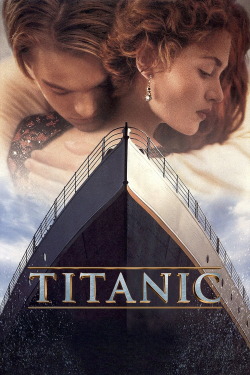
Review of Titanic (1997) by Roxanne D — 10 Oct 2017
Initially it seems that Jack dies in order to fulfill the white knight, damsel in distress narrative. Or does it? Jack's death renders Rose completely alone. She enters New York alone, which has fascinating implications. Of course, Jack's death precipitated Rose's independence, and we can assume she wouldn't have it if he had survived, which is why he doesn't (lol). But I'm not crying about it. Men have rarely been victimized and disposed of in order to make compelling thematic statements in film. In this, Jack's death creates such fascinating implications, that it's difficult to regret.
Of note however: Rose's independence begins much earlier in the film, as well as her agency. She claims in the end that Jack saved her, but really she saved herself. She sacrificed everything for a new life. Of course, Jack's influence cannot be denied. He can be credited for revealing her disposition toward independence and adventure, but Rose acts on it and sees it to fruition. Example: she had that diamond the entire time she was in New York. But she never cashed it in. She could have, no judgment, (girls gotta eat) but it makes a powerful feminist statement that she doesn't. She wasn't going to 'let Cal win' which she confesses in a deleted scene. Rather, she'd rely on her own strength and resourcefulness.
This review of Titanic (1997) was written by Roxanne D on 10 Oct 2017.
Titanic has generally received very positive reviews.
Was this review helpful?