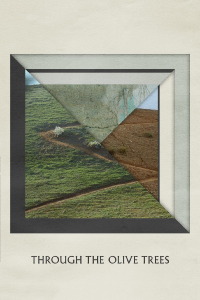
Review of Through the Olive Trees (1995) by Edgar C — 26 Jun 2014
The master's meta-film technique has just been perfected, culminating in arguably the best installment of the "Koker Trilogy", and despite that the levels of reality and meta-reality can be officially defined, their interconnected coexistence has become now even more mind-puzzling and allow for several interpretations. Still, the message remains the same: the degree of interchangeableness between cinematic reality and this thing we called "life" goes beyond our scope of things:
+ Level 1: Where is the Friend's Home?.- "Follow your characters", dictates Kiarostami's celluloid philosophy.
+ Level 2: And Life Goes On....- Reality and fiction have a passionate affair in a metafilm context; Kiarostami's trademark visual style is born.
+ Level 3: Through the Olive Trees.- A masterfully directed humanist drama; the finished film that we see. This movie nudes the actual fiction of the meta-reality of the meta-reality that created a fiction in 1987.
+ Level 4: Mohamad Ali Keshavarz.-The introduction leaves clear that Mohamad Ali Keshavarz is playing the director of this film. For the very first time, we are introduced with some factual piece of information about what really is: "What you're about to see is ALSO a film!" What a way to open!
+ Level 5: And yet, everything is a film.- We do know who is behind the camera, orchestrating a trilogy of metafilmic interconnections trying to reflect on the beauty of life and how both coexist in a realm that we can and simultaneously cannot perceive with the senses. Kiarostami is the true master, performing an "inception" in our perceptions. According to Level 2, Level 1 had been directed by Farhadi. Level 3 fictionalizes the n- longer-meta-reality of Level 2. So, according to Level 3, who really directed Level 1? Farhadi, who is seen as a hired actor in Level 3, or Kiarostami?
Kill some neurons while you're at it.
Cinema is an art form that imitates life, but art has reflected our conditions, affairs, traits, tendencies, romances (this film's main case), families and tragedies so well, that we tend to imitate cinema as well. We imitate the imitator by excellence: cinema. What a paradox!! Our imitator is the best imitator of the authentic thing (life); we will never match its imitation! Or will we? Perhaps embarking into several layers of imitation and depiction of fictional and factual realities will, somehow, bring us back to the authentic thing, therefore coming back to life.
For the record, this has one of the best endings in Iranian cinema.
97/100.
This review of Through the Olive Trees (1995) was written by Edgar C on 26 Jun 2014.
Through the Olive Trees has generally received very positive reviews.
Was this review helpful?