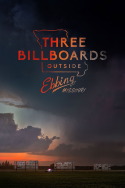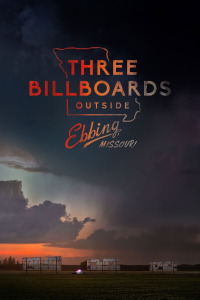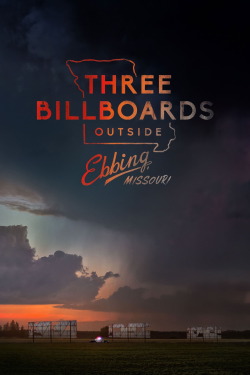
Review of Three Billboards Outside Ebbing, Missouri (2017) by Cormac O — 22 Jan 2018
A film that, on closer inspection, seems to be dissembling much more than it is revealing; distracting, much more than it is amplifying; an awful lot of sound and fury in the end signifying nothing.
Think of Ebbing, Missouri - not a real place, but selected as the more-or-less midpoint, north-to-south of the United States. Think then of a racist character named Jason Dixon, and reflect on the Mason-Dixon line that once denoted the demarcation for the legality of slavery, once Pennsylvania outlawed it. Conclude that this film must therefore be about race, and have important and weighty things to say about it; Ebbing, Missouri as microcosm, as synecdoche.
Think about the subversive-seeming scene where wooden structures are burning in a field in middle America. But here there was no KKK. It feels like that scene must be undercutting something, must be symbolic of something. What is it symbolic of?
Think of Woody Harrelson, facing his own immediate mortality in the company of his horses. Think about how that is symbolic, and of what. Think of the deer appearing at Frances McDormand's side. Again, ponder how it is symbolic, and of what.
Think about the specificity of the town name in the title - and think then about Fargo, North Dakota. Think about Frances McDormand in the starring role. Consider if there is any reason for this that is not utterly superficial.
Think of a character introduced reading Flannery O'Connor. Think of Psycho - "no one comes this way anymore, since they built the highway". Reflect again on where this film is positioning itself in a literary canon.
Consider the themes the film purports to be about - race; rape and murder; cancer; death; grief; vengeance.
Then reflect again. You're being told at each turn that this film is of an oeuvre; is standing on the shoulders of giants. You're distracted, again and again, by its referents, its indebtedness. Examine closely what this film is actually about. Is it about death? About cancer? What about racism? Is it about vengeance? About guilt? About grief? Think about what exactly about those things is explored, is revealed.
And then conclude, finally, that it is about none of these things. Just because people die in the film does not mean it is about death. Because someone has lost a daughter does not make it about grief, or guilt. Subject matter alone cannot lend gravitas to a work - that comes in the reflections and meditations on these things that emerge from the film. I see none at work here.
Just because a film-maker has seen the films of the Coens Brothers, or Alfred Hitchcock, or Tom McCarthy; or read the work of Flannery O'Connor does not mean he is their equal.
A film whose ideas are murky, under-cooked; a film maker who knows what he wants to talk about, but without any idea of what he wants to say about these things; and hopes to disguise that truth with flag waving, with sleight of hand, with constant reminders of the works of artists who were clear about what they wanted to say. This is the work of a confidence trickster - full of sound and fury, signifying nothing.
This review of Three Billboards Outside Ebbing, Missouri (2017) was written by Cormac O on 22 Jan 2018.
Three Billboards Outside Ebbing, Missouri has generally received very positive reviews.
Was this review helpful?