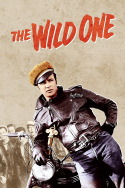
Review of The Wild One (1953) by Brett W — 06 Mar 2008
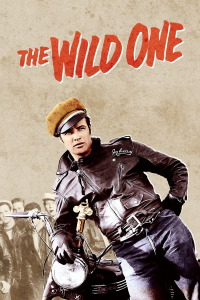
Being as it was Marlon Brando's role in Apocalypse Now that originally so killed the pacing of the movie for me, I originally had no real desire to track down On the Waterfront, A Streetcar Named Desire or this film. I remember reading a MAD parody once, called The Wheeled One, but that's about the extent of my experience here. I have heard that Rebel Without a Cause is a "pale imitation" of this film, usually from those who feel that James Dean was a pale imitation of Marlon Brando. If memory serves, though, what broke me on snapping this one up (admittedly, pretty cheap) was the presence of Lee Marvin.
I've read strange and peculiar things about this movie. My first impression was that it was an exploitation-esque film, in the vein of Ed Wood's The Sinister Urge (uh, not that I'm comparing the two quality wise, mind you)--something that says, "Look! See how dangerous the gangs are! These horrible hoodlums on their motorized bicycles! What horror! What hooligans!" Then I read something (I believe it was the Wikipedia entry on the film) that said that the "Motorcycle Club" Johnny Strabler (Brando) rides with was pretty sympathetic and didn't do anything overly harmful, and really just pursued a good time and fun, rather than being troublemaking degenerates. And Sonny Barger apparently felt Johnny was a bully to Chino (Marvin).
What I've seen seems to be a movie that none of these other folk saw. In my version (which I realistically expect is the exact same film) the gang is sympathetic, yes, but not without fault by any stretch of the imagination. Yes, prejudices are put forth against them, with many folks assuming they are degenerates who should automatically be locked up. But the first major incident, when they are "dragging for beer" and one of the club members slides his bike under a swerving car--well, the reactions might have been a bit excessive, but, um, they WERE just drag racing down an actual street with actual traffic. They do start breaking things and causing trouble and so on, and even chase down Kathie Bleeker (Mary Murphy) because she is "Johnny's Girl,"--at least, Johnny feels this way, even if she doesn't. While I'm a believer that there can be an overreaction to basic interest from people sometimes that is misconstrued unfairly, I think riding motorcycles in a tight circle around someone very definitely crosses that line. Admittedly, Johnny has nothing to do with this, so perhaps that's the line people were referring to. But, still, the film does seem intent on pointing out--repeatedly--that the gang is looking for trouble, openly and honestly. And as for Sonny...I don't even understand the feeling that there is such a dynamic. Chino and Johnny are like brothers, fighting but with mutual common interest in the wellbeing of the other.
Anyway, I digress, and I'm off on the subject of what the film is trying to say without saying much about whether the film achieves any of these things successfully or manages to do anything other than engender this debate. I will say that the fact that it manages to engender both these varied responses and this debate from myself is a testament to the at least slightly-higher brow approach to the material than someone like, say, Ed Wood, has used. Sympathies are varied and a little more grey than I guess I expected, with Johnny occasionally coming off as kind of a jerk, and Chino being more sympathetic than I particularly expected. The obvious villain (with no real debate!) is Charlie Thomas (Hugh Sanders) who takes it upon himself to violently stop Johnny, after consistently suggesting he should be locked up. The response from Sheriff Harry Bleeker (Robert Keith) doesn't help matters, and it's only made worse by Johnny's response to Bleeker. The Sheriff is a decent man, but not one with the strongest spine in the world. He does try valiantly to solve things peaceably, but fails because of Johnny's refusal to listen to "cops." Self-righteous Charlie exacerbates things far more than Johnny though, but his gang is no help either, tearing up the town, even if all in fun, and legitimately and reasonably scaring and worrying the less arrogant and pompous townspeople.
Brando's performance is moody, fiery despite its subtlety, and actually kind of like a petulant teenager, which I guess isn't far off the age he's intended to be. It's a little off-putting for that reason, but this in no way denigrates the quality of it. I almost feel like Lee Marvin shines more, as the rowdy, boisterous Chino--a far cry from his later stern, tight-lipped bad-ass roles, but almost more entertaining because of that context.
Not a stunning movie (anymore, at least) but a very good one.
This review of The Wild One (1953) was written by Brett W on 06 Mar 2008.
The Wild One has generally received positive reviews.
Was this review helpful?