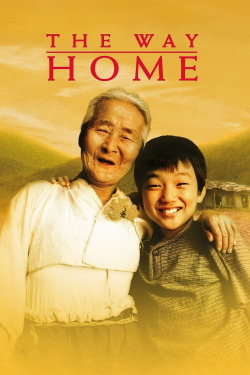
Review of The Way Home (2002) by Michael A — 10 Jun 2008
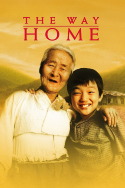
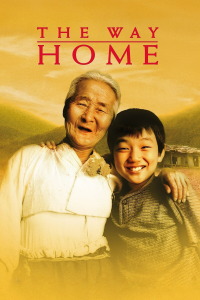
The Korean film The Way Home by writer/director Jeong-hyang Lee provides the viewer with a unique view of rural Korean life through the eyes of two polar opposites. The first a 7 year old brat inundated with western culture, the other an extremely elderly woman of indeterminable age with very traditional rural Korean customs and values. The director establishes this setting by introducing first the boy who is riding with his mother, apparently in monetary troubles, on a bus to his grandmotherâ??s. It is here the viewer sees the extent of the boyâ??s spoiled nature. After the boy is released into his grandmotherâ??s custody he immediately begins tormenting her, which she tolerates without even the slightest outward sign even of frustration. This occurs throughout the movie but as time passes the viewer sees the boy go through a type of transformation from a totally spoiled brat to an at least partially sympathetic and loving child. In his time there the boy also encounters two other children who guide him in learning morals. This movie basically tracks this young boy as he learns from a grandmother with whom he canâ??t communicate and barely relate to.
The grandmother in this story is a very Christ-like figure. She shows extraordinary capacity for love even in the face of a constantly disobedient child. She also gives no outward recognition of wrongdoings and just slowly, quietly, picks up her wardâ??s messes with deliberation and purpose. To the same end she gives no recognition to the good things her ward does much like God does not pat people on the back when they do good deeds. The grandmother being a mute supports this also because in the same manner the boy has trouble understanding what she is saying to him and this causes strife and for him to rebel quite a bit before he finally realizes and understands his grandmother and what she means to him. This misinterpretation has many parallels in common religions where meanings are twisted based on misunderstanding of what is truly meant by the deity. The idea of homecoming is very important in this film as well and while some may argue that the boy â??comes homeâ?? when he first sets foot at his grandmotherâ??s house, I believe this is incorrect. He only has his true homecoming when he accepts the place where he is staying as his home, because before this point he has rejected everything about the place he is living from the food to the customs making this not his true home. Like my mother always used to tell me home is where the heart is so if youâ??re heart is elsewhere the place you are right now is just a temporary living place.
The questions I had at the end of this movie were two related questions. First, Does the boy undergo a true transformation during the course of the film? The reason I ask this question is because towards the end it seems that the grandmother is making progress in teaching him but nowhere near completed when his mother comes to get him. This makes me wonder if being back with his mother whom he knows he can push around will tempt him back to his old ways. On the same level as this I wonder if the boy will return to his grandmotherâ??s in the future? He is so young when he goes there and spends such a relatively short period of time there I wonder if this experience was enough to make him be drawn back.
This review of The Way Home (2002) was written by Michael A on 10 Jun 2008.
The Way Home has generally received very positive reviews.
Was this review helpful?