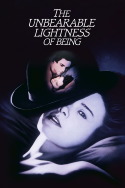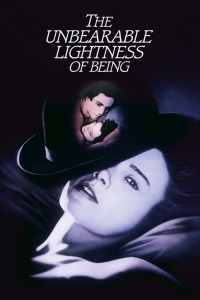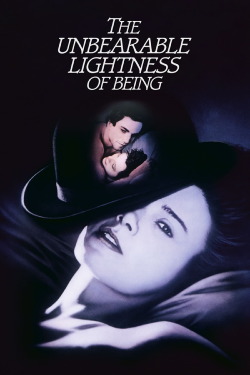
Review of The Unbearable Lightness of Being (1988) by Josh S — 19 Jan 2010
Easily one of the greatest films the 1980s ever produced. It captures wit, emotion and solitude perfectly, the acting is flawless and the overall task of putting Milan Kundera's "unfilmable" novel to the big screen was well performed.
Set in 1968, "The Summer of Love," a young Czech brain surgeon named Tomas performs an operation in a small European spa resort. There he meets Tereza, a shy and extremely cute young woman who wants to escape the boring and thoughtless environment she works in. This is where the movie starts to shine, as Tomas just returns to Prague and probably will never see her again. But instead, she is the one who follows him and the two embark into a loving relationship. However, Tomas is not really a one-woman kind of guy, he is a womanizer. He is on a never ending search for happiness and being...as the title would imply. Just simply "being" is only a simple virtue in a much bigger spectrum, so he goes and has flings with his old flame Sabine, the only woman who really understands him. Of course, it produces some tension, but at the same time, these three characters embed themselves into our feelings for each of their well being, and we just wonder what it is that will come out of the story. Set behind the Soviet invasion of Prague adds the claustrophobic and oppressed feeling of a European country torn by the Cold War.
The performances are amazing. Daniel Day-Lewis always shines and his portrayal of Tomas is calm and melancholy as well as sly and humorous. He is very gentle, despite his savage lust for women. Juliette Binoche is Tereza, who captures an adorable and reliant character so well. One big surprise is Lena Olin, who plays the artist Sabine, her array of emotions and overall character are fascinating and is probably the best performance in the whole film. Although it was directed by an American (mainly due to the fact that Czech directors had to withdraw due to possible Soviet backlash, being that the Cold War was still in effect), Philip Kaufman made excellent casting choices by using actual European actors. And they do not speak with English accents, they have full-on Czech accents and are very well done. As well, Kaufman's eye for authenticity is grand. Background dialogue is either in Czech, French or Russian and even the signs and book titles in the film are in the native language. The photography is excellent as well. Filmed in ancient parts of France, the cobblestone streets and stone walls give that authentic European air to the film. The most impressive sequence by far is the actual invasion of Prague by the Red Army. Crisp footage becomes documentary style and newsreel-esque, black and white shots are thrown in to capture mood and effect, giving us the viewfinder of a camera documenting the horrifying nature of war.
Although I have not read the book itself, The Unbearable Lightness of Being's script is top notch. I believed the dialogue and the characters, and it made me want to read the book all the more. I have been told that even though this film is superb, it still could not capture the magnitude the novel portrayed as there are many psychological discussions and inner monologues that were unfilmable. But needless to say, this film's style and attempt to create something deemed impossible was a highly well done masterpiece.
This review of The Unbearable Lightness of Being (1988) was written by Josh S on 19 Jan 2010.
The Unbearable Lightness of Being has generally received positive reviews.
Was this review helpful?