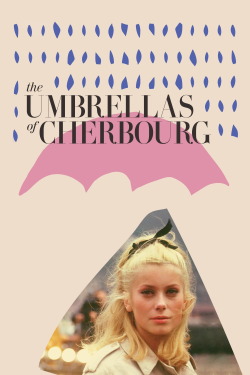
Review of The Umbrellas of Cherbourg (1964) by Duglas S — 05 Feb 2008
There is art that is of the mind and there is art that is of the heart. I've always favoured and connected with the art of the heart. I think it was discovering Matisse's bold, joyous papercuts and the music of Jonathan Richman, pretty much simultaneously, at an impressionable age that dictated so much of my taste and personal aesthetic as an 'adult'.
Some critics can be sniffy about art that is purely of the heart, misreading it as being unsophisticated and therefore of less worth. They are wrong. Much of the greatest and most eternal art bypasses our intellect and goes straight to our heart.
Brian Wilson's Pet Sounds is perhaps the most celebrated non-cerebral masterpiece in recent times. The album represented an epoch where pop had reached a new level of sophistication in musicality and production, Pet Sounds combined that with a naive purity of vision and intent.
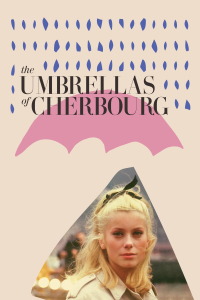
Jacques Demy's The Umbrellas of Cherbourg is most definitely cinema of the heart - like Pet Sounds, it is a sophisticated and masterful piece of work by a remarkably gifted and singular artist.
Part of the French Nouvelle Vague, a movement that saw the director as auteur, Demy may seem miles apart from his contemporaries Godard, Truffaut and Chabrol but his films were no less bold, radical or individual.
The Umbrellas of Cherbourg is the story of two young lovers and the obstacles that get in the way of their love. Although Demy loved them, this is not like a glossy Hollywood musical - Guy and Genevieve are very ordinary young people with unremarkable lives. Their trials, situations and eventual fates are very much of the real world. There are no villains here, the love rivals in this movie are good and kind people. In fact Genevieve's other suitor, Roland Cassard, also featured in Demy's earlier musical romance Lola and that time round was both brought to life by love and then left heartbroken. What makes this almost everyday tale of young love so extraordinary and deeply affecting is Demy's bold and beautiful use of colour coordination, fluid cinematography and most importantly his use of music.
From its naive optimistic beginnings to one of the most emotive and memorable endings ever committed to celluloid, often mundane dialogue is sung to a brilliant score by Michel Legrand. Demy and Legrand don't just allow us to witness this love story as outsiders, all of the pure hearted tenderness, passion and heartbreak is there for us in the notes... so we share in their hopes, their dreams and in their hurts. The Umbrellas of Cherbourg opens with a shot from above of umbrellas being rained on. It is perhaps a slight nod to the fantastical routines of Busby Berkeley but accompanied by Legrand's bittersweet theme it reminds us, in the real world, that into every life some rain must fall.
This review of The Umbrellas of Cherbourg (1964) was written by Duglas S on 05 Feb 2008.
The Umbrellas of Cherbourg has generally received very positive reviews.
Was this review helpful?