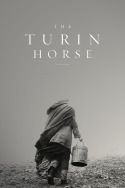
Review of The Turin Horse (2011) by Max C — 24 Oct 2011
The story goes: "In Turin on 3rd January, 1889, Friedrich Nietzsche steps out of the doorway of number six, Via Carlo Albert. Not far from him, the driver of a hansom cab is having trouble with a stubborn horse. Despite all his urging, the horse refuses to move, whereupon the driver loses his patience and takes his whip to it. Nietzsche comes up to the throng and puts an end to the brutal scene, throwing his arms around the horse's neck, sobbing. His landlord takes him home, he lies motionless and silent for two days on a divan until he mutters the obligatory last words, and lives for another ten years, silent and demented, cared for by his mother and sisters. We do not know what happened to the horse.".
Nietzsche is never specifically mentioned again after the opening voice-over, but I decided that he must be important in the viewing or understanding of The Turin Horse, because it starts off with that story. Nietzsche, despite the amount of misunderstood teenagers you see in God Is Dead t-shirts, was a very life-affirming guy. His doctrine of Eternal Recurrence asked the reader the question would you live your life eternally, rather than die?, and the idea was if you said "yes!" then you were a winner, and if you said "oh dear God, no!" then you should probably re-evaluate the way you live. In a rather cunning way, the story above describes Nietzsche as a madman, and with the concluding we do not know what happened to the horse, Tarr decides to ask his audience "would you live your life eternally, rather than die?" using the horse and driver from the story above as his subject.
There's one passage in Nietzsche's Ecce Homo that comes to mind when watching the film: "My formula for greatness in a human being is amor fati: that one wants nothing to be different, not forward, not backward, not in all eternity. Not merely bear what is necessary, still less conceal it . . . but love it." Appropriately then, The Turin Horse hardly moves forward, nor backwards, and as its detractors might note, does in fact feel like it takes eternity! Different scenes come slowly following the same ideas and basic composition, only the camera has moved to remind us that this is in fact a new day. Although I admire Tarr for being convicted enough in his ideas to actually do this, I completely understood the huge amount of people walking out of the theatres saying things like "Oh God, I'm over watching them eat potatoes!" At one stage, the characters decide to leave their isolated house and head up a hill, only to turn back again and this brings to mind Camus' The Myth of Sisyphus, cementing Tarr's pessimism and the suspicion I had that these characters are meant to represent all of mankind. There is a character who is intentionally Nietzschean here, like there was in Werckmeister Harmonies, only here he's not violent like The Prince was, but more a pessimistic prophet. Tarr described him as "a sort of Nietzschean shadow", which confuses me given Nietzsche's optimism, but this hardly matters. For Tarr, optimism belongs to the insane, and repetition and nihilism remains for the rest of us.
The repetitive structure of the film is complimented by its overall simplicity and pureness: this is the most pure and yet difficult film I have ever seen. It is entirely suitable then for nihilistic parable; those leaving because they can't stand the repetition might add to Tarr's statement on mankind, The Turin Horse is a mirror into which we're meant to look and see a simplified version of ourselves. Post-apocalyptic, post-faith, post-belief, and post-optimism. Obviously the film's audience might not be too happy accepting this, I'm a pessimistic person but don't really agree with it. It's hard to deny though that he achieves everything he sets out to, with this pure, frequently beautiful and truly harrowing work. A conversation between the insane and reality, pessimism and optimism, even if it does seem cheeky that he responds to Nietzsche's response to nihilism with, well, nihilism.
This review of The Turin Horse (2011) was written by Max C on 24 Oct 2011.
The Turin Horse has generally received very positive reviews.
Was this review helpful?