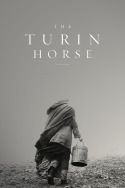
Review of The Turin Horse (2011) by Gary W — 22 Feb 2012
This film is not absurd. It is sincere. That is unfortunate. This is probably the result of the education that the modern artist receives today. In view of this fact we may say: our artists have been educated badly.
At the end of all arguments, both sides have to blame education. The Turin Horse is premised on a Wagnerian misinterpretation of Nietzsche: that is artistically necessary, because it is the only way to have Wagnerian art after Nietzsche, although that premising is neither a necessary nor desirable thing from the point of view of a good education and good taste, of which Tarr possesses neither.
Tarr achieves his very romantic and apocalyptic art quite cleverly: he shows the world after the apocalypse has happened, after romanticism is shattered, in an off-kilter morris dance away from Aristotelian poietics of dramatic progression.
After the play, in Aristotle's sense, has already finished, the curtains fallen, Tarr's little story begins. Its inspiring message is nothing less than the eternal banality and pointlessness of life.
It is from the death of god that this eternal fact, which long lay hidden under the veil of Maya, has entered consciousness. From the Wagnerian perspective, that 19C apocalypse illuminated the new 'eternal', which is simply an eternity for humankind of feckless nothingness and unending banality.
But here lies the rub: that perspective is neither ours nor should it be. The world after Nietzsche shown in Tarr's film is not the world after Nietzsche at all - it is rather the opposite, it is the world after the Schopenhauerian Wagner before his conversion.
Nietzsche is invoked solely to perpetuate the false Nietzsche, the Wagnerian Nietzsche of popular imagining: Nietzsche as the epigone of Schopenhauer, as the supree rhapsodist of bitterness and resignation - a false Nietzsche beloved of teenage boys.
Tarr's art here imagines the world as taking place in the wake of the consummation of Wagner's Götterdämmerung: this art's interpretation of the history of art and intellectual history ignores Nietzsche's own fully consummated Götzen-Dämmerung, the twilight of the idols, out of which emerges an altogether different humanity from that depicted in Tarr's film: it is a humanity which I will not describe except by saying that it is neither banal nor nihilistic, and attributively stronger and more cheerful than Tarr himself, and a humanity which is not conquered, but conquers.
This review of The Turin Horse (2011) was written by Gary W on 22 Feb 2012.
The Turin Horse has generally received very positive reviews.
Was this review helpful?