Review of The Turin Horse (2011) by Joao Manuel A — 25 Aug 2012
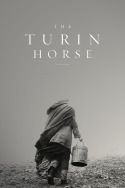
Bela Tarr may well be the cruelest of art house directors working today, fact. Even Lars Von Trier with his own end of the world magnum opus Melancholia cannot compete since death is a given and catharsis can be achieved by the acceptance of the inevitable demise. In the Turin Horse, future is neither apocalyptic nor auspicious; there is only the present and the banality of repetition. The daughter obeys the father, he follows his own habits to exhaustion; getting water from the well, cooking potatoes and eating them, drinking and sitting in front of the window as if waiting for Godâ(TM)s redemption or damnation. The few clothes that they change along with the portrait of the manâ(TM)s wife and are one of their few possessions .
The dust storm is relentless outside and the horse refuses to eat or drink eliminating in the process any chance of escaping their fate. They are prisoners of their own existence and survive rather than living in their dilapidated house. Disease and heavy drinking leaves the patriarch of the house frail and hopelessness plagues the daughter âwe have to eatâ? says the man, her face says that she reached her limit âis there a pointâ? we can read from her expressions. A man visits them bringing news of an impending doom, âeverything is in ruins, everything has been degradedâ? he says. The wind moans just outside as the man takes his bottle of Palinka and opens the door to face the weather. As their world starts dismantling upon their eyes father and daughter try a daring escape but soon realize that such act is unwise and return. Just like Godâ(TM)s creation, their story is told in days, we are only given six, the seventh is up to our own imagination.
When inside sheltered from the storm Mihaly Vigâ(TM)s organ based composition pounds repetitively over the images helping to create deep emotions on the audience and Fred Kelemanâ(TM)s monochromic cinematography adds to this a sense of dread and despair. They are not going anywhere; there is nowhere to go and nothing to do apart from repeating the minutiae of their daily lives. The perfectly composed shots and the minimalistic mise-en-scene shows beauty in such a bleak scenario despite their somber faces ravaged by the harsh conditions they have been facing. Nietzscheâ(TM)s spirit hovers over their household in the nihilism in their actions as their hope starts fading away and a disembodied voice at moments is heard narrating some of the events. On the sixth day almost all is lost; the horse, the well, light but there is no sense of closure only a sense of continuation and repetition.
For the less devoted of cinephiles it may be an endurance test being a voyeur in the lives of the father, daughter and horse in Laszlo Krasznahorkaiâ(TM)s story but all those willing to give it a chance it is a filmmaking experience like no other.
This review of The Turin Horse (2011) was written by Joao Manuel A on 25 Aug 2012.
The Turin Horse has generally received very positive reviews.
Was this review helpful?