Review of The Tree of Life (2011) by Callum H — 22 Dec 2014
This review reportedly contains spoilers.
"The nuns taught us there were two ways through life - the way of nature and the way of grace. You have to choose which one you'll follow.".
Prior to last night, I was yet to seeing any Terrence Malick films. This is strange, considering the kind of filmmaking style he possesses is something I admire and strive to recognise throughout my reviews. After finding the trailer for his next upcoming feature on Youtube, entitled Knight of Cups, I was curious as to what Malick was all about. I sought to watch one of his films and understand what all the talk was about; why Malick is both so revered yet so hated. Critics admire the director for his metaphorical and reflective take on human life, and the heartbreaking passion he pours into every image and every event. Audiences generally admonish the director for his lack of blatancy within his storytelling, and how he supposedly concocts "boring" films. After witnessing the continued battle between these two factions, I decided it was time to add my voice to the argument. So, last night, I waited for my parents and siblings to leave for bed, and I sat up and watched The Tree of Life until 1:00 in the morning. My experience was one of the most uplifting and breathtakingly passionate I had ever endured.
The Tree of Life strives to tell us the story of everything; from the birth of the universe and the enormity that entails, to the individual molecules that make up human life, these being some of the smallest particles in existence. Malick contrasts the bold and the gigantic with the intimate and subtle, and transcends conventional filmmaking to bring us a picture which tells the story of life with a perceived and beautiful ease that is comforting and relatable. Fuck Boyhood; whilst that film is a beautiful achievement that should be heralded for its earnest and realistic portrayal of modern childhood, The Tree of Life gives us perhaps the definitive and defining portrayal of our own existence, one that any and all can relate to, so long as they watch and soak in the visual artistry that is being shown on screen. For those who hold a distaste for actually thinking whilst viewing a film, The Tree of Life is not for them. This movie demands that the audience member actively participate and perceive certain images as certain things. The heart and emotion we see through Malick's visuals tells us that this is a man with deeply ingrained sentimentality; a man who wishes to explore the mysteries of life with metaphorical questioning, as one should do. As we do not truly understand the meaning of our own existence and its importance, perhaps a metaphorical and thematically-based story is suitable.
The Tree of Life centres around the character of Jack, and follows him from as he is a newborn to an adult. We see him dealing with all the philosophical and demanding questions every other human being on the planet has struggled with; those concerning their belief of a deity. The questioning of their existence. The misunderstanding of their parents role in their lives. Questions in relation to good or bad. Moral ambiguity. It is convoluted, confusing and the film never outright tells you exactly what is going on, but perhaps that is the point; Malick is trying to show us the craziness and difficulty of life, and our universal pursuit to find ourselves. The film begins with shots of Jessica Chastain's character, the mother to Jack and his 2 brothers, Mrs. O'Brien, running around with her children, enjoying life. Swinging on swings, running in circles, laughing. We see a young girl staring at a cow in bewilderment; she is curious, as we can see from her face. We see Brad Pitt's character, the father to Jack and his brothers, Mr. O'Brien, looking at his family, reflecting. We see their individual relationships spark, without a single word being uttered about it. We see seclusion and space being represented with cinematography instead of words. Jack's younger brother dies towards the opening of the picture, and whilst we don't explicitly see this happen, we garner the image of which child this is simply from the preceding shots; during these shots of happiness, love and tenderness, we see one of the sons off by himself. He is stepping away from his family. He is walking off from them. It is a subtle and quick shot, thrown in together in and amongst the loving and beautiful wide shots of this family laughing and playing together, but it is still noticeable and discernible.
Soon later, we see Mrs. O'Brien receiving a letter and crying out in despair. The scene is sudden and direct, and whilst we are not told of any details, we draw conclusions. Malick enjoys doing this; he allows us to follow our gut instincts about what is happening. We see Mr. O'Brien receiving the news on the phone. We don't see or hear anything apart from Pitt's emotional face. His stunned expression is enough to send us into heartbreak. We find out soon enough what exactly happened; the death of one of their sons. We see the hesitance from Mr. O'Brien to open up to those around him; he demands all the things one would expect from a man who has children in the 50's, where the film is set. Mrs. O'Brien, on the other hand, exudes emotion and sympathy. She encompasses everything we expect a loving and nurturing mother to be. We feel sorry for her, and hold distaste for her husband as he ushers other mothers and people away from their family, trying to seclude their heartbreak from the rest of the community. This dilemma is a constant within our society; should we let out our emotions, or hide them, so as not to irritate or get in the way of others? This is perhaps the first major question The Tree of Life asks, but it shall not be the last.
We hear an older Jack, played by Sean Penn, giving voice overs. Like his mother's voice overs in the prior few scenes, it sounds as if he is in the middle of prayer. He is still shaken up by the death of his brother, and now stuck in the middle of the big city instead of the intimate and homely Texan community he grew up in, he secludes himself from others. As the camera moves through the city Jack inhabits, the framing is wide, beautiful, and always looking upwards. It is as if Malick wants us to look up to the stars and wonder. Perhaps it is his pathway to God; the one which Jack is speaking to in his prayers. We see he wakes up alongside a girlfriend or wife, but he doesn't interact or discuss anything with her. There is space between them, something Malick again reincorporating to spectacular effect. It is made obvious by this gap that there is still a yearning and sadness inside Jack that has accompanied him since his brother's death. He is stuck in the cycle of grief, and blocks everyone else from outside his mind, leaving him to pray and think. He questions his God for allowing his brother to die. As he walks through the gigantic glass buildings he works within, we almost always have some part of the sky in frame, telling us that he is still looking up to his God and demanding answers.
We see the birth of the universe soon on. Bright and dazzling colours from afar turn into violent and ravaging beasts of nature, rocks and asteroids hurtling through space to collide with planets, namely ours. We see volcanoes spitting out magma. We see in the vast cosmos a battle of colours; the dark battling the light, the reds battling the blue and greens. Perhaps it represents evil fighting the good? It is not long before we see dinosaurs, eating and traversing the planet. We see one dinosaur, hurt and laying on the ground. Another one comes over, it being tall, strong and fast. It places its foot on the grounded beast and looks at it curiously. We haven't been with these beasts for long, nor do we feel any huge connection to them, but the second that the healthy dinosaur threatens the hurt one, we feel caution and despair. Malick is unearthing our morality and sense of right and wrong. Suddenly, the healthy dinosaur walks away from the grounded one, showing us the birth of conscious thought, or perhaps the birth of sympathy as an emotion.
We see more flashing lights, before we arrive back at Mrs and Mr. O'Brien. Mrs. O'Brien is pregnant with their first child; Jack. We see her give birth, and we witness the loving nature of childhood. Happiness, fun and learning. These moments flash by, just as life does. One can instantly throw themselves into the parent's shoes, and we feel their love as their son walks around, discovering. We feel terror when he falls over or runs somewhere he shouldn't. The movie brings us in and asks us to witness the birth of life and the growing of the spirit. Jack's brothers soon come along, just as quickly as Jack himself did, and we see the protagonist dealing with them. He is reluctant to accept them into what he perceives is his family; a jealousy that every single eldest child will be able to empathize with, myself included. His curiosity is infectious, and we desire to see him branch out and explore the world. As he grows older with his brothers, we see his father's strictness, his attempts at rebellion, his explorations and his misdeeds. We see his pain as he has to witness the arguments between his mother and father. When he veers off the path that his parents have set him on, we yearn and desire the opportunity to see their wounds and pain healed, and their relationships fixed. The Tree of Life explores all the little devastating, beautiful and simple moments of life; even the ones we initally think are unimportant are seen, and they are perhaps the most special and beautiful of them all.
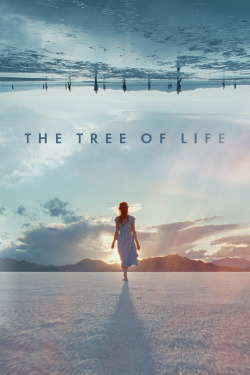
As the film nears its conclusion, we see the film shift into maximum metaphor mode. We see the older Jack walking through the desert to arrive at a door frame. Perhaps he is walking through the door to God's kingdom? Maybe it is the door to his mind? Maybe the door to his past? Nevertheless, as he walks through it, he comes to a beach. He sees his mother and father, his living sibling and his dead brother. He embraces them all. He looks out onto the water; the cold and vast expanse, all of it blue and saddened, but he is surrounded by warmth in contrast; his family is now here, here to help him through his pain and depression. He walks through his old house, now situated in the middle of a barren desert. When the front door is opened, we see Mrs. O'Brien run out onto the hard ground and run towards the fading sun. We see the whiteness surrounding her being. She is in heaven herself now. We see older Jack watching, accepting. Perhaps now he has overcome his grief; now he has found it in himself to finally move on. That is the fundamental component behind The Tree of Life; to move on and to embrace life. To see the beauty in the simple things. To appreciate the slow moving waltz of the jellyfish; to be dazzled by the simplicity of the sun shining through a tree; to laugh as children and their parents run around, having fun with each other. Terrence Malick sees love and heart where others don't. He throws his camera to the sky, and where others perceive emptiness, he sees a vast and beautiful array of character and meaning. The Tree of Life understands this, and is beautiful for doing so.
"Help each other. Love everyone. Every leaf. Every ray of light. Forgive.".
This review of The Tree of Life (2011) was written by Callum H on 22 Dec 2014.
The Tree of Life has generally received positive reviews.
Was this review helpful?