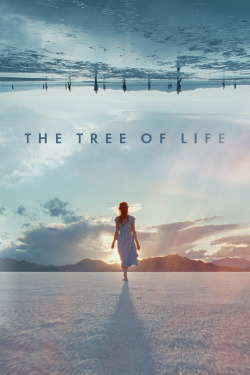
Review of The Tree of Life (2011) by Joanna B — 01 Mar 2016
Universally regarded as a legend and unchallenged as one of cinemas greatest living directors, Terrance Malick has made a mere five features (Badlands (1973), Days Of Heaven (1978) The Thin Red Line (1998), The New World (2005) and now Tree of life) in his 40 years behind the camera.
A reclusive auteur of sensitivity and implication with an affinity for stunning visuals, Malick's hotly anticipated latest offering was an instant winner for the prestigious and coveted Palme D'Or at the Canners Film Festival, but is it worthy or was it awarded under a misplaced admiration from intelligenistia's?
Undeniably experimental, existential and evocative, this film is both great and fatally flawed. Suffering from overt pretentiousness, overstated impressions and a bloated sense of self importance, this movie is a dreadful disappointment. Poorly grounded and with no anchor, the actors become casualties of Malick's tedious deconstruction of techniques resulting in a garbled and perfunctory shambles of poetic consciousness.
The central story is that of the O'Brien Family. A middle class family of five living a calm-surface life in suburban 1950's America. The patriarch, Mr. O'Brien (vividly characterised by the often underrated Brad Pitt) is a hard-jawed, embittered martinet raising his three young sons with a toxic regime of mixed messages from mental intimidation to commanding affection. This is brought into sharp contrast with the healing, gentle presence of his ethereally calm angelic wife (A beautiful portrayal by Jessica Chastain).
The cracks in the façade are self evident and Mr. O'Briens personal frustrations as a failed musician and bitterness for his middle class status is the driving force behind his unsettling need for family dominance taken most noticeably out on his eldest son Jack (An endearing performance by acting newcomer Hunter McCracken).
Although the above makes up the body of the film's pungent content, its contextual meaning is somewhat different. Conveyed from the immediate beginning, this story is all actually a flashback at a difficult and confusing childhood from the decidedly pained and detached eldest son, a conflicted adult Jack (played by the woefully underutilised Sean Penn).
Wandering bewildered through a contemporary cityscape, Jack invites us into his retrospective to explore his theory of "two ways through life, the way of nature and the way of grace". This however is where the director's pretentious necessity for beauty, random juxtaposition and metaphysical musings leaves viewers cold and at only 15 minutes in.
Digressing into a perplexing 30-minute spool of excruciatingly edited (although eye-kissing) images of cells, stars, grass, smoke, fire, steam, light and wait for it dinosaurs with nothing but insistent ecclesiastical music and a whisper quiet narration read to the rhythm of a psalm begging questions like "who are we to you?" and "Answer me" this is a sequence that is not only boring to the point of inflammation, it creates unnecessary confusion and actively defies viewers challenging their patience and thumbing their intelligence.
The Verdict: Steeped in metaphor, grandeur and hidden meanings, Tree of life is inescapably pious, reeking of so much meaning that it ironically becomes almost meaningless. Although a complete mess, there are kernels of greatness still present, a primal scream from a filmmaker who crates more craft in one frame than the entirety of most expensive Hollywood blockbusters.
Published: The Queanbeyan Age.
Date of Publication: 08/07/2011.
This review of The Tree of Life (2011) was written by Joanna B on 01 Mar 2016.
The Tree of Life has generally received positive reviews.
Was this review helpful?