Review of The Time That Remains (2009) by Talia S — 01 Mar 2010
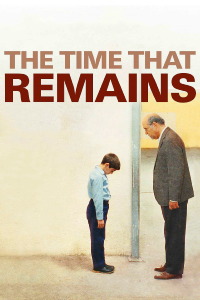
In 2002, Elia Suleiman made history with ?Divine Intervention?, the first Palestinian movie to have ever competed at the Cannes Film Festival. Seven years later in 2009, he returned to the official competition with his much anticipated second feature film, ?The Time That Remains?, inspired by and dedicated to his parents.
Using his father?s diaries and his mother?s letters to relatives as the basis for his screenplay, Suleiman begins the story of his family back in 1948 in Nazareth, when he was a child, and twists through the decades in four separate episodes, recounting torture, looting, exile and the resistance, of which his father, Fuad (played by the excellent Saleh Bakri), was an unofficial yet enthusiastic member, and finally, the acceptance of their fate: Israel was now a country and the remaining Palestinians on the land were now referred to as Israeli-Arabs. Without pathos nor any political declarations, except to evoke the current situation ever-so-diplomatically, he avoids clichés by deploying both dark and light humor. But what makes the film touching are its unique and sometimes quirky characters, such as his parents, their alcoholic neighbor who, every afternoon, pours gasoline on his head and threatens to set himself on fire, or his mother?s Chinese caretaker who karaokes to Céline Dion?s ?My Heart Will Go On?.
Playing his own role, called simply E.S., the director never utters a single syllable throughout the movie. Not a man of many words, Elia Suleiman. He deploys the old adage ?Silence is golden?, a very eloquent and thought-provoking one at that. Everything is contained in movements and expressions, subversive, light and poetic.
This review of The Time That Remains (2009) was written by Talia S on 01 Mar 2010.
The Time That Remains has generally received positive reviews.
Was this review helpful?