Review of The Thin Blue Line (1988) by Bhaskar S — 19 Jun 2007
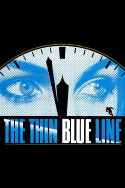
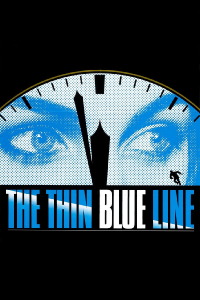
Errol Morris investigates the 1976 murder of a Dallas police officer through a series of re-enactments and interviews. What makes it so different is that there is no narration, and the people he interviewed are not identified.
The re-enactments don't quite show the viewer everything, and the strange angles of the shots and the shadows give the film a noir feel. Even newspaper articles and still images of objects are shown a little too closely, so the viewer can't properly take them in.
The point here is that the search for truth and justice is not an easy one. Morris allows all sides to present alternative accounts of the events, showing the viewer re-enactments to support each story.
This has the effect of turning the viewer into an investigator or jury member. The somewhat repetitive music of Phillip Glass works perfectly with this film. It is also a bit eerie in that the music doesn't change, no matter what is happening on screen.
The film's title refers to the line between peace and anarchy, represented by the police (it's meant to be ironic). Note the use of red throughout the film: in the opening title, flashing lights, and even Dillinger's "woman in red.
" This is what a documentary film is supposed to be, unlike the manipulative, ideologically motivated documentaries that have become so fashionable recently.
This review of The Thin Blue Line (1988) was written by Bhaskar S on 19 Jun 2007.
The Thin Blue Line has generally received very positive reviews.
Was this review helpful?