Review of The Thin Blue Line (1988) by Clint D — 20 Aug 2012
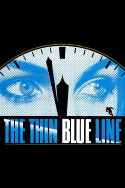
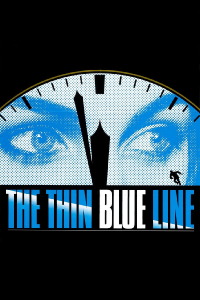
What decides whether a film succeeds or fails? Every time I sit down to write about any movie, this is the question I try to answer, and it can be different for each situation. If your film frees an innocent man from a lifetime in prison, like director Errol Morris's documentary "The Thin Blue Line", I'd say the question of success is moot.
The film focuses on Randall Adams, a man convicted of murdering Dallas police officer Robert Wood on a night in 1977, over eleven years prior to the release of the film. Morris uses interviews with eye witnesses, investigators, attorneys, and character witnesses to recreate the events of the crime from every different perspective offered in the accounts. It's these recreations that made "The Thin Blue Line" one of the most original and copied documentaries in history, but it's Morris' respect for the audience that makes this film a masterpiece.
If you've seen "Paradise Lost" or "Murder on a Sunday Morning", you will immediately see how much of a debt they owe to this film. Today it seems old hat but the idea of using a motion picture, rather than a written piece or even a public movement to second-guess the conviction of a murderer, was a bold concept in the 1980s. It would have been easy for Morris and his team to paint a highly slanted, accusatory picture of how greedy police officers used Adams as a "proverbial scapegoat" (as he is called in a shocking bit of audio toward the end of the film) in order to get the conviction, but this movie isn't interested in easy. Everyone knows justice isn't easy, if it were then "CSI" would be a reality series, and this is where the film's aforementioned respect for its audience comes in.
"The Thin Blue Line" wants you to literally see every possible viewpoint of the crime in question and, like some of the witnesses, possibly get a little confused along the way. Errol Morris essentially deputizes the viewers by asking them to keep track of statements and facts mentally while making their own decision on who's telling the truth. Unlike most documentaries, this one doesn't use any narration or even on-screen titles to tell you any of the speakers' names--the filmmakers leave it all up to you to keep up and put the pieces together, which may frustrate some and thrill others. I also give kudos to Morris for keeping the focus 100 percent on the facts; you only hear the director's voice off-screen once, while during the rest of the movie the interviewees face the camera and talk directly to the audience.
The fact that it took a judge less than a year following the premiere of this film to get Randall Adams released from prison is a far better testament to the job done by the filmmakers than I could ever give. If you dig true crime, you owe yourself to see "The Thin Blue Line", it does for crime scene reenactments what "Citizen Kane" did for nonlinear editing!
Bottom line: Errol Morris' "The Thin Blue Line" is a masterclass in film journalism and shows the absolute best this medium can be used for.
This review of The Thin Blue Line (1988) was written by Clint D on 20 Aug 2012.
The Thin Blue Line has generally received very positive reviews.
Was this review helpful?