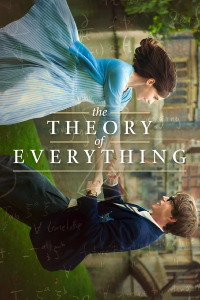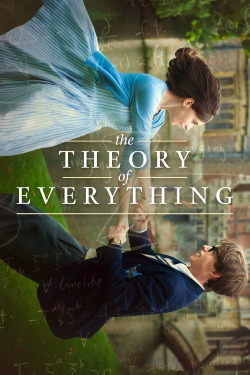
Review of The Theory of Everything (2014) by Omar K — 17 Jul 2015
Who really is Stephen Hawking? â?? That is the question you should really ask of this man who has made his mark on the world both scientifically and personally. Many will be able to recognise the name Stephen Hawking and even remember his wheelchair-bound appearance, yet not many people will be able to elaborate on his scientific endeavours or his personal struggles. So it appears that the world needs a nourishing of knowledge as to who really was this great scientific mind of the last 50 years. There are no visual depictions of Stephen Hawking therefore now at the age of 72, it seems apt that his life should be hailed scientifically and investigated personally as to how he experienced his physical transformation. Well, 2015 has just begun and brought along a film exploring the younger transformative years of Hawking up until his worldwide recognition as a disabled genius.
James Marshâ??s The Theory of Everything falls into the category of a biopic, and considering the life of Stephen Hawking encompasses 50 eventful years starting form his university career at Cambridge to his scientific breakthroughs of black holes, The Theory of Everything does just about enough to satisfy your understanding of the enigma that is Stephen Hawking. The film explores Hawkingâ??s relationship with a fellow student Jane Wilde perhaps a little too over-zealously, his tragic physical deterioration as a result of his Motor Neurone disease gradually paralysing him and his scientific endeavours that have shaped modern cosmology. The Theory of Everything places so much emphasis on Hawking and Wildeâ??s relationship that it has shaped the film as a romantic-led drama. Often, romantic-dramaâ??s are the paramount amalgamation of boredom, but this film manages to keep its head just above water and produce an intriguing depiction that enriches your knowledge of Stephen Hawking.
Eddie Redmayne, star of Les Misérables and My Week With Marilyn, literally buries himself into the role of Stephen Hawking as by the end all you see is the scientific genius himself. Redmayneâ??s physical transformation is truly a marvellous piece of acting as he scene by scene excellently calculates Hawkingâ??s gradual frailties making his downfall appear realistically tragic. Redmayne needed to accustom himself to the habits of Hawking in order to even attempt the role. He has transformed his stature, his voice, his movements but most importantly has still managed to retain the genius of his thoughts by always appearing aware of situations even though he looks unresponsive. It is a real struggle to watch him do his interpretation because it looks so real, or even better, someone real actually went through this same problem and is still going through it. This is a truly visceral performance that towers over the film by instigating all its success as it plays such an integral part in the filmâ??s course of action. Felicity Jones stars as the female lead, Jane Wilde. Not taking anything away from Redmayne but she is the audienceâ??s connection to the ever-deteriorating Hawking and actually is most of the time the only one resuming normal acting duties and boy does she do a good job at it. Jonesâ?? character faces a delicately stringent dilemma that could tarnish her reputation as a patient, loving wife even though she has endured more than anybody has seen of her. After 25-years of tiring struggles, no one can blame her if she wants just a little bit of action! Jones is truly captivating as the lead woman whose aura of boldness and power grows as her husband physically declines. Jonesâ?? performance excels as a woman that has performed the miracle of patience. Both Redmayne and Jones are the engines to this movie and without their Golden Globe nominated performances; The Theory of Everything would truly suffer.
The Theory of Everything is essentially divided into two genres: romance and drama. The romantic aspect of the film is perhaps a little too overly-incorporated into the film that it directs which road of his life to head down. Yes it does teach us the personal life of Hawking and the woman that endured his transformation, but the filmâ??s digression into romantic territory has undoubtedly impacted the scientific side of his life. The film makes you feel the love between two people who have been through a hellish struggle together but their relationship lacks a bite to it as it never fluctuates and always remains on the same level. Their romance is disappointing, but you canâ??t manoeuvre real life for cinematic benefit. However, there is an emotional ode to their relationship and this is perhaps the best scene in the film because it feels so real and heart-rendering making the experience seem worth it. The drama side of proceedings formulates itself as extremely tough viewing at some points of his physical change. You end up becoming bogged down in its tragic depictions of his physical downfall but because you know there is a positive outcome to this story you try not to fall into dreariness. Thus, The Theory of Everything is a moving film that lacks an ending because the story still lives on and that is testament to how remarkable Hawking is as a person as he has defeated obstacles continuously for the last 50 years. Romance and drama donâ??t go hand in hand as both are powerful genres on their own and need a lot of time for exploration. As a result, the film touches over things and never really explores anything that isnâ??t romantically involved. There should be more about the science Hawking is most known for, but his breakthroughs in science are merely mulled over and employed as a foil to his physical capitulation as the unknown hope the universe radiates is mirrored in his conditionâ??s unpredictability.
It is a polished looking film that despite its harsh subject matter appears bright and hopeful. It is brightly lit giving it an almost glowing appearance symbolising The Theory of Everything as a film of hope and belief that even through inconsolably despondent times, there is always a light at the end of the tunnel. This metaphoric understanding demonstrates that the film has utilised everything as a means to comprehend his personal life rather than know what Stephen stands for scientifically. As a result, the film drags for long periods because it swallows you in its shiny-looking despondency. Both the lack of humorous output to dumb down the filmâ??s intensity and whining instrumentals to accompany despondent scenes truly brings you down a lot that when the film is 1 hour and a half in, you canâ??t wait for the end because the uplifting moments become overshadowed by the barrage of negativity in Hawkingâ??s life. The only thing that keeps you feeling upbeat about Hawkingâ??s life is that he is still alive today and has made monumental strides in our scientific understandings of the universe. The Theory of Everything intently explores the personal downfall of Hawkingâ??s physical abilities, but what would have suited Hawkingâ??s story is a more fervent display of his scientific prowess; a contribution most people would recognise him for but struggle to explain exactly what he has done.
The Theory of Everything is an intriguing insight into the personal life of Stephen Hawking brilliantly acted by Eddie Redmayne, but this insight would have fascinated further if it payed more attention into the science that made him famous.
â??â??â??â??â??â??â??â??â??â?? 6/10.
This review of The Theory of Everything (2014) was written by Omar K on 17 Jul 2015.
The Theory of Everything has generally received very positive reviews.
Was this review helpful?