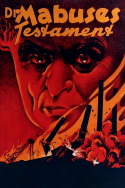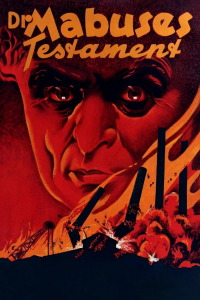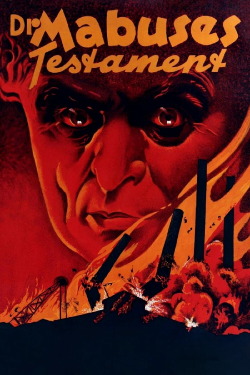
Review of The Testament of Dr. Mabuse (1933) by Marcus H — 20 Jan 2011
As important to film grammar as any of Fritz Lang's other early works, this film is a virtually endless display of the extraordinary language of film editing. Working with a crime thriller with psychological tendencies that border on supernatural, Lang recognizes the importance of interweaving the scenes of the film not only for thematic connection but to give the story an exhilarating speed.
There's a lot going on here, and instead of dropping us into random situations and conversations he finds likenesses to string them all together. Good or evil, all the characters have motivations and intentions that revolve around the same thing- the legendary Dr.
Mabuse himself. Lang had worked with Mabuse before and would work with him afterward, but he is careful to avoid making this a standard sequel. Instead, it's about the anarchic danger of crime, especially when it is glamorized and given a mascot like Mabuse- a character who isn't really a part of the film in flesh and blood but more an ideal, a symbol.
Powerful performances with senses of humor and larger-than-life expressionistic settings help round out this atypical nightmare, an experience as enjoyable as it is educational.
This review of The Testament of Dr. Mabuse (1933) was written by Marcus H on 20 Jan 2011.
The Testament of Dr. Mabuse has generally received very positive reviews.
Was this review helpful?