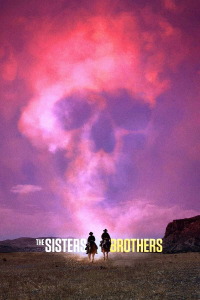
Review of The Sisters Brothers (2018) by Bertaut1 — 14 Apr 2019
A plodding tale of violence and redemption that doesn't seem to know quite what it's trying to say.
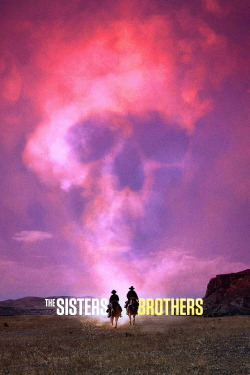
On the surface The Sisters Brothers is a Revisionist Western with a gritty Spaghetti aesthetic, but it's also a tale of avarice and the destructive potential of progressive thinking, a chase movie, a dark comedy, a tragic fable, an examination of the days when the Old West was giving way to an ever-encroaching modernity, a look at how the sins of the father are oft repeated by the children, a study of competing types of masculinity, even a political thesis. The English language debut of director Jacques Audiard, who adapted the script with Thomas Bidegain from Patrick DeWitt's 2011 novel, unfortunately, it did next-to-nothing for me, as its episodic rhythm, bifurcated narrative structure, and poorly-defined morality left me unengaged, frustrated, and rather bored.
Set in 1851, the film tells the story of Charlie Sisters (Joaquin Phoenix) and his older brother Eli (John C. Reilly), hired guns looking for Hermann Kermit Warm (Riz Ahmed), a mild-manner chemist who has created an elixir that when poured into a river, will illuminate any gold deposits on the river bed. Following tracker John Morris (Jake Gyllenhaal), who is to detain Warm until the brothers catch up, the mission soon proves a lot more than they bargained for.
Highly revisionist, The Sisters Brothers gives us all the genre's tropes, but from unexpected angles. For example, men ride horses, but when a horse is mortally wounded, the man to whom he belongs cries and apologises. Yes, this is the Old West of Sergio Leone, but Audiard defamiliarises it as much as possible. Additionally, Warm's progressive egalitarian vision for the future allows the film to examine the belief (however short-lived) that out of the lawlessness and land thievery, a certain section of the populace hoped a more mutually beneficial society might arise.
However, Audiard is not naïve enough to suggest that the Old West was especially peaceful or safe. But even here, he subverts the genre, using a recurring motif of either Charlie or Eli shooting an already downed opponent pleading for his life, which is not what we've come to expect from the protagonists of Hollywood westerns.
In terms of acting, Phoenix, Gyllenhaal, and Ahmed all have moments to shine, but this is Reilly's film. His nuanced performance allows us to see just how badly Eli's conscience is affecting him, and how much he is drifting away from the increasingly amoral Charlie.
However, for all this, I really disliked it. For one, I found it far too episodic, lurching from one incident to next with little in the way of connective tissue between them. I also didn't particularly like the shifts in focus from the brothers on the one hand to Morris and Warm on the other, making it impossible for either to fully settle. A knock-on from this is that it's difficult to figure out where one's empathy is supposed to lie. This difficulty becomes especially problematic in relation to the morally questionable dénouement, in which there is an incident which seems designed for the audience to roundly condemn one of the main characters, only for the film to then give us a 15-minute epilogue seemingly designed to redeem him. This throws into relief what for me was the most egregious problem - none of what we see seems to mean anything, there are virtually no consequences for anything the brothers do. This left me scratching my head as to what the film is trying to say. Is it suggesting that even the most morally repugnant of men deserve a shot at redemption?
As a kind of an aside, it's also worth mentioning an aesthetic decision that has me baffled. On occasion, the film is shot within a circular frame (think of how films often simulate POV through a telescope), often combined with racked focus and unsteady photography. I'm assuming the idea is to try to replicate a Kinetograph, but given that that device wouldn't be invented for another four decades, I'm not entirely sure what the point is. An especially strange example is a scene in which Charlie speaks direct-to-camera, the only example of such in the whole film. Is this a break in the fourth wall, and if so, why? If it isn't, from whose POV is the scene shot?
The four performances at the heart of The Sisters Brothers earn it a great deal of leeway. But even taking that into account, I just couldn't get into it. Far too plodding and thematically unfocused, it's certainly original in how it approaches generic tropes, and that's to be commended, but the imprecise and poorly constructed episodic narrative saps away the good will built up by the aesthetic design and the acting.
This review of The Sisters Brothers (2018) was written by Bertaut1 on 14 Apr 2019.
The Sisters Brothers has generally received positive reviews.
Was this review helpful?