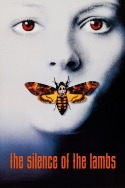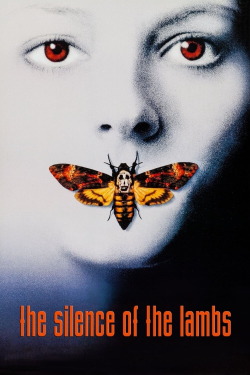
Review of The Silence of the Lambs (1991) by Brett C — 03 Feb 2014
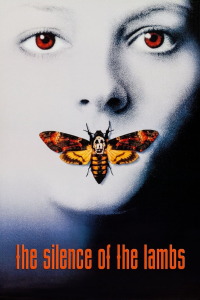
The Silence of the Lambs is a film that took me by surprise. Before watching this, I was expecting to be satisfied and entertained by this thriller. After the film was over, the film hit me in a way that other thrillers couldn't possibly do to me.
The film was based on a novel by Thomas Harris and it was adapted to the screen by Ted Tally. I haven't read Harris' novel, so I cannot justify the film's faith towards the source material. Tally's screenplay is excellent. On the surface it is a manhunt thriller but the film shows much more depth than I was expecting. Tally also delivers a personal journey of our protagonist to heal herself from the horrors of her past. This could have easily been a disaster, with that storyline becoming more of a focused character study ergo losing it's ability to thrill us with the chase but instead Tally doesn't force it on us and keeps it's main focus on the chase. I can't recall any moment in the film that I found unnecessary or dull, as each scene seems to give us something to absorb and always stays relevant in building up it's plot. The Silence of the Lambs is definitely an example where substance dominates style. The film contains so much depth in it's characters, that I find it hard to not be more curious of their personal story. Clarice Starling is definitely a well written character, as Tally isn't afraid to give her a backstory that makes her come off as fragile. This vulnerability ultimately makes her an underdog and it further allows us to connect with this character. Dr. Hannibal Lecter is an interesting antagonist, as he is clearly written as a villain, yet Tally doesn't have him as the person we want to be stopped, instead he plays as an apparatus for Clarice in taking Buffalo Bill down. If Tally wrote this character with simplicity then having him in the film would have just felt unnecessary. The fact that this character creates a twisted attachment with our protagonist has and therefore allows the conversations between the two to come off as entertaining, while at the same time allowing characters to be fleshed out. The film's main antagonist is just as an interesting study as the two previously mentioned characters. Buffalo Bill's reasons for his killings has kept me engaged, and as the film gives us more and more details of this character, the more my interest grew in how this film resolves itself. Tally gives the film a level of psychological depth that both fills the history of the character but also reveal the fuel of their actions. Without this aspect, I would have considered this film to be just a B-grade thriller. The film's dialogue is fantastic, as it isn't just present to fill the scene. The back and forth between Clarice and Lecter were a standout, developing tension in the most calm of moments, and the speech that Clarice makes about her life on the farm was amazing.
The Silence of The Lambs is my first opportunity in jumping into Jonathan Demme's filmography. Demme has handled Tally's script quite well, he allows the film's script to be the main focus and not let anything draw us out of it. The styles that he applies in this film is just used to support the structures and personalities of the film's characters. Demme wanted the balance to be somewhat shifted between our characters, with our protagonist feeling low in power. As our protagonist is a woman, the film gives off this battle of the sexes vibe whilst in support of the psychological structure that Tally has written for this character. Demme depicts the men in this film as figures who gains pleasure in antagonizing women for their own personal pleasures. Clarice feels like a pawn in someone's game or she feels like she is being towered by the 'dominant figures' of society. Overall, creating this underdog story of a person striving to achieve in a world that is cruel and unfair to her kind. That represented the underlying story that Demme was trying to create. The director also achieved in creating a gripping manhunt story that rivals is able to rival against the best within it's genre. Demme has kept the film's tone to be depressing all the way through. This enabled the film to maintain it's intensity and at the same time making it easier to convey pain and suffering to the audience, whether it's internal or external. The praise the construction of this film, and I have Demme and the editors to thank for it. They seem to just want the film to go straight to the point, removing out any fillers that may slow or drag the film down or scenes that could potentially affect the tone of the film.
Tak Fujimoto is the film's cinematographer. Fujimoto has clearly understood on how Demme wanted the film to look in order to reinforce the themes of the film. The film's look is quite lifeless, which makes the film feel subtly frightening and dangerous. In order for us to feel like we are in Clarice's level, Demme and Fujimoto has us see the world through her eyes. Shots takes a point of view approach and we always seem to look up at these men as if we are like their prey. The film achieved in making us feel weak and lonely, and all this is credited to Demme's direction and Fujimoto's cinematography. During the climax of the film, Demme cleverly allows the perspectives to be switched, with us following the perspective of Buffalo Bill. I thought this was a nice change and it allows the ending to feel much more effective this way. The point of view shots has the actors look straight at us, and this method increases the impact of the words that is being delivered, as it sounds like we are the ones that he/she is saying it to. This is truly frightening when Lecter is looking straight at us with his dark petrifying eyes and giving off a speech that could already give us the chills even if the cinematography was more distant from it's characters. The film consists of many tight close ups as Demme wanted us to see the layers behind these characters, and keeping the shots tight allows us to focus on it and nothing else.
The film's score was composed by Howard Shore. I think he does a wonderful job here as he doesn't try to create something groundbreaking or overly stylish, instead he creates a score that amplifies the film's already unsettling atmosphere. Shore's use of the strings and trumpet, is nicely crafted. The film doesn't try to be overly ambitious or even that noticeable when watching the film. The score blends in with the imagery and the story so subtly, having the audience be much more in focus with the plot. Shore's work for this film has been used as inspiration to the many many thrillers that have spawned after this film's release. Howard Shore's work on Silence of the Lambs and Se7en are the main source of influence for thrillers made in the late 90's to the 21st beginning of the 21st century.
The film's acting are definitely a standout. As the film, kind of becomes a character study of it's own, the film needed that extra dimension that an actor/actress can deliver in order to sell their characters. Jodie Foster was fantastic in this film, she was able to play this woman who projects this shell of hardness in order to compete in a difficult and harsh world while also being delicate and fragile in the core due to the persistent horrors that haunt her even to this day. During conversations between actors, one can subtly make out the pain that she is trying to hide and we can immediately tell that there is more to her than what she projects. Foster has successfully embodied a character that we can easily sympathise and follow. Her height also allows her to feel small among the other tall actors, again making her feel inferior and weak. Anthony Hopkins as Hannibal Lecter was fantastic. He was able to convey this fear without having to actually do anything drastic or dramatic. Just from his body language and the way he uses his face haves us feeling intimidated. Though he is frightening to watch, he was also able to have us be curious about the man. Ted Levine as Buffalo Bill was great. During my first watch, I felt very disturbed watching what he does to others and to himself. Like Hopkins, Levine didn't really need to go over the top or overly forced in projecting the horror to the audience. The way he refers to his subjects as "it", distills this sense of humanity from him. These three actors truly carry this film, and without them then this film would have lacked the ingredient that made this film so great.
Silence of the Lambs is a film that surprised me and it stands up there as one of the best thrillers around. It features amazing talent from it's actors, clever and precise direction from Demme, wonderful cinematography, and a well written screenplay. If you want to see a thriller that truly explores the inner workings of a insane man's mind, then this is the perfect film for you.
This review of The Silence of the Lambs (1991) was written by Brett C on 03 Feb 2014.
The Silence of the Lambs has generally received very positive reviews.
Was this review helpful?