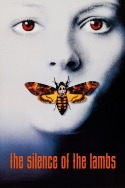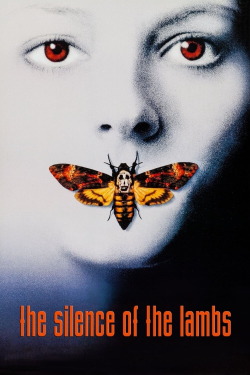
Review of The Silence of the Lambs (1991) by Jeremy K — 19 Feb 2014
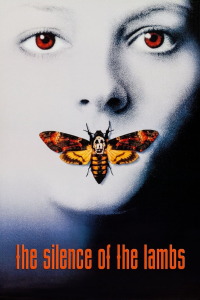
Anthony Hopkins gives one of the creepiest and certainly most famous performances in all of cinema as the cannibalistic Dr. Hannibal Lecter in "The Silence of the Lambs," actually the second Hannibal film following 1986's "Manhunter," but nobody seems to remember that film. Let's face it; 2002's "Red Dragon" trumped that anyway. But this is the movie people think about the most when they think of this character, and for good reason; it has brilliant performances, an unashamedly unsettling premise and some beyond memorable dialogue.
Clarice Starling (Jodie Foster) is a trainee at the FBI Academy called in by Jack Crawford (Scott Glenn) in Behavioral Science to speak with Lecter, who's incarcerated at the Baltimore State Hospital for the Criminally Insane; he's hoping Lecter can give them insight on how to pursue a serial killer nicknamed "Buffalo Bill" (Ted Levine).
She goes to see Lecter, and here's where we partake in the first of some of the best conversations you'll ever see. I just adore the dialogue between Starling and Lecter. She's trying to wheedle out information about Buffalo Bill out of him, as he was a former patient of Lecter's, but he wants to play quid pro quo by asking her questions about her own life. It's difficult to describe why these conversations are so engaging; it's partly because of how convincing Jodie Foster and Hopkins are in their roles, but also because of the battle of wits that's going on between them. We can see how shook up Starling gets talking to this guy, but she becomes quite clever in how she tries to get him to talk, sort of playing Lecter's game in how she uses what he's told her to her advantage. I also particularly love the moment in their first scene when Lecter chastises her like a child with how she tries to segue into getting him to take a questionnaire. Their scenes are so good that during their talk at Lecter's cell in Tennessee where she's talking about freeing the lambs on her uncle's farm as a child, they were going to actually film flashback scenes of the event happening. But director Jonathan Demme decided it would be pointless to cut away from these two characters.
In between their talks, Starling is attempting to track down Bill, occasionally assisted by Crawford and sometimes nuisanced by hospital head Dr. Frederick Chilton (Anthony Heald). We also actually see Bill kidnap a U.S. senator's daughter, Catherine Martin (Brooke Smith), and take her back to his hideout where he plans to skin her as he has his other victims. Unlike Lecter, who's polite and dignified, this guy is a real nutcase, but he works in making us feel uncomfortable in a different way than Lecter. Lecter gets inside your head with his words and facial expressions, while Bill makes you squirm with his actions. It's like each of this villains are attacking from two different playing fields.
But let's not dismiss Jodie Foster; she's one of my favorite actresses ever, making even films that are lousy at least watchable. She plays this role far better than Julianne Moore went on to play in "Hannibal." She's slightly overwhelmed, but still stands strong. She's kind and caring, but speaks her mind and does whatever she can to get the job done. Both Foster and Hopkins won Academy Awards for their performances; in fact, "The Silence of the Lambs" is one of only three films to win the "Top 5" awards: Best Picture, Best Director, Best Actor and Actress, and Best Screenplay (this one adapted).
However, this movie's accolades are not what make it so memorable. It's memorable because of the frightening realism of the scenes with Bill, the powerful conversations between Lecter and Starling, the mystery of tracking Bill down, and how it more or less ties itself together with a plot that is always engaging and never lets up. There are some mild nitpicky things, like exactly how Lecter escapes from his cell, Catherine being slightly irritating and maybe that Lecter does come off as unrealistically hammy, since this movie is supposed to be really serious and gritty. But that last bit I don't even care about that much, because it's such a powerhouse performance. Everything about this movie is powerhouse material, any way you look at it. It's one of my favorites.
This review of The Silence of the Lambs (1991) was written by Jeremy K on 19 Feb 2014.
The Silence of the Lambs has generally received very positive reviews.
Was this review helpful?