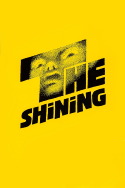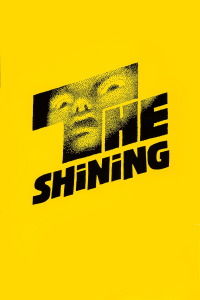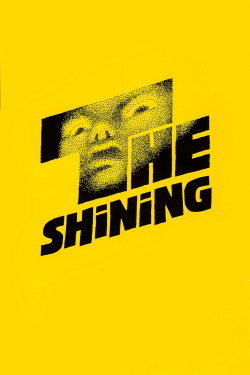
Review of The Shining (1980) by Edward S — 09 Dec 2013
Visually, "The Shining" is one of the most gorgeous, inspiring, and atmospheric films ever made. Never has another film so emanated and exemplified Kubrick's virtuosity with the camera, most notably his captivating dolly shots, symmetrical dolly-zooms, wide-angle lens, and steadicam. They're all done so beautifully to portray the vast emptiness and hollow luxuriousness of the massive and labyrinth Overlook Hotel.
The hotel is simultaneously animated, with its bright lights, wooden furniture, and carpets featuring menacing patterns, into a claustrophobic and unnerving prison. There's just something about the way the seats are placed and the rooms constructed that makes the setting so wonderfully creepy. The minimalist ambient soundtrack, reverb of certain lines spoken in big rooms, and outstanding cinematography (Mr. DP is Garrett Brown, the inventor of the steadicam himself) are also unforgettable.
However, I exhibited a great deal of cynicism towards the convoluted intricacies of the story. On the note of what the film was actually about, there's literally no novel insight I can write right now that hasn't already been mentioned on any analysis of this film somewhere on the web. In a nutshell, the key to "understanding" or "cracking" this film lies in the themes of mirror duality, children's cartoons and innocence gone bad, mazes, symbolism that may include the act of strangling, paternal vs. sexual love, and the fact that many people, perhaps even the Overlook Hotel, possesses the ability to "shine.".
From this perspective, my own analysis of this film resulted in *I guess this is a spoiler but with this film being a cultural icon, a classic, and 32 years old, it's your own fault for not seeing it and then reading a review on it, lol* most of the horrors being projected by Danny's psyche because of his suppressed abuse by his father being summoned by the Overlook via the shine (how else would you explain the terrific naked-woman-turned-rotting-fairy scene where there are numerous cuts to Danny drooling and oscillating in a trance-like state?) We've now excavated "The Shining"s hidden subplot about a father who has brutally ignored his duties, embraced his vices, and is now facing his comeuppance by his son; and that's only a start. But, in a psychoanalytic perspective this film seems to work on many other levels, and the themes of mirrors in this film (it turns out that Kubrick's famous symmetrical shots may have a deeper meaning) also take on an important role which harkens back to the Jungian-inspired work of Fellini, which is always welcomed. An example may include the shots of the hotel gradually becoming darker and more maze-like as it approaches the end of the film, eventually becoming a menacing reflection (or reveal) of itself.
Anyway, even though the plot itself does make sense in a cohesive way, I'm just here to question if this sort of requirement of rigorous analysis is a necessity for enjoying the film. In other words, where is the pay-off? Even as I watch the film over and over again, only the original analysis was actually fun; the scenes and frames may take on a new meaning but, suddenly, in another viewing, they're still the same as always. Even then I feel the film itself possesses a duality, in terms of either enjoying it aesthetically or in the sterile environments of a lab. I couldn't even appreciate Kubrick's amazing crane shot of the miniature model of the maze; I only thought "note to myself that 'x' is 'x.'" Are encrypted puzzle-pieces in film really something that make them great? Or, is the superficial appeal of a film, which here would be the amazing Kubrickesque style, only an invitation to solve it? For reference I never cared for "Donnie Darko" simply because I was not very impressed by its nostalgic indie sci-fi romance appeal and didn't think its deeper puzzle, which doesn't even come close to the intricacy as "The Shining"s, brought too many layers of enjoyment to change my thinking of it. I'm OK with complex films, such as many of the more convoluted film noirs, since they still have a direction. Some puzzles, on the other hand, seem to be a reward in themselves completely independent of my enjoyment of what film can offer. Then again, it's still a valid use of the medim.
So, even though an analysis of a story that requires one is fun, it seems to be a different type of enjoyment. It does not budge my opinion that it is Kubrick's impeccable direction and technique, as well as his talent for creating resonating, memorable, and haunting images, which elevate "The Shining" into the reputed horror/suspense masterpiece that it is so lauded for today. Treat it as a puzzle-piece if you will, but that's only an added bonus yet a free one at that. So you might as well solve it!
This review of The Shining (1980) was written by Edward S on 09 Dec 2013.
The Shining has generally received very positive reviews.
Was this review helpful?