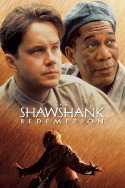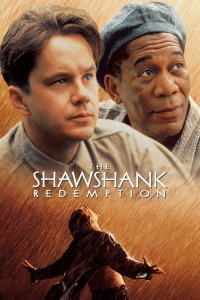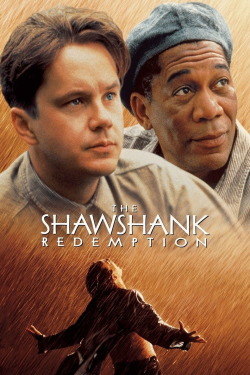
Review of The Shawshank Redemption (1994) by Cameron J — 05 Sep 2014
"The Midnight Express II", only, well, less horrifying, as weird as that is for Stephen King! A man accused of a horrible crime comes to embrace imprisonment as a humbling experience which will show him just how beautiful life truly is, but the catch is that... the prison is haunted... right? I guess King doesn't strictly do horror stories, or rather, ghost stories, because I don't know how much you can tone down the horror aspects of a prison drama. You know that you're going to be having quite the comfortable stay in a prison called Shaw[u]shank[/u]. I guess, Morgan Freeman can make any place a little cozier, although he's not exactly cozy for your career if you're hoping to get some recognition. You'd think being in what is largely considered one of the greatest films of all time would make Tim Robbins a household name, but, no, he's still just floating around. Well, he'll always have this under his belt, which is a good thing, because I don't know if it's because or Morgan Freeman or whatever, but this film is awesome, even though it's not really one of the greatest films of all time in my opinion, for a couple of reasons.
Falling just a little shy of two-and-a-half hours, this film is a little too long, not because of excessive filler, but because of excessive material, for the film is structured almost episodically, with segments that keep consistent in certain important themes, particularly those regarding the progression of the leads' personal stories, but divert central attention to supporting players, sometimes in a way so jarring that it halts a sense of progression, leaving a sense of repetition to set in. The unevenness of this pseudo-epic of an extensive drama derives, not simply from fat around the edges, but unevenness in the storytelling style altogether, which all but jarringly alternates between thoughtful traditionalism, and a glossing over the progression of happenings that, when accompanied by Morgan Freeman's narration, challenges a feeling of subjectivity which defines most of this intimate affair, and superficializes a sense of depth and nuance almost as much as Stephen King himself. King's story is a rich one whose tastefully dramatic interpretation of edgy subject matter is realistic enough to feel important, and yet, there's still something missing about this subject matter, which puts only so much grime on a portrayal of prison life that often feels - dare I say it - fun, and not strictly in the best way, while glorifying good-hearted, but still morally problematic criminals, and demonizing brutally misguided keepers of some sort of justice. The lack of risky layers to the characterization don't so much convolute the moral stance of this drama, as much as they limit the depth and believability of mostly richly well-drawn roles, whose subtlety issues feel like devices in melodramatics that corrupt a sense of genuineness to this largely grounded drama through improbable happenings and conflict motivations. The film is so engrossing in its being so grounded and thoughtful, so when subtlety lapses, a sense of dramatic superficiality glares, further polished by Frank Darabont's directorial sentimentality, which is realized enough, and balanced enough with thoughtfulness, to cut deep, but not especially subtle in its grasping at the histrionics and overdramatic stylistic touches to try and move. These sentimental touches reflect an ambition that in turn reflects what shortcomings there are to this excellent, thoroughly well-crafted drama that could have been greater than outstanding, if it was a little more even with its focus and pacing, and more delicate with sometimes superficial characterization and dramatics. The flaws stand in this film, but not exactly firm, at least in comparison with the strengths which dig deep enough to carry the final products to near-soaring heights, on the backs of taste that even falls into the musical aspects of the film.
What timely tunes there are in this film are pretty delightful, but for a period drama that spans several decades, this film is mostly reliant on original music, composed by the great Thomas Newman, whose trademark emotive tenderness gets to be supplementary to the sentimentality that corrupts dramatic subtlety, but is hauntingly beautiful in its range and classical proficiency, with enough realized soul to be mostly important in the supplementing of the genuine dramatics, and, by extension, the complimenting of this subject matter's value. Not particularly well-known for his dramatic works, Stephen King gets to be a little superficial and melodramatic in his take on subject matter as potentially brutal as that which deals with prison, but as a man well-versed in horror, he does an adequate job of capturing claustrophobia and grit of entrapment, backed by his equally notorious expertize in human themes, which, in this case, are applied to a portrait on the humanity within the criminal to enrich an intriguingly extensive and layered dramatization of living out your life behind bars, thus making for an incredible story concept that Frank Darabont interprets with the utmost inspiration. Darabont may be a better director than he is a writer, but just barely, backing his directorial sentimentality with an uneven story structure and contrivances to stress the superficiality of the subject matter, but far outweighing his scripted shortcomings with crackling dialogue and generally extensive exposition that compliments a sense of great range in the storytelling by focusing on each individual segment, albeit in a manner that is episodic, but dynamic enough for you to feel the progression and evolution of this epic of a thoughtful drama, anchored by often unsubtle, but consistently distinguished and, especially when genuinely layered, rich characters. Each character is given his or her time to be fleshed out, thus giving this solid ensemble cast plenty of opportunities to present standouts, and sure enough, when given a time to shine, the performers sparkle, with show-stealers including James Whitmore as an ultimately good-hearted old man fearing being released into a busy new world he may never again get used to or be welcomed in, and Gil Bellows as a rough punk who finds his depth and potential through education and friendship, who are merely highlights in a supporting case all but forgotten in the wake of leads Tim Robbins' and Morgan Freeman's electric charisma and chemistry, accompanied by a subtle nuance that defines the Andy Dufresne and Ellis Boyd "Red" Redding characters as prime examples of humanity and bravery within an oppressive environment. This drama is driven by its humanity and characters, and for every shortcoming in characterization, there is so much wealth to the written and acted humanity that the heart and soul of this film is subtly, but surely brought to life as an instrumental component in the final product's excellence, fully secured by the area of immersive storytelling in which Darabont most sands out. Even in his well-framed celebration of Roger Deakins' subtly sharp cinematography, - whose lighting encompasses grit to make the bleak moments rugged and tense, and to contrast with the intensely bright spots in a beautifully emphatic fashion - Darabont immerses, or at least crafts memorable - nay - iconic visuals (Yeah, we all know what the most iconic one is), for what draws you in more than anything is Darabont's structure of the storytelling, whose tight pacing keeps the hefty runtime flowing smoothly through sound entertainment value that goes settled through a thoughtfulness that gradually draws you into the environment selling a sense of, not claustrophobia, but intimacy, backed by a nuance and sentimentality that, when realized, engross, until resonating with near-devastating impact. The film is ambitious as a heartfelt drama, and that begets moments of overt sentimentality that emphasizes the uneven structure and, of course, the superficiality of the subject matter, so where this film could have been just about epic in its genuineness, and resonate on the level of what I perhaps controversially consider the much superior prison drama, Darabont's "The Green Mile", it feels a touch held back, but ever so barely, very rarely, if ever losing, not reward value, or strength, but excellence as a powerful, extensively molded drama with the thematic and dramatic importance, beauty and effectiveness to stand firm as a classic triumph.
In the end, there's something uneven about the plot and storytelling of this drama, whose conceptual superficialities, exacerbated by the interpretation's subtlety issues, melodramatics and sentimentality, threaten to hold the final product shy of its excellence, firmly secured by Thomas Newman's gorgeous score, a solidly charismatic and dramatically nuanced ensemble cast, and an extensively drawn and immersively, if not piercingly resonant script and directorial performance by Frank Darabont, all of which do enough justice to Stephen King's incredibly rich and thematically important subject matter to make "The Shawshank Redemption" something of a triumph, an outstanding portrait on humanity, friendship and the true entrapment and freedom one can find behind and beyond bars.
3.5/5 - Excellent.
This review of The Shawshank Redemption (1994) was written by Cameron J on 05 Sep 2014.
The Shawshank Redemption has generally received very positive reviews.
Was this review helpful?