Review of The Shape of Water (2017) by Nightreviews — 18 Dec 2017
If I told you about The Shape of Water, what would I tell you? I wonder?
Well, for starters, I don’t think that anyone would have predicted that we would have gotten two adaptations of the classic “Beauty and the Beast” story arc in 2017.If I told you about The Shape of Water, what would I tell you? I wonder?
Well, for starters, I don’t think that anyone would have predicted that we would have gotten two adaptations of the classic “Beauty and the Beast” story arc in 2017. While one was a literal Disney re-imagining, following the animated classic almost frame-for-frame, Disney’s March hit Beauty and the Beast was a huge success at the box office and with critics alike. While our second interpretation, The Shape of Water, the film is more of a…lets say, unconventional take on the classic narrative archetype; complete with full frontal nudity, scenes of masterbation, feline decapitation and of course (as with any del Toro film) good ol’ bloody violence, our second interpretation is defiantly a more imaginative and adult directed adaptation.
Yet, the sex, blood, violence, gore and nudity aren’t the things we remember most from The Shape of Water. Instead, we focus on the lucid use of luminous night colours, the amazing characters and all of their flaws, feats and challenges, and most of all, the beauty of such a taboo love story, between two very misunderstood individuals from different worlds.
While del Toro may very well NOT be remembered as a director and writer who flourished making intoxicating love stories, The Shape of Water will surely be a film that challenges that notion greatly.
Set in 1962, del Toro’s newest is an interesting yet ironically reflective film that romanticizes the past with great style. While the past that del Toro is passionate about, his narratives always seem to use the past as a tool that presents an idealized and passionate and very forward way of thinking. In doing so, del Toro uses the past as a reference point of so many of society’s mistakes about women, visible minorities and of course, a repressed society without a voice, hence, why our story centres around a princess without a voice.
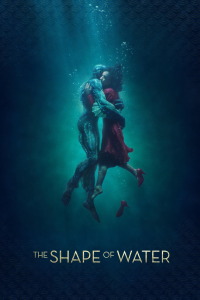
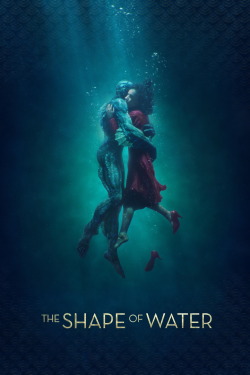
Our princess here, Elisa (Sally Hawkins), is an uninteresting mute who, in the first five minutes, establishes her daily routine of her home life, work life and social life in very quick and easy to understand order of routine. Elisa, who works for a highly classified government research facility in Baltimore, has seen many things. Among one of the newest secrets to be housed in the facility, is their most sensitive assets to-date; an aquatic creature that was captured in South America by the highly violent and blue-collard, religious American patriot Strickland (Michael Shannon). Along with her best Zelda (Octavio Spencer), Elisa and Zelda are tasked with cleaning the facility that houses the highly sensitive and elaborate creature from the South American lagoon, with out course keeping in mind that Elisa’s muteness adds to the sense of secrecy. With each passing day and intrigue to blame, Elisa becomes more and more transfixed with the two-legged, finned man-fish who is never given a name but played by the del Toro staple Doug Jones. Clearly, Elisa begins to fall in love with the creature that eats the hard boiled eggs. As each passing night brings the beast and beauty together, Elisa begins smuggling in record players, vinyls and experiences for the creature that begins to humanize him. Sharing her nightly work experiences with her best friend and neighbour Giles (Richard Jenkins), Elisa finds comfort in the unordinary romance with the “thing” that has captivates her heart, as well as ours.
It would be hard to argue the vision of the passionate and such artful director Guillermo del Toro, especially since his masterwork Pan’s Labyrinth. While Water may not be that films successor, it surely will be remembered along side it for many years to come. A man whose fascination with the gothic and horror elements of storytelling are visibly seen in almost all his works, del Toro has been known for focus on action and the very violent side of story-telling. With The Shape of Water, del Toro places violence and gore aside, alongside with his co-writer Vanessa Taylor, who decide to focus on their shared voice of telling the story, the very contemporary and relevant social commentary, as well as the love story between a woman and a creature who feels and is made to feel, that they do not belong.
The theme of oppression is soaked within each and every frame of The Shape of Water. By choosing on having the main couple in love both mute, the two main voices of the film are Zelda (a black working class woman) and Giles (an artistic, flamboyant artist), two very specific caricatures of people who may have suffered the most amount of oppression and suppression in the United States in the 1960’s. Yet, in a world where Russians and Americans are in a race to superiorly outwit one another, del Toro’s world in the film, doesn’t seem too far from the America we know and despise today.
This review of The Shape of Water (2017) was written by Nightreviews on 18 Dec 2017.
The Shape of Water has generally received very positive reviews.
Was this review helpful?